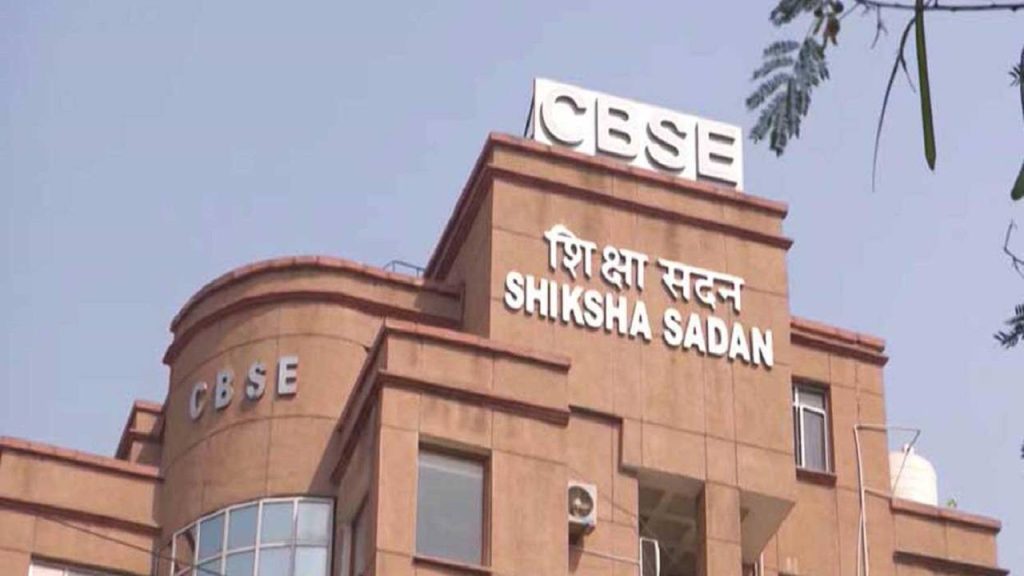
The Central Board of Secondary Education (CBSE) has brought some of the most significant reforms to the Class 10 and Class 12 board examinations for 2026 — aimed at improving evaluation accuracy, reducing student stress, and making assessments more aligned with competency-based learning under the National Education Policy (NEP) 2020. Expect new exam formats, evaluation changes, attendance norms, and exam-writing rules that students and parents must understand well before the exams start.
1. Revised Exam Calendar & Structure
🗓 New Date Sheet & Sessions
- The 2026 CBSE board exams will be held from mid-February to March/April for most subjects, with Class 10 theory exams ending by March 11, 2026 and Class 12 exams concluding by April 10, 2026 after a rescheduling of some subject papers.
📌 Two-Attempt System for Class 10
- Class 10 students now have two board exam opportunities per academic year:
- February (mandatory) main board exam.
- May (optional) improvement exam for up to three subjects, with the better score counting in final results. This aims to ease pressure on students and offer flexibility.
This dual-exam model aligns with broader NEP goals of reducing high-stakes pressures by giving students a second chance within the same year.
2. Updated Exam Pattern & Question Structure
📘 Competency-Based Format
Both Classes 10 and 12 will feature an updated question paper structure that places emphasis on analytical, application-based learning:
- 50% competency-based questions such as case studies, data interpretation, real-world problems.
- 20% objective-type questions (MCQs, select-responses).
- 30% constructed response questions including short and long answers.
This pattern is designed to reduce rote learning and measure concept clarity, reasoning, and problem-solving skills rather than memorisation alone.
📑 Section-Wise Answering Rules
CBSE has introduced strict sectional answer rules especially for Class 10 Science and Social Science papers:
- Science papers are divided into labelled sections — Biology, Chemistry, Physics; answers must be written in their respective slots.
- Social Science papers now have four sections — History, Geography, Political Science, Economics — with separate spaces defined for each.
⚠️ Answers written in the wrong section will not be evaluated and will be treated as an “Attempt Not Done”, making careful adherence critical for scoring.
3. New Evaluation & Marking System
💻 On-Screen Marking (OSM) for Class 12
CBSE is introducing digital evaluation — known as On-Screen Marking (OSM) — for Class 12 answer sheets in 2026. Examiners will evaluate scanned scripts online rather than through traditional manual checking.
Key benefits include:
- Reduced totalling and human errors.
- Faster evaluation and result processing.
- Wider teacher participation, including from their own schools.
- No need for post-result verification for digital preparatory reasons.
For Class 10, evaluation remains manual for this exam cycle, but digital evaluation systems are expected to expand in coming years.
4. Additional Rules, Attendance & Compliance
📍 Strict Attendance Requirement
Students must ensure minimum attendance criteria (typically 75%) to be eligible to sit for board examinations, reinforcing classroom participation and continuity.
📌 Pariksha Sangam Registration
All candidates must register via the Pariksha Sangam Portal, where they will receive a unique APAAR ID for digital academic tracking and exam eligibility management.
📊 Internal Assessment Weightage
Board exams now place greater importance on internal assessments (which can contribute 20–40% of total marks depending on subject), further encouraging ongoing school-based evaluation rather than one-off exam performance.
✍️ Allowed vs Prohibited Items
CBSE has also published updated lists of allowed and prohibited items for the exam hall — e.g., calculators are normally not permitted unless specified, and geography maps/graph papers will be provided by the board.