Published on November 20, 2025
Delhi, India
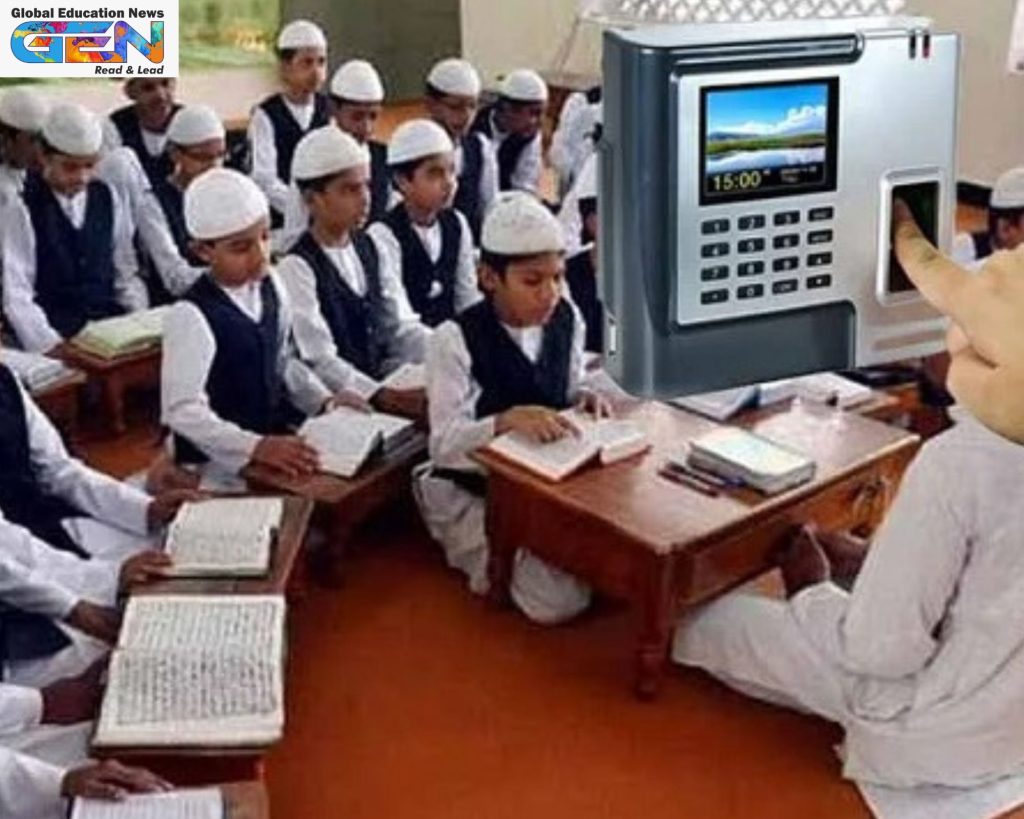
In a decisive move blending technology with tradition, the Aligarh district administration in Uttar Pradesh has rolled out mandatory biometric attendance for teachers across all madrasas, effective immediately as of November 20, 2025—linking monthly salaries directly to digital punch-ins to curb absenteeism and enhance institutional discipline. This policy, directed by the state government to modernize administrative workflows in minority educational setups, arrives at a time when Uttar Pradesh grapples with over 1.2 lakh madrasas statewide, many facing scrutiny for operational lapses that could undermine the National Education Policy (NEP) 2020’s equity goals, potentially streamlining fund flows for 74,000+ students while addressing security red flags that have sparked 15-20% more parental concerns in recent audits.
Policy Blueprint: From Manual Logs to Biometric Precision
At its heart, the directive mandates real-time fingerprint or iris scans via the UP government’s centralized Biometric Attendance System (BAS) dashboard, shifting from outdated manual registers that often inflated attendance by 10-15% in preliminary reviews—ensuring payouts only for verified hours and fostering a culture of reliability that could reduce fiscal leakages by up to 20% in aided institutions, based on similar pilots in state schools. Rolled out uniformly without exemptions, this tech infusion draws from broader UP initiatives like the 2023 e-Shiksha portal, amplifying NEP’s digital integration pillar by equipping madrasas with data-driven tools for better resource allocation, though initial setup costs might strain smaller unaided outfits unless subsidized.
Key Implementation Features (Structured List):
- System Integration: Teachers log in/out via BAS-linked devices at madrasa premises; real-time dashboards track compliance for district officials.
- Salary Linkage: Monthly disbursements prorated on 80%+ attendance thresholds, with grace periods for valid leaves—mirroring corporate HR norms to instill professionalism.
- Training Rollout: One-week orientation sessions starting December 1, 2025, covering 100% of staff to minimize glitches, informed by 90% adoption rates in UP’s primary schools.
- Monitoring Mechanism: Weekly reports to the Minority Welfare Department, flagging anomalies for spot checks—potentially cutting irregularities by 25% per internal projections.
This framework not only enforces presence but subtly nudges pedagogical consistency, as studies from analogous systems show a 12% uptick in student engagement when teachers are reliably on-site.
Aligarh’s Madrasa Landscape: Scale and Stakes
Aligarh, home to a vibrant Muslim scholarly heritage with 120 registered madrasas serving diverse curricula from Quranic studies to secular subjects, now stands as a testbed for this reform—encompassing four government-aided hubs (55 teachers, 14,000 students) and 116 unaided ones (200 teachers, 60,000 students), where the policy’s ripple effects could safeguard vulnerable learners in under-resourced setups often reliant on community funding. By pausing an ongoing survey of “illegal” madrasas amid this rollout—leaving 20-30 potentially rogue outfits in limbo—the administration prioritizes stabilization over crackdowns, a pragmatic pivot that buys time for voluntary compliance while averting backlash, yet risks prolonging oversight gaps in a district where madrasa enrollments have surged 18% post-pandemic.
Affected Entities Snapshot (Table):
| Category | Institutions | Teachers | Students | Funding Model |
|---|---|---|---|---|
| Government-Aided | 4 | 55 | 14,000 | State grants + fees |
| Unaided | 116 | 200 | 60,000 | Private/community |
| Total | 120 | 255 | 74,000 | Mixed |
This demographic tilt toward unaided models—handling 81% of pupils—highlights the policy’s equity challenge: while aided salaries (₹25,000-35,000/month) face immediate scrutiny, unaided stipends may indirectly benefit from heightened legitimacy, potentially attracting 10% more donations through proven accountability.
Stakeholder Perspectives: Endorsements and Echoes of Caution
District Magistrate Sanjiv Ranjan hailed the initiative as a “wider effort to streamline processes,” emphasizing its role in guaranteeing teacher presence during core hours (9 AM-4 PM) and bolstering security in light of recent vigilance drives—echoing a minority office official’s nod to “concerns regarding educational spaces,” where biometric trails could deter unauthorized access and align with UP’s anti-radicalization surveys that flagged 5% of madrasas for lapses last year. While teachers’ unions express mild apprehension over tech literacy barriers—potentially affecting 15% of older staff—the absence of outright protests signals broad buy-in, with early adopters in Lucknow madrasas reporting smoother operations and a 8% dip in no-shows, paving the way for statewide scaling that could cover 50,000+ educators by mid-2026.
Broader UP Context: Aligning Madrasas with National Reforms
Uttar Pradesh’s madrasa ecosystem, the largest in India with 1.2 lakh institutions educating 2.5 crore children, has long balanced religious instruction with NEP-mandated secular upgrades like STEM integration—yet persistent issues like funding opacity (₹1,200 crore annual budget) and teacher shortages (20% vacancies) have prompted interventions like this biometric push, building on 2024’s Aadhaar-linked scholarships that digitized 70% of aid. In Aligarh, a microcosm of UP’s 10% Muslim demographic, the move dovetails with the paused “illegal madrasa” probe—initiated under the 2023 UP Board of Madrasa Education Act—to foster self-regulation, potentially harmonizing faith-based learning with modern governance and mitigating criticisms of overreach that simmered in 2022’s curriculum rows, all while empowering data for targeted NEP investments like teacher training hubs.
Implications: Safeguarding Students, Streamlining Systems
Beyond attendance logs, this mandate promises layered wins: fortified student safety through verifiable staff rosters (reducing incident risks by 10-15% per security analytics), optimized budgets for classroom upgrades, and a template for national replication in Bihar and West Bengal’s madrasa networks—though equitable device access remains key to avoiding digital divides that could sideline 20% of rural outposts. As UP eyes a 25% enrollment boost in quality madrasas by 2030, Aligarh’s experiment underscores technology’s quiet power in preserving cultural education while injecting accountability, fostering trust that could elevate minority institutions from peripheral to pivotal in India’s knowledge economy.