Published on September 29, 2025, at 7:00 PM IST
Delhi, India
From the bustling labs of IIT Bombay emerges Daksha, a visionary project poised to catapult India into the forefront of deep space exploration. Conceived in 2018 amid ISRO’s call for groundbreaking proposals, Daksha was shortlisted by a panel led by Prof. Ajit Kembhavi for its blend of feasibility, innovation, and transformative potential. Led by Prof. Varun Bhalerao, this mission isn’t just about satellites—it’s a declaration that India is ready to lead, not follow, in unraveling the universe’s deepest secrets.
Key Points:
- Originated from ISRO’s 2018 invitation for new missions; one of five shortlisted projects out of 20 proposals.
- ISRO seed funding kickstarted development, with technical milestones achieved by December 2022.
- Cost-effective design using proven technology, positioning Daksha as a “technological and scientific sweet spot.”
Technological Marvel: Twin Satellites with Unmatched Power
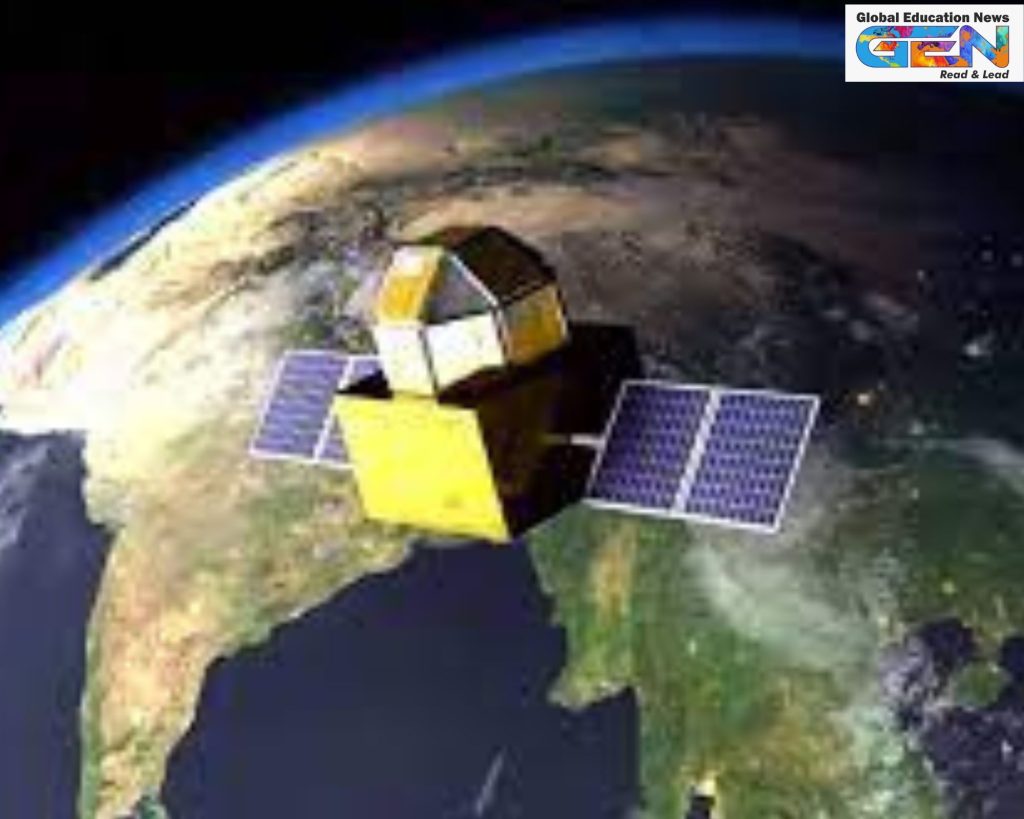
At Daksha’s heart are two satellites orbiting opposite sides of Earth, equipped with advanced gamma-ray telescopes that scan 1.81 million cubic megaparsecs—nearly five times NASA’s Fermi Gamma Ray Telescope and 13 times Swift. Featuring Medium Energy (ME) detectors with ~1,300 cm² effective area, Low Energy (LE) scintillators for 1-30 keV, and Cadmium Zinc Telluride (CZT) for high-resolution imaging, these satellites promise continuous all-sky monitoring from 1 keV to >1 MeV.
Key Points:
- Orbit: 650 km near-equatorial for optimal coverage and photon data downlink.
- Sensitivity: 10x better than existing missions for faint, distant sources; polarization capabilities to study transients accurately.
- Localization: In-orbit resolution of ~10° for gamma-ray bursts (GRBs), improving with brightness; ground processing enhances precision.
Cosmic Quests: Probing Black Holes, Neutron Stars, and Beyond
Daksha targets the universe’s most explosive events—gamma-ray bursts from neutron star mergers and black hole collisions, electromagnetic counterparts to gravitational waves. It could detect thousands of GRBs in five years, dozens of high-energy signals from mergers, and even probe primordial black holes (PBHs) via microlensing. Closer to home, it will monitor solar flares, terrestrial gamma-ray flashes, and X-rays from pulsars, offering clues to the Big Bang, dark matter, and cosmic expansion.
Key Points:
- Primary goals: Link gravitational waves (e.g., from LIGO) with light signals; study GRB origins and universe’s early moments.
- Broader impacts: Insights into exploding stars, high-altitude lightning, and potential dark matter signatures through PBH detection.
- Astrophysical edge: Addresses gaps in NASA’s aging fleet (last major gamma-ray telescope: 2008), filling a decade-long void.
Powerhouse Collaborations: Uniting India’s Scientific Elite
Daksha thrives on synergy, led by IIT Bombay’s STAR Lab in partnership with TIFR (instrument development), RRI, PRL, IUCAA, and ISRO centers. Prof. Bhalerao’s team integrates expertise from 75+ scientists, as detailed in a 2022 arXiv paper, fostering international opportunities in hardware and data analysis. This network not only builds the mission but accelerates India’s multi-messenger astrophysics efforts.
Key Points:
- Core partners: TIFR, RRI, PRL, IUCAA for detectors; ISRO for launch and operations.
- Student-driven innovation: STAR Lab engages 15-20 interdisciplinary researchers, with alumni like Gaurav Waratkar (now at Caltech) crediting it for career pivots.
- Global outreach: Open to collaborations, emphasizing community support via dakshasat.in petitions.
Student Spark: From Passion Projects to Global Impact
What sets Daksha apart is its vibrant ecosystem at IIT Bombay’s STAR Lab, where students toil passionately—even on holidays like Ganesh Chaturthi. From mechanical engineers turning astrophysicists, the lab’s open-door policy and mentorship ignite dreams. As Waratkar reflects, Daksha has fueled seven years of “plans, hopes, and dreams,” transforming raw enthusiasm into cutting-edge contributions.
Key Points:
- Hands-on involvement: Students prototype detectors and simulate orbits, bridging theory and practice.
- Mentorship magic: Prof. Bhalerao’s guidance draws diverse talent, fostering resilience and innovation.
- Legacy building: Prepares India’s next-gen scientists for missions like LIGO-India, blending education with exploration.
The Global Space Race: Why Daksha Can’t Wait
With NASA pivoting from gamma-ray tech since 2008 and China surging ahead, Daksha arrives at a pivotal moment. Prof. Bhalerao warns: “If we don’t act now, we’ll hand deep space to competitors.” India’s timely execution could secure leadership, especially with complementary projects like AstroSat and upcoming LIGO-India, amplifying multi-messenger discoveries.
Key Points:
- Competitive landscape: Fills void left by Fermi (2008); outpaces China’s advances in transient detection.
- Strategic urgency: Aligns with India’s space vision, boosting remittances from skilled exports and national pride.
- Broader ecosystem: Ties into global efforts like LIGO, enhancing India’s role in international astrophysics.
Roadblocks and Roadmap: Approval Hurdles and Launch Timeline
Despite ISRO’s technical nod in 2022, Daksha awaits full financial and policy greenlight—stalled for over 2.5 years. Proof-of-concept advances with seed funds, but experts urge swift action. If approved today, satellites could launch in three years, delivering a five-year mission of groundbreaking data.
Key Points:
- Current status: Meets all tech requirements; funding pending as of September 2025.
- Timeline: Build phase post-approval: 3 years; operational life: 5 years for thousands of detections.
- Call to action: Community petitions on dakshasat.in to push for clearance.
Dawn of a New Era: Daksha’s Lasting Legacy
Daksha isn’t merely a mission—it’s India’s cosmic manifesto, merging youthful zeal, institutional might, and bold science to decode the universe. As Prof. Bhalerao envisions, it’s time to be “world-class.” With approval on the horizon, Daksha promises to etch India’s name among space pioneers, inspiring generations to gaze beyond the stars.
Key Points:
- Transformative potential: Positions India as a deep space leader, answering Big Bang queries and beyond.
- Inclusive innovation: Democratizes space research, empowering students and collaborators nationwide.
- Future horizon: Paves way for more missions, solidifying India’s $3 trillion space economy ambitions.