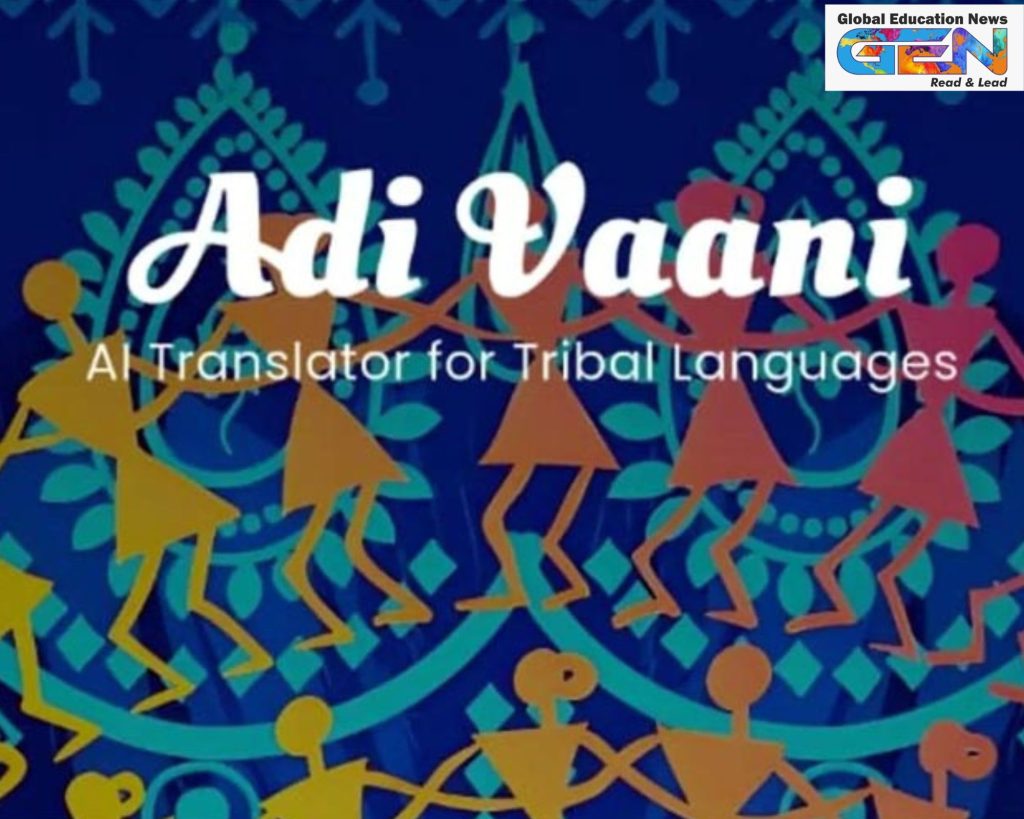
On September 1, 2025, the Ministry of Tribal Affairs unveiled the Beta version of Adi Vaani, a groundbreaking AI-powered translator designed to safeguard and promote India’s 461 tribal languages, including 81 vulnerable and 42 critically endangered dialects. Developed under the Janjatiya Gaurav Varsh, this pioneering tool, led by IIT Delhi in collaboration with top institutes and tribal communities, marks a significant step toward linguistic preservation and inclusive development. By enabling real-time translation, digital literacy, and access to government services, Adi Vaani aligns with Digital India, Ek Bharat Shreshtha Bharat, and PM JANMAN, ensuring tribal voices are heard in India’s technological revolution. Here’s an in-depth look at this transformative initiative.
Preserving India’s Linguistic Heritage
India’s tribal languages, spoken by over 100 million people across 700+ communities, are a vital part of its cultural fabric. However, with 123 languages at risk of extinction (per UNESCO’s 2024 Atlas), urgent action was needed. Adi Vaani addresses this crisis by digitizing and translating tribal dialects, ensuring their survival for future generations.
- Cultural Equity: The platform promotes linguistic diversity, reflecting India’s constitutional commitment to inclusivity under Article 29.
- Community-Driven: Over 5,000 tribal contributors from states like Odisha, Jharkhand, and Chhattisgarh provided linguistic data, ensuring cultural accuracy.
- Scalable Preservation: By creating bilingual dictionaries and cultural repositories, Adi Vaani safeguards folklore, oral traditions, and manuscripts.
How Adi Vaani Works: AI at the Heart
Developed by a consortium including IIT Delhi, BITS Pilani, IIIT Hyderabad, and IIIT Nava Raipur, alongside Tribal Research Institutes (TRIs), Adi Vaani leverages advanced AI models like IndicTrans2 and No Language Left Behind (NLLB). These technologies enable seamless translation between tribal languages, Hindi, and English.
- Multimodal Capabilities: The platform supports text-to-text, speech-to-speech, text-to-speech, and speech-to-text translations, making it accessible to diverse users.
- Optical Character Recognition (OCR): Digitizes traditional tribal manuscripts, preserving scripts like Ol Chiki (Santali) for future study.
- Subtitling and Outreach: Translates government announcements, such as health advisories on sickle cell anemia, into tribal languages for wider reach.
- Educational Tools: Interactive bilingual dictionaries and learning modules promote digital literacy among tribal youth.
Beta Phase: Focus on Four Key Languages
The Beta version of Adi Vaani supports four major tribal languages, with plans to expand to others like Kui and Garo:
- Santali (Odisha): Spoken by 7.6 million, it uses the Ol Chiki script and is vital for eastern India’s tribal identity.
- Bhili (Madhya Pradesh): With 10.4 million speakers, it’s one of India’s largest tribal languages.
- Mundari (Jharkhand): A key Austroasiatic language with 1.1 million speakers, at risk due to declining usage.
- Gondi (Chhattisgarh): Spoken by 2.9 million, it’s critical for central India’s tribal communities.
This phased rollout, covering four states with high tribal populations, ensures scalability and accuracy, with TRIs validating translations for cultural relevance.
Empowering Tribal Communities
Adi Vaani goes beyond translation, fostering inclusion across critical sectors:
- Education: Provides digital learning resources in tribal languages, boosting literacy rates (currently 59% among tribal populations, per 2021 Census).
- Healthcare: Translates medical advisories, enabling better access to schemes like Ayushman Bharat for conditions like sickle cell anemia, prevalent among tribes.
- Governance: Simplifies access to welfare schemes like PM JANMAN, with applications and certificates available in native languages.
- Civic Inclusion: Enhances participation in elections and public services through translated voter awareness campaigns and legal documents.
Alignment with National Missions
Adi Vaani supports India’s flagship initiatives, positioning the country as a global leader in AI for social impact:
- Digital India: Expands digital access to remote tribal areas, complementing BharatNet’s connectivity in 2.5 lakh gram panchayats.
- Ek Bharat Shreshtha Bharat: Promotes cultural unity by integrating tribal languages into mainstream digital platforms.
- PM JANMAN: Supports the welfare of Particularly Vulnerable Tribal Groups (PVTGs) through targeted service delivery.
- NEP 2020: Aligns with the National Education Policy’s focus on mother tongue-based education for inclusive learning.
Challenges and Future Roadmap
While Adi Vaani is a game-changer, challenges remain in ensuring its widespread adoption and scalability:
- Digital Access: Over 60% of tribal households lack smartphones or internet access, requiring integration with Common Service Centres (CSCs).
- Language Expansion: Scaling to cover all 461 tribal languages, especially critically endangered ones, demands significant resources and data.
- Community Training: Digital literacy programs are needed to empower tribal users to navigate the platform effectively.
Future updates will include voice-based interfaces in regional dialects and AI-driven chatbots for real-time assistance, ensuring inclusivity for non-literate users.