The Kaleshwaram Lift Irrigation Project (KLIP), envisioned as a lifeline for Telangana’s farmers, has turned into one of India’s largest infrastructure scandals, with the Justice PC Ghose Commission exposing rampant irregularities in its planning, design, and execution. Tabled in the Telangana Legislative Assembly on August 31, 2025, the 665-page report holds former Chief Minister K. Chandrashekar Rao (KCR), former Irrigation Minister T. Harish Rao, and others accountable for a “colossal waste of public money” costing over ₹1.47 lakh crore. This article delves into the commission’s findings, the project’s failures, and the political storm it has ignited, shedding light on a critical moment for Telangana’s governance.
The Kaleshwaram Project: A Costly Vision Gone Wrong
Launched by the Bharat Rashtra Samithi (BRS) government, the Kaleshwaram project aimed to transform Telangana’s agriculture by lifting water from the Godavari River to irrigate millions of acres and supply drinking water. However, structural failures, financial mismanagement, and procedural violations have overshadowed its legacy.
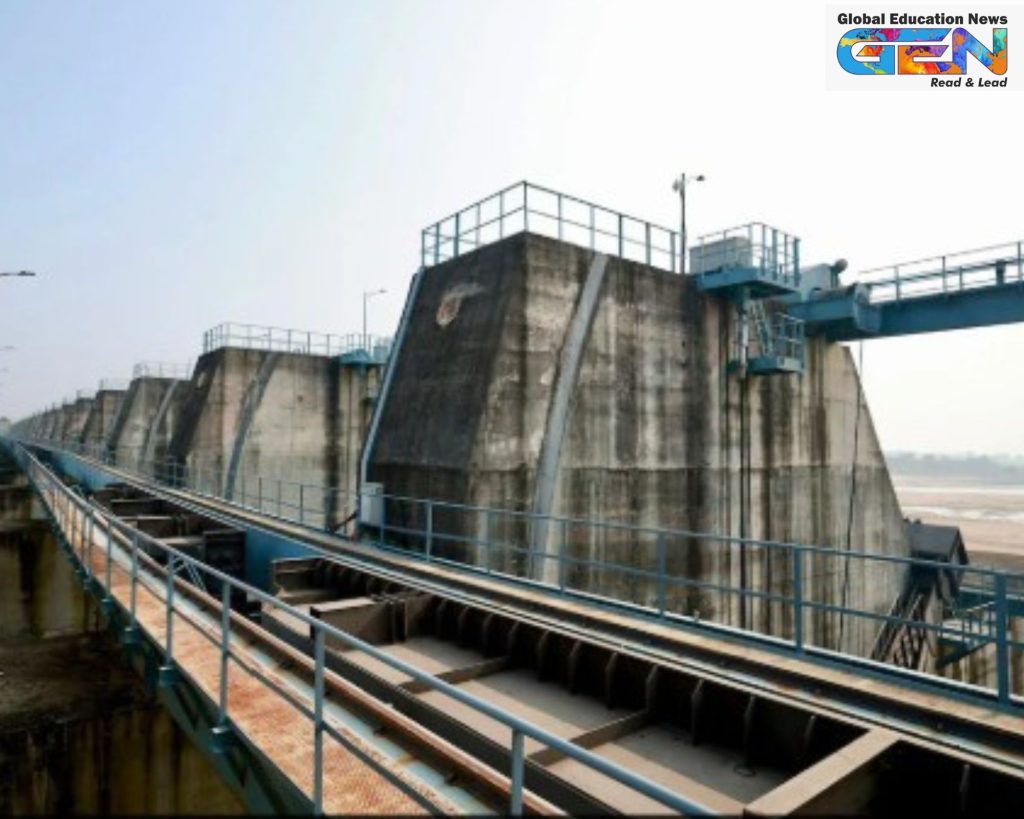
- Project Scope: Designed to lift 195 tmcft of water annually, the project involved constructing three barrages at Medigadda, Annaram, and Sundilla, alongside extensive canal networks and reservoirs.
- Cost Escalation: Initially budgeted at ₹38,500 crore, costs skyrocketed to ₹1.47 lakh crore by 2025, with only 20.2 tmcft of water lifted annually, irrigating less than 2 lakh acres.
- Structural Failures: The Medigadda barrage suffered significant damage in October 2023, with sinking piers and leakages in Annaram and Sundilla, rendering the barrages inoperable for over 20 months.
The PC Ghose Commission: A Deep Dive into Irregularities
Formed on March 14, 2024, under retired Supreme Court Justice Pinaki Chandra Ghose, the commission conducted a 15-month probe, examining 115 witnesses and producing a 665-page report submitted on July 31, 2025. The investigation focused on planning, design, construction, quality control, and maintenance of the three barrages.
- Direct Accountability: The report holds KCR “directly and vicariously accountable” for irregularities, citing his “sole and individual decision” to shift the project site from Tummidi Hatti to Medigadda without Cabinet approval.
- Suppressed Expert Advice: A 2015 expert committee rejected Medigadda due to high costs and time constraints, recommending Vemanapally instead, but KCR and officials suppressed these findings.
- Procedural Violations: The project bypassed mandatory Cabinet approvals and Central Water Commission (CWC) vetting, with construction starting before a Detailed Project Report (DPR) was finalized.
Financial Mismanagement: A Burden on Telangana
The commission exposed staggering financial irregularities, accusing the BRS government of saddling Telangana with unsustainable debt through off-budget borrowings.
- High-Interest Loans: The Kaleshwaram Irrigation Project Corporation Limited (KIPCL) borrowed ₹87,449 crore, with ₹29,737 crore repaid and ₹64,212 crore in principal plus ₹41,638 crore in interest still owed as of September 2025.
- Unjustified Costs: ₹1,342 crore was paid due to price escalation clauses added post-tender, and ₹612 crore was disbursed as inflated contractor benefits.
- Collusion with Contractors: Agencies like L&T, Afcons, and Navayuga were found to have acted “hand in glove” with project authorities, with the commission recommending they bear repair costs.
Political Fallout and Legal Challenges
The report’s tabling in the Assembly on August 31, 2025, sparked heated debates, with Irrigation Minister N. Uttam Kumar Reddy accusing the BRS of “looting public money.” The opposition BRS, led by KCR and Harish Rao, dismissed the report as a “politically motivated” vendetta by the Congress government.
- High Court Petitions: KCR and Harish Rao filed writ petitions in the Telangana High Court to quash the report, arguing it violated the Commission of Inquiry Act and principles of natural justice. On August 22, the court declined interim relief but directed the government to file counter-affidavits within four weeks.
- Assembly Uproar: BRS legislators protested Reddy’s claim that six Medigadda pillars collapsed, clarifying only two were sagging, highlighting tensions over the report’s accuracy.
- Government Response: Chief Minister A. Revanth Reddy cited a 2015 letter from then-Union Minister Uma Bharti, confirming sufficient water at Tummidi Hatti, to argue the Medigadda shift was driven by ulterior motives.
Key Individuals Implicated
The commission named several key figures alongside KCR for their roles in the irregularities:
- T. Harish Rao: As Irrigation Minister, he was criticized for approving works without proper scrutiny and ignoring expert warnings.
- Eatala Rajender: The former Finance Minister was faulted for deferring financial oversight to KIPCL despite being on its board.
- C. Muralidhar Rao: The then Engineer-in-Chief was caught by the Anti-Corruption Bureau (ACB) for misrepresenting facts to the CWC.
- Officials: Senior bureaucrats like Smita Sabharwal and SK Joshi were accused of suppressing critical reports, enabling unauthorized decisions.
Recommendations and Next Steps
The commission proposed stringent measures to address the irregularities and prevent future lapses:
- Legal Action: Recommended severe legal action against implicated officials and engineers for misleading the commission and facilitating illegal decisions.
- Cost Recovery: Suggested recovering ₹677.67 lakh paid to WAPCOS and holding contractors like L&T liable for barrage repairs at their own cost.
- Technical Oversight: Urged forming a technical committee to oversee repairs and ensure the project’s sustainability, following National Dam Safety Authority (NDSA) guidelines.
- Future Governance: Emphasized the need for independent oversight and public disclosure of technical assessments to avoid similar scandals.
Why This Matters for Telangana
The Kaleshwaram project, once hailed as a game-changer for Telangana’s farmers, has become a symbol of mismanagement, with only 20% of its intended irrigation achieved despite massive expenditure. The commission’s findings highlight systemic weaknesses in infrastructure governance, from suppressed expert advice to unchecked financial decisions. As the Congress government plans a CID probe and further repairs, the report sets a precedent for accountability in mega-projects.
A Call for Accountability
The PC Ghose Commission report is a watershed moment for Telangana, exposing how political overreach and administrative lapses turned a visionary project into a financial and structural disaster. As Chief Minister Revanth Reddy emphasized, “The Kaleshwaram project was meant to be a lifeline for our farmers, but it has become a symbol of mismanagement.” With the government poised to act on the report’s recommendations, Telangana stands at a crossroads, balancing justice for past wrongs with the urgent need to restore the project’s functionality. Stay informed and join the call for transparent, accountable governance in India’s infrastructure future.