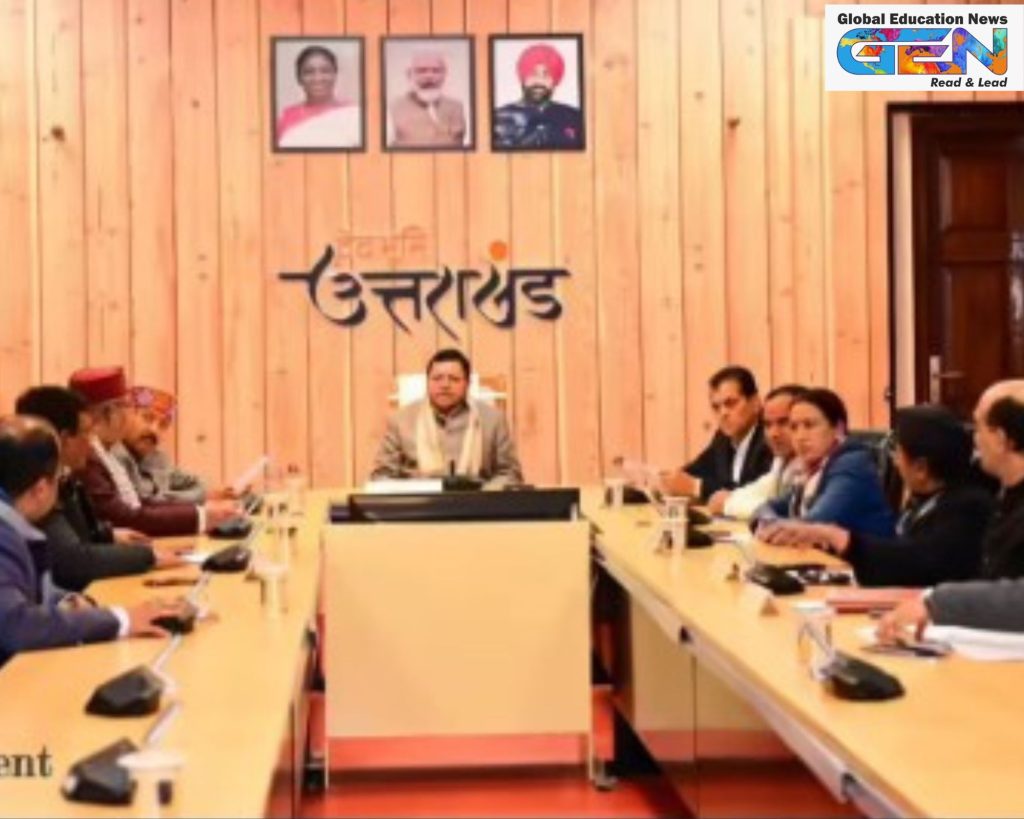
On August 20, 2025, the Uttarakhand Legislative Assembly passed the Uttarakhand Minority Educational Institutions Bill, 2025, a pioneering law that extends minority status benefits to educational institutions run by Sikh, Jain, Buddhist, Christian, and Parsi communities, in addition to Muslims. Previously, only Muslim-run institutions enjoyed this status. Introduced on August 19, 2025, during the monsoon session in Gairsain, the bill replaces the Uttarakhand Madrasa Education Board Act, 2016, and the Uttarakhand Non-Government Arabic and Persian Madrasa Recognition Rules, 2019, effective July 1, 2026. This move marks Uttarakhand as the first state in India to establish a uniform recognition process for minority educational institutions across multiple communities.
Key Points:
- Bill passed on August 20, 2025, in the Uttarakhand Assembly.
- Extends minority status to Sikh, Jain, Buddhist, Christian, Parsi, and Muslim institutions.
- Repeals Madrasa Board Act, 2016, and related rules by July 1, 2026.
Key Features of the Bill
The Uttarakhand Minority Educational Institutions Bill, 2025, introduces a structured framework to ensure transparency, accountability, and educational excellence. Its core provisions include:
- Formation of Uttarakhand State Authority for Minority Education (USAME): A new regulatory body will oversee the recognition of minority educational institutions, replacing the Uttarakhand Madrasa Board.
- Mandatory Recognition: All institutions run by Muslim, Sikh, Jain, Christian, Buddhist, or Parsi communities must obtain recognition from USAME to qualify as minority institutions.
- Educational Standards: Institutions must adhere to the Uttarakhand Board of School Education standards, ensuring fair and transparent student evaluations.
- Conditions for Recognition: Institutions must be registered under the Societies Act, Trust Act, or Companies Act, with assets (land, bank accounts) in the institution’s name. Recognition can be revoked for financial mismanagement, lack of transparency, or activities against social harmony.
- Language Inclusion: The bill permits the teaching of Gurmukhi and Pali in recognized minority institutions, enriching cultural education.
Key Points:
- USAME replaces the Madrasa Board to regulate minority institutions.
- Institutions must meet strict criteria for recognition, with revocation for non-compliance.
- Supports teaching of Gurmukhi and Pali, enhancing cultural diversity.
Impact on Minority Communities
The bill expands minority status benefits—such as autonomy in administration, fee structures, and curriculum design—to a broader range of communities, fostering inclusivity. Mufti Shamoon Qazmi, president of the Uttarakhand Madrasa Board, welcomed the decision, stating it would ensure quality education while preserving religious education for Muslims. By July 1, 2026, all 452 recognized madrasas in Uttarakhand must affiliate with the Uttarakhand Education Board and apply for minority status under USAME, or risk closure. The legislation aligns with the BJP’s motto of “Sabka Saath, Sabka Vikas” (Together with All, Development for All), as stated by Chief Minister Pushkar Singh Dhami.
Key Points:
- Benefits extended to Sikh, Jain, Buddhist, Christian, Parsi communities, previously limited to Muslims.
- 452 madrasas must seek affiliation by July 1, 2026, or face closure.
- Aims to promote inclusivity and educational excellence across communities.
Controversies and Opposition
The bill faced significant opposition during its passage, with Congress leaders, including former CM Harish Rawat, criticizing it as politically motivated. Some Muslim groups expressed concerns that repealing the Madrasa Board Act could erode constitutional rights under Articles 26 and 30, which protect the management of religious and educational institutions. Rawat advocated for modernizing madrasas rather than abolishing the board, arguing they are vital for religious scholarship. The opposition also raised issues about law and order and alleged electoral irregularities during the session, leading to protests and a sit-in outside the Assembly.
Chief Minister Pushkar Singh Dhami defended the bill, citing irregularities in madrasa management, such as issues with central scholarships and mid-day meals, and emphasized its role in ensuring transparency and fair treatment for all minorities. State BJP chief Mahendra Bhatt argued that the bill addresses past scams in minority institutions and safeguards constitutional rights.
Key Points:
- Congress and Muslim groups fear erosion of Articles 26 and 30 rights.
- BJP defends the bill as a step toward transparency and inclusivity.
- Opposition protests highlighted broader concerns about governance and electoral fairness.
Context and Background
Until now, only Muslim-run institutions enjoyed minority status in Uttarakhand, governed by the Madrasa Board Act, 2016, enacted under the Congress-led government of Harish Rawat. The new bill follows a madrasa-sealing drive in early 2025 targeting unrecognized institutions, reflecting the state’s push to regulate and standardize minority education. Uttarakhand’s move is notable as the first state to implement a Uniform Civil Code (UCC), and this bill mirrors that approach by bringing all minority institutions under a single regulatory framework.
Key Points:
- Repeals Madrasa Board Act, 2016, following a madrasa-sealing drive in 2025.
- Aligns with Uttarakhand’s UCC framework for uniform regulation.
- Builds on the state’s history of educational reform for accountability.
Looking Ahead: Implementation and Challenges
The Uttarakhand State Authority for Minority Education (USAME) will play a critical role in overseeing the transition, ensuring compliance with educational standards and monitoring institutional operations. Challenges include addressing opposition concerns, ensuring equitable access to recognition for all communities, and maintaining religious education alongside modern curricula. The inclusion of Gurmukhi and Pali studies is expected to enhance cultural education, but institutions must navigate stringent criteria to secure and retain minority status.
Key Points:
- USAME to monitor compliance and ensure educational quality.
- Challenges include addressing opposition concerns and ensuring equitable recognition.
- Gurmukhi and Pali studies to enrich cultural education in minority institutions.