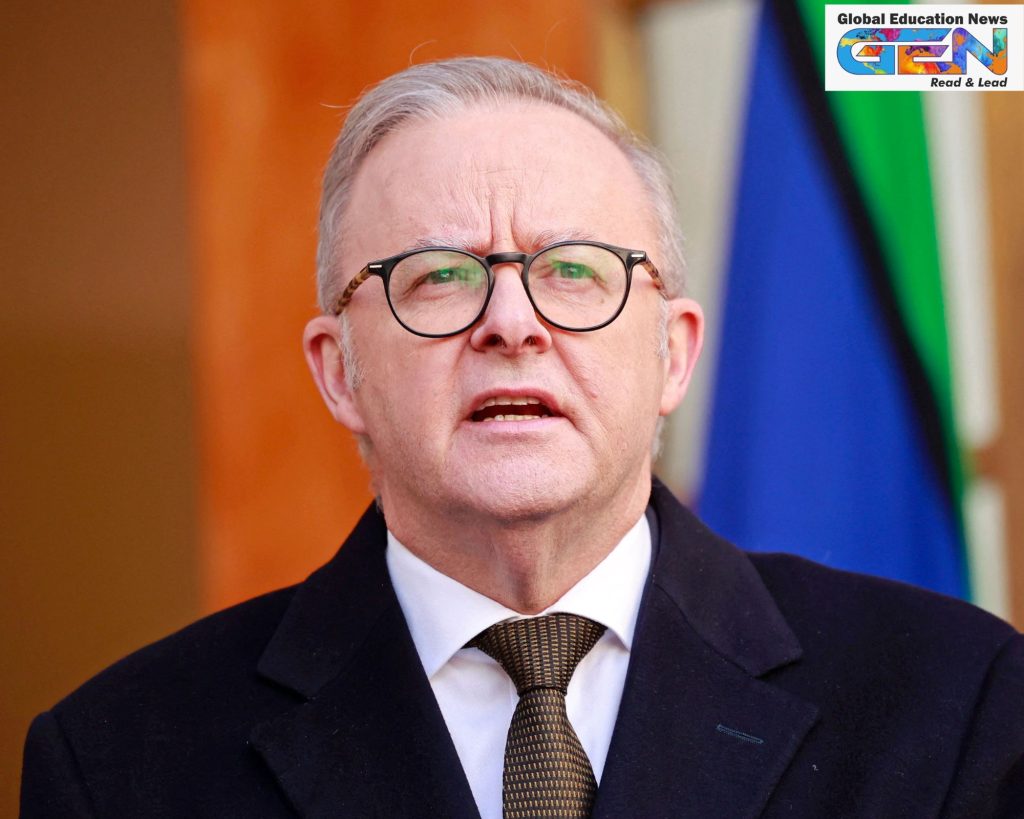
On August 11, 2025, Australian Prime Minister Anthony Albanese announced that Australia will formally recognize the State of Palestine at the 80th United Nations General Assembly (UNGA) in September 2025. This historic decision marks a pivotal shift in Australia’s stance on the Israeli-Palestinian conflict, aiming to bolster international support for a two-state solution, secure a ceasefire in Gaza, and facilitate the release of hostages.
Key Points:
- Recognition Date: Set for UNGA in September 2025.
- Objective: Promote peace through a two-state framework and end violence in Gaza.
- Global Context: Aligns with over 138 UN member states already recognizing Palestine.
- Announcement: Made by PM Albanese, emphasizing a political solution to the conflict.
Conditions for Recognition
Australia’s recognition comes with clear conditions to ensure sustainable governance and peace. The Palestinian Authority (PA) must meet specific requirements to align with international expectations for statehood.
Key Points:
- No Role for Hamas: The militant group must be excluded from future Palestinian governance.
- Governance Reforms: The PA must implement transparent and effective administrative changes.
- General Elections: Free and fair elections to establish legitimate leadership.
- Demilitarization: The proposed Palestinian state must commit to non-militarized status.
These conditions aim to foster a stable, democratic Palestinian state capable of peaceful coexistence with Israel.
Why This Move Matters
The decision is a response to growing frustration with Israel’s policies, including illegal settlement expansion, threats of Gaza annexation, and Prime Minister Benjamin Netanyahu’s rejection of Palestinian statehood. Australia joins a wave of Western nations, including France, Britain, and Canada, in recognizing Palestine, adding diplomatic pressure on Israel to resume peace talks.
Key Points:
- Diplomatic Momentum: Strengthens global support for Palestinian statehood, with 138+ UN members already on board.
- Pressure on Israel: Condemns settlement expansion and calls for a halt to military control over Gaza.
- Palestinian Reform: Incentivizes the PA to modernize governance and exclude militant groups like Hamas.
- Humanitarian Focus: Supports a Gaza ceasefire and addresses the region’s humanitarian crisis.
Global and Regional Reactions
The announcement has sparked varied responses, reflecting the complexity of the Israeli-Palestinian conflict:
Key Points:
- Israel: Expected to oppose the move, citing security concerns and viewing recognition as undermining its position.
- Arab League: Welcomes Australia’s decision, aligning with calls to end Hamas’s influence in Gaza.
- New Zealand: Foreign Minister Winston Peters indicated a review of its stance, potentially following Australia’s lead.
- Global Impact: Adds to international pressure on Israel amid criticism of its handling of Gaza’s humanitarian crisis.
Historical Context: A Long-Standing Conflict
The Israeli-Palestinian conflict, spanning over seven decades, centers on disputes over territory, sovereignty, and security. The two-state solution, endorsed by the UN, Arab League, and many Western powers, envisions independent Israeli and Palestinian states living side by side. Australia’s recognition builds on this framework, aiming to break the cycle of violence and foster lasting peace.
Key Points:
- Conflict Roots: Decades of disputes over land, borders, and self-determination.
- Two-State Solution: A globally backed framework for peace, now supported by Australia.
- Western Shift: Increasing recognition of Palestine by nations like France, Britain, and Canada.
- UN Role: Australia’s move at UNGA 2025 will amplify calls for a negotiated settlement.
What’s Next for Australia and Palestine?
Australia’s recognition is a strategic step to influence Middle East diplomacy. By setting conditions like Hamas exclusion and PA reforms, it aims to create a viable Palestinian state while addressing Israel’s security concerns. The move also positions Australia as a proactive player in global peace efforts, potentially inspiring other nations to act.
Key Points:
- UNGA Spotlight: September 2025 will see Australia formally table its recognition.
- Peace Talks: Increased pressure on Israel and Palestine to resume negotiations.
- Global Ripple Effect: Encourages other nations, like New Zealand, to consider recognition.
- Local Support: Pro-Palestinian rallies, like those on Sydney’s Harbour Bridge, reflect growing public backing.
How to Stay Informed
To follow this historic development, keep an eye on official updates and trusted sources:
Key Points:
- UNGA Updates: Track proceedings on un.org for real-time developments.
- News Platforms: Follow trusted sites like sarkariresult.com for global affairs coverage.
- Australian Government: Check dfat.gov.au for official statements on foreign policy.
- Engage Locally: Join community discussions or forums to understand regional perspectives.
A Step Toward Middle East Peace
Australia’s decision to recognize the State of Palestine at UNGA 2025 is a bold move toward a two-state solution and lasting peace. By condemning illegal settlements, supporting Gaza’s humanitarian needs, and pushing for Palestinian reforms, Australia is paving the way for a more stable Middle East. As the world watches, this historic step could redefine global diplomacy and inspire hope for millions.