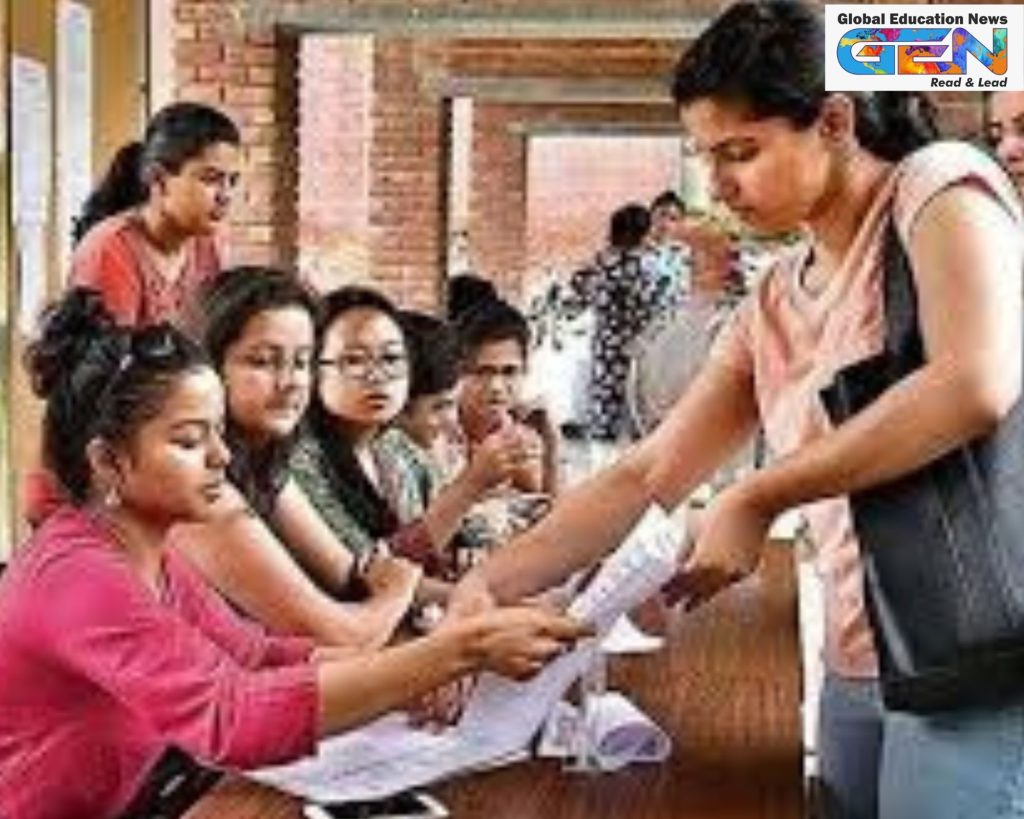
The introduction of the Common University Entrance Test (CUET) in 2022 has reshaped the landscape of undergraduate admissions at Delhi University (DU), with government data revealing a significant milestone: more women than men have been admitted each year since its launch. This trend marks a pivotal step toward gender equity in one of India’s most prestigious institutions.
Key Points:
- Female admissions surpassed male admissions annually since 2022.
- Women’s enrollment at DU: 34,010 (2022-23), 36,126 (2023-24), 39,242 (2024-25).
- Male enrollment: 30,662 (2022-23), 32,425 (2023-24), 33,124 (2024-25).
The Power of CUET: Leveling the Playing Field
The CUET UG, managed by the National Testing Agency (NTA), has revolutionized access to higher education by reducing reliance on board exam percentages, which often vary across states and boards. This standardized test has enabled students from diverse backgrounds, particularly women, to compete on an equal footing, boosting female participation significantly.
Key Points:
- Female CUET applications grew from 4.29 lakh (2022-23) to 5.94 lakh (2024-25).
- CUET spans 240 institutions, up from 90 in its first year.
- Experts credit CUET for widening access for women from varied regions.
Rising Female Enrollment Across Delhi-NCR
The impact of CUET extends beyond DU, with the All India Survey on Higher Education (AISHE) reporting a rise in female undergraduate enrollment across Delhi-NCR, from 4.09 lakh in 2020-21 to 4.91 lakh in 2022-23. The Annual Status of Higher Education (ASHE) 2024 further highlights Delhi’s reversal of the gender gap, with female Gross Enrolment Ratio (GER) at 49.7% compared to 48.3% for males in 2021-22.
Key Points:
- Female UG enrollment in Delhi-NCR rose to 4.91 lakh in 2022-23.
- Female GER (49.7%) surpassed male GER (48.3%) in 2021-22.
- CUET contributes to broader gender equity in higher education.
Popular Courses and College Preferences
Delhi University’s Common Seat Allocation System (CSAS) saw over 3.05 lakh candidates vying for 71,642 seats across 79 undergraduate programs in 69 colleges in 2024-25. Women made up 53.06% of first-preference applicants, with high demand for courses like BCom (Hons) and Political Science (Hons). Top colleges such as Shri Ram College of Commerce (SRCC), Hindu College, and Hansraj College remain favorites among aspirants.
Key Points:
- Over 3.05 lakh CSAS registrations for 71,642 seats in 2024-25.
- Women comprised 53.06% of first-preference applicants.
- BCom (Hons) and Political Science (Hons) among top course choices.
Inclusive Policies and Scholarships for Women
DU’s commitment to gender equity is bolstered by initiatives like the single-girl child quota, extended to postgraduate programs from the 2025-26 session. Other inclusive categories include quotas for orphans, PwBD, armed forces wards, sports, and extracurricular activities (ECA). National schemes like the UGC’s Development of Women’s Studies, AICTE’s Pragati Scholarship, and DST’s WISE KIRAN and SERB POWER programs further support women in technical and STEM fields.
Key Points:
- Single-girl child quota now applies to PG programs from 2025-26.
- DU offers quotas for diverse groups to promote inclusivity.
- National scholarships encourage women in STEM and research.
Challenges to Overcome
Despite the progress, challenges persist. Experts note that women from rural areas often face barriers such as limited access to digital resources and coaching facilities for online exams like CUET. Cultural factors, including lower family investment in daughters’ education, can also hinder participation, underscoring the need for targeted interventions.
Key Points:
- Rural women face challenges with digital access and coaching.
- Cultural barriers limit family support for girls’ education.
- Experts call for enhanced resources to bridge the gap.
A Bright Future for Women in Higher Education
The rise in female admissions at DU and across Delhi-NCR reflects a transformative shift driven by CUET’s standardized approach. By fostering inclusivity and reducing disparities, CUET is empowering women to pursue their academic and career aspirations. As initiatives like scholarships and quotas continue to evolve, India’s higher education system is poised to become a global model for gender equity.
Key Points:
- CUET’s standardized format promotes fairness and access.
- Ongoing initiatives aim to sustain and expand female participation.
- Delhi University sets a benchmark for gender-inclusive education.