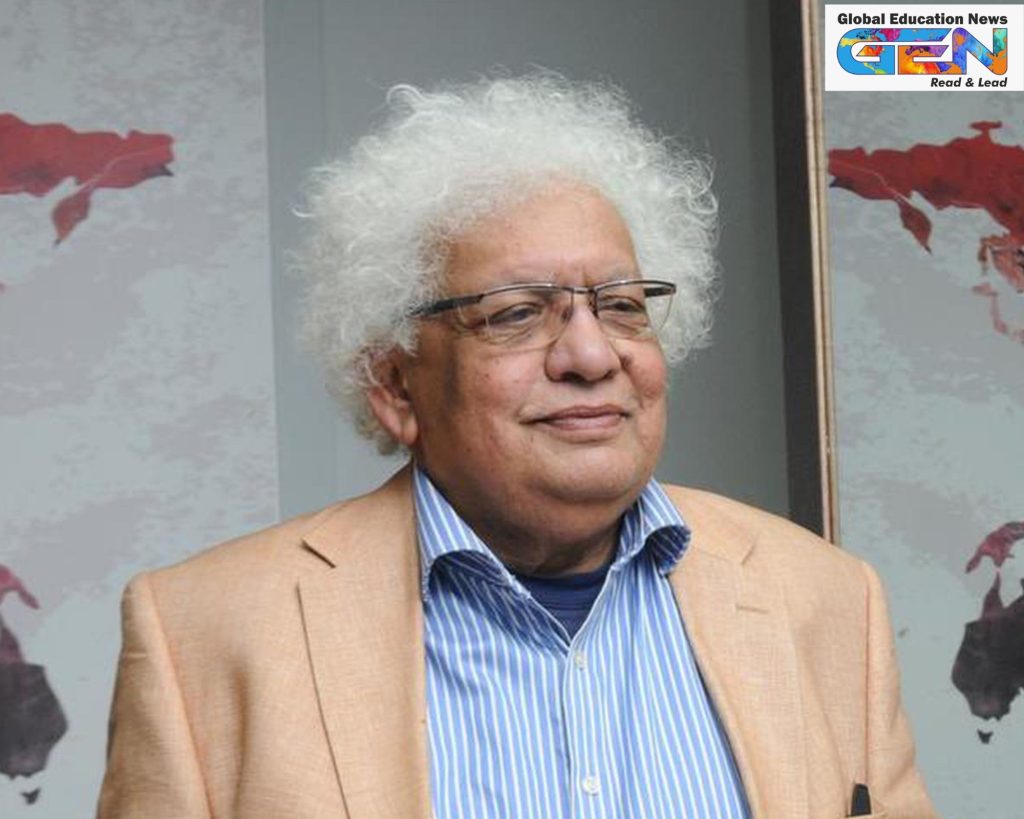
Lord Meghnad Desai, a towering figure in economics and public policy, passed away on July 29, 2025, at the age of 85 in a hospital in Gurugram, India, following a brief illness. His remarkable career spanned over six decades, blending academic rigor, political influence, and cultural commentary. As a Professor Emeritus at the London School of Economics (LSE) and a former Labour peer in the UK House of Lords, Desai’s contributions to development economics, Marxian theory, and India-UK relations left a lasting legacy. His passing, mourned by figures like PM Narendra Modi and British diplomats, marks the end of an era for global economic thought and cross-cultural dialogue.
- Lord Meghnad Desai, eminent economist and UK House of Lords peer, died on July 29, 2025, at 85.
- Born in Vadodara, Gujarat, in 1940, he bridged India and the UK through academia and politics.
- Known for his work in development economics, Marxian theory, and India-UK relations.
- His death in Gurugram (not London, as initially reported) prompted global tributes, including from PM Narendra Modi.
Early Life and Academic Journey
Key Points:
- Born in Vadodara, Gujarat, on July 10, 1940, Desai showed early brilliance, starting secondary school at age seven.
- Earned bachelor’s and master’s degrees in economics from the University of Mumbai.
- Completed a PhD at the University of Pennsylvania in 1963, focusing on development economics.
- Joined LSE in 1965, becoming Professor of Economics in 1983 and Emeritus Professor in 2003.
Desai’s intellectual journey began in Vadodara, where his curiosity about social inequality shaped his career. After excelling at Ramnarain Ruia College and the University of Mumbai, he secured a scholarship to the University of Pennsylvania, completing his PhD in just three years. His focus on macroeconomic challenges in underdeveloped nations laid the foundation for his lifelong work. In 1965, he joined LSE, where he taught for nearly four decades, mentoring generations and shaping global economic discourse.
Academic Contributions and LSE Leadership
Key Points:
- Founded the Centre for the Study of Global Governance at LSE in 1992.
- Directed LSE’s Development Studies Institute from 1990 to 1995.
- Published over 200 scholarly articles and books like Marxian Economic Theory (1973) and Marx’s Revenge (2002).
- Blended Marxist insights with market reform advocacy, influencing global economic thought.
At LSE, Desai was a trailblazer, teaching econometrics, macroeconomics, and development economics with an unconventional approach, often starting with Marxist theorist Piero Sraffa. He founded the Centre for the Study of Global Governance in 1992 to explore post-colonial transitions and global power shifts. As director of the Development Studies Institute, he championed interdisciplinary research. His prolific output, including Marx’s Revenge, argued that globalization could revive socialism, earning praise for its prescient analysis of capitalism’s evolution. Desai’s work, including co-editing the Journal of Applied Econometrics (1984–1991), remains influential in academia.
Political Engagement and House of Lords Tenure
Key Points:
- Appointed life peer as Lord Desai of St Clement Danes in 1991, initially with the Labour Party.
- Resigned from Labour in 2020 over antisemitism concerns, continuing as a crossbench peer.
- Focused on India-UK relations, development aid, immigration, and globalization’s impact.
- Played a key role in erecting the Mahatma Gandhi statue at Parliament Square in 2015.
Desai’s political career was as impactful as his academic one. Elevated to the House of Lords in 1991, he served as a Labour peer and chaired the party from 1986 to 1992. His resignation from Labour in 2020, citing its handling of antisemitism, reflected his commitment to principle over party loyalty. As a crossbencher, he advocated for India-UK relations, development aid, and policies addressing globalization’s effects on vulnerable communities. His work with the Gandhi Statue Memorial Trust, culminating in the 2015 Mahatma Gandhi statue unveiling in London, symbolized his dedication to cultural and diplomatic ties.
Cultural and Intellectual Contributions
Key Points:
- Authored diverse works, including India Grows at Night (2013) and Nehru’s Hero: Dilip Kumar (2004).
- Regular columnist for Tribune, Business Standard, and Indian Express, simplifying complex issues.
- Founded the Meghnad Desai Academy of Economics in Mumbai for applied economic learning.
- Contributed to India’s economic liberalization debates, advocating democratic capitalism.
Desai’s intellectual versatility extended beyond economics. His books explored cultural identity (The Rediscovery of India), Bollywood (Nehru’s Hero: Dilip Kumar), and political economy (The Poverty of Political Economy). A passionate cinephile, he equated Dilip Kumar’s talent to global acting legends, calling the biography his “greatest achievement.” As a columnist, he engaged millions on economic reforms and political challenges. In Mumbai, he established the Meghnad Desai Academy of Economics, emphasizing practical learning over rote methods. His advocacy for democratic capitalism with strong institutions shaped India’s economic liberalization discourse.
Recognition and Global Impact
Key Points:
- Awarded India’s Padma Bhushan in 2008 for public affairs and economics.
- Held advisory roles with the United Nations and World Bank.
- Received honorary doctorates and was a mentor to global policymakers and students.
- Championed India-UK ties, earning praise from PM Modi and British diplomats.
Desai’s contributions earned him the Padma Bhushan in 2008, India’s third-highest civilian honor, alongside honorary doctorates from global universities. His advisory roles with the UN and World Bank amplified his influence on international development policy. PM Narendra Modi lauded his “valuable insights” and role in deepening India-UK ties, while the High Commission of India in London called him a “thought leader” whose legacy endures through initiatives like the Gandhi statue. Desai’s approachable style made him a beloved mentor and public intellectual.
Tributes and Personal Legacy
Key Points:
- PM Modi, British diplomats, and LSE mourned Desai’s passing, praising his intellect and humanism.
- Wife Lady Kishwar Desai called him her “rockstar husband, larger than life.”
- Peers like Lord Karan Bilimoria and Rami Ranger highlighted his wit and contributions.
- Desai’s legacy bridges academia, politics, and cultural dialogue across continents.
Tributes poured in after Desai’s death. PM Modi expressed grief on X, noting his connection to Indian culture. Lady Kishwar Desai, his wife, described him as “indestructible” and “larger than life.” Lord Karan Bilimoria called him “truly iconic,” and the LSE community, led by Professor Larry Kramer, mourned a “cherished” figure. Desai’s multifaceted life—as a Marxist-turned-reformer, parliamentarian, and cultural commentator—leaves a legacy that continues to inspire scholars, policymakers, and students worldwide.
Addressing Source Discrepancies
Key Points:
- Most sources report Desai’s death in Gurugram, not London, after a brief illness.
- Age at death consistently cited as 85; one source incorrectly states 84.
- Cause of death not publicly disclosed, but reports suggest he passed peacefully.
While some sources, like GKToday and Economic Times, initially reported Desai’s death in London, others, including India Today, The Hindu, and Telangana Today, confirm he passed away in a Gurugram hospital following a health issue. The consensus across reliable sources establishes Gurugram as the correct location. His age is consistently reported as 85, except in Business Today, which likely erred in stating 84. The cause of death remains undisclosed, with reports indicating a peaceful passing surrounded by family.
Conclusion: A Lasting Intellectual and Cultural Bridge
Key Points:
- Desai’s work addressed inequality, globalization, and India’s development challenges.
- His independent thought and cultural contributions reshaped economic and political discourse.
- Legacy endures through LSE institutions, India-UK ties, and the Meghnad Desai Academy.
- Remains a model for blending scholarship, public service, and cultural pride.
Lord Meghnad Desai’s death on July 29, 2025, closes a chapter on a life that bridged India and the UK through economics, politics, and culture. His fearless intellect, from Marxist roots to market reform advocacy, tackled global challenges like inequality and fragile democracies. His establishment of LSE’s Centre for Global Governance, contributions to India’s economic liberalization, and cultural works like the Gandhi statue and Dilip Kumar biography reflect a legacy of intellectual courage and cross-cultural impact. Desai’s life inspires future generations to blend rigorous scholarship with public engagement and cultural pride.