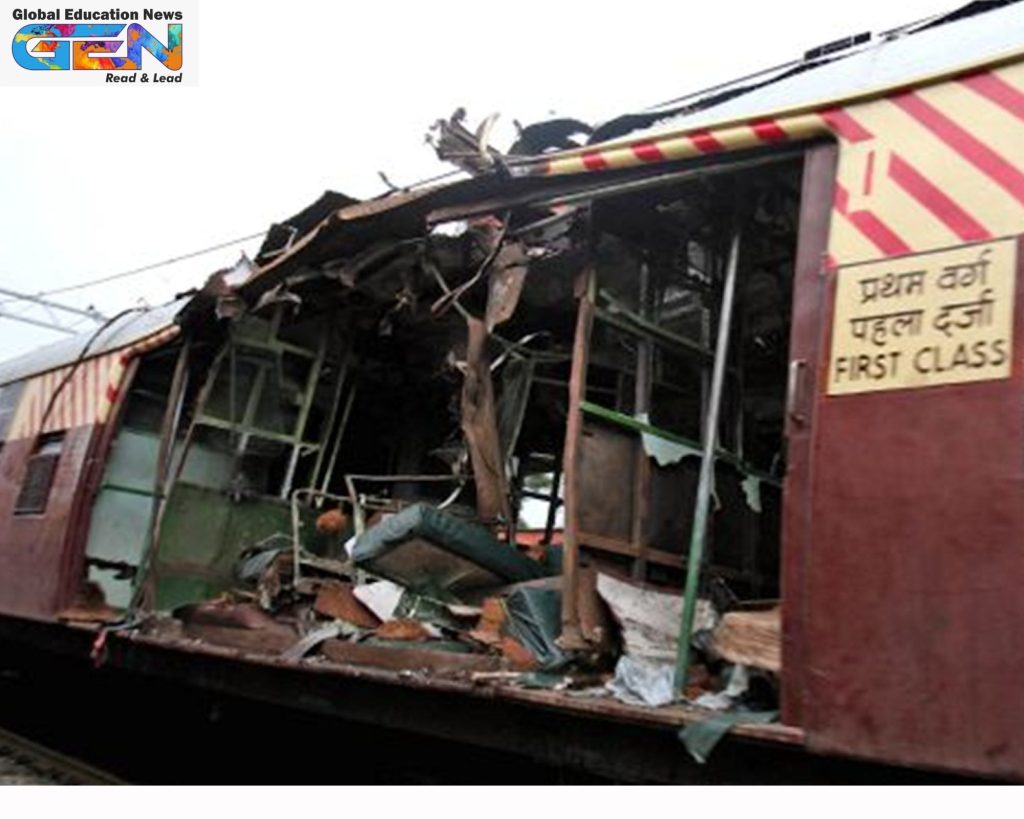
In a jaw-dropping decision, the Bombay High Court in 2025 overturned the convictions of 12 men accused in the 2006 Mumbai train blasts, a tragedy that killed 189 people and injured over 800. This landmark ruling, which contradicts the 2015 Maharashtra Control of Organised Crime Act (MCOCA) court verdict, shines a spotlight on custodial torture, flawed evidence, and procedural lapses. After sifting through 44,000 pages of evidence, the High Court’s verdict is a bold call for justice, shaking up India’s legal landscape.
- Bombay High Court acquitted 12 men convicted in the 2006 Mumbai train blasts in 2025.
- Overturned 2015 MCOCA court verdict after reviewing 44,000 pages of evidence.
- Raises questions about custodial torture, evidence reliability, and legal procedures.
Confessions Under Fire: Torture Exposed
Key Points:
- Court found confessional statements were extracted through torture.
- Confessions showed similar or copied content, undermining their truthfulness.
- 2015 MCOCA court had deemed confessions voluntary, dismissing torture claims.
The High Court delivered a scathing critique of the confessional statements used to convict the accused. Evidence showed these confessions were coerced through custodial torture, with identical or copied phrases raising red flags. The accused provided proof of physical abuse, which the court upheld. In stark contrast, the 2015 MCOCA court accepted these confessions as voluntary, rejecting torture allegations as baseless and untimely. This discrepancy exposes serious flaws in how confessions are handled in terror cases.
Eyewitness Testimony Crumbles
Key Points:
- Taxi drivers’ testimonies deemed unreliable due to delayed reporting.
- Witnesses identifying accused after four years lacked credible recall.
- One witness labeled a ‘stock witness’ with a history of police case involvement.
Eyewitness accounts, once a cornerstone of the prosecution’s case, fell apart under scrutiny. The High Court categorized witnesses into taxi drivers, bomb planters, bomb assemblers, and conspiracy planners, finding all unreliable. Taxi drivers reported sightings too late, with limited chances to observe the accused. Witnesses who identified suspects four years later were dismissed for lacking verifiable recall. A ‘stock witness’, frequently used in police cases, was discredited entirely. The 2015 MCOCA court, however, had trusted these accounts without question.
Call Data Records: A Missing Link
Key Points:
- Prosecution failed to produce call data records (CDRs) linking accused to Lashkar-e-Taiba.
- Destruction or non-production of CDRs led to adverse inference against prosecution.
- MCOCA court treated CDRs as inferential, not proof of crime scene presence.
The prosecution’s case took another hit over call data records (CDRs) allegedly tying the accused to Lashkar-e-Taiba and Pakistani mastermind Azam Cheema. The High Court noted the prosecution’s reluctance to present CDRs, with some destroyed or withheld, prompting an adverse inference against their case. The 2015 MCOCA court, however, viewed CDRs as supplementary, not definitive proof of the accused’s presence at crime scenes, highlighting a critical gap in evidence standards.
Test Identification Parade Flawed
Key Points:
- Test Identification Parade (TIP) officer Shashikant Barve lacked valid authority.
- Barve’s Special Executive Officer (SEO) appointment had lapsed before TIP.
- MCOCA court accepted Barve’s authority without verification.
The High Court struck down the Test Identification Parade (TIP), a key prosecution tool, due to procedural invalidity. The officer conducting the TIP, Shashikant Barve, was found to lack authority, as his Special Executive Officer (SEO) appointment had expired. This rendered the identification process for several accused invalid. Shockingly, the 2015 MCOCA court accepted Barve’s role without scrutiny, exposing a glaring oversight in legal procedures.
A Clash of Judicial Perspectives
Key Points:
- High Court emphasized credible confessions, reliable witnesses, and legal adherence.
- MCOCA court relied on questionable evidence and overlooked procedural flaws.
- Ruling highlights custodial rights and evidentiary standards in terror cases.
The Bombay High Court’s ruling lays bare a stark contrast with the MCOCA court’s approach. While the High Court demanded robust evidence and strict procedural compliance, the lower court leaned on questionable confessions, unreliable witnesses, and lax oversight. This verdict underscores the need for custodial rights protections and higher evidentiary standards, especially in high-stakes terror cases, setting a precedent for future trials.
Impact and Public Reaction
Key Points:
- 189 deaths and 800 injuries in 2006 blasts make acquittal controversial.
- X posts reflect mixed sentiments: justice for accused vs. closure for victims.
- Calls for reform in police investigations and anti-terror laws.
The acquittal has sparked heated debate. The 2006 Mumbai train blasts, which struck seven trains on July 11, 2006, left a deep scar, with 189 lives lost and over 800 injured. X users are divided: some hail the verdict as a triumph over custodial abuse, while others argue it denies closure to victims’ families. Public sentiment calls for police investigation reforms, better evidence handling, and a review of MCOCA’s application in terror cases to prevent future miscarriages of justice.
A Call for Justice Reform
Key Points:
- Verdict challenges reliability of confessions in terror investigations.
- Strengthens need for independent oversight in custodial interrogations.
- Sets stage for legal reforms to balance security and human rights.
The Bombay High Court’s 2025 ruling is a wake-up call for India’s justice system. By exposing torture, unreliable evidence, and procedural lapses, it demands stronger safeguards for custodial rights and evidentiary integrity. This landmark decision, overturning the 2015 MCOCA verdict, not only frees 12 men but also ignites a broader conversation about balancing national security with human rights. As India grapples with terror threats, this verdict paves the way for a fairer, more accountable legal future.