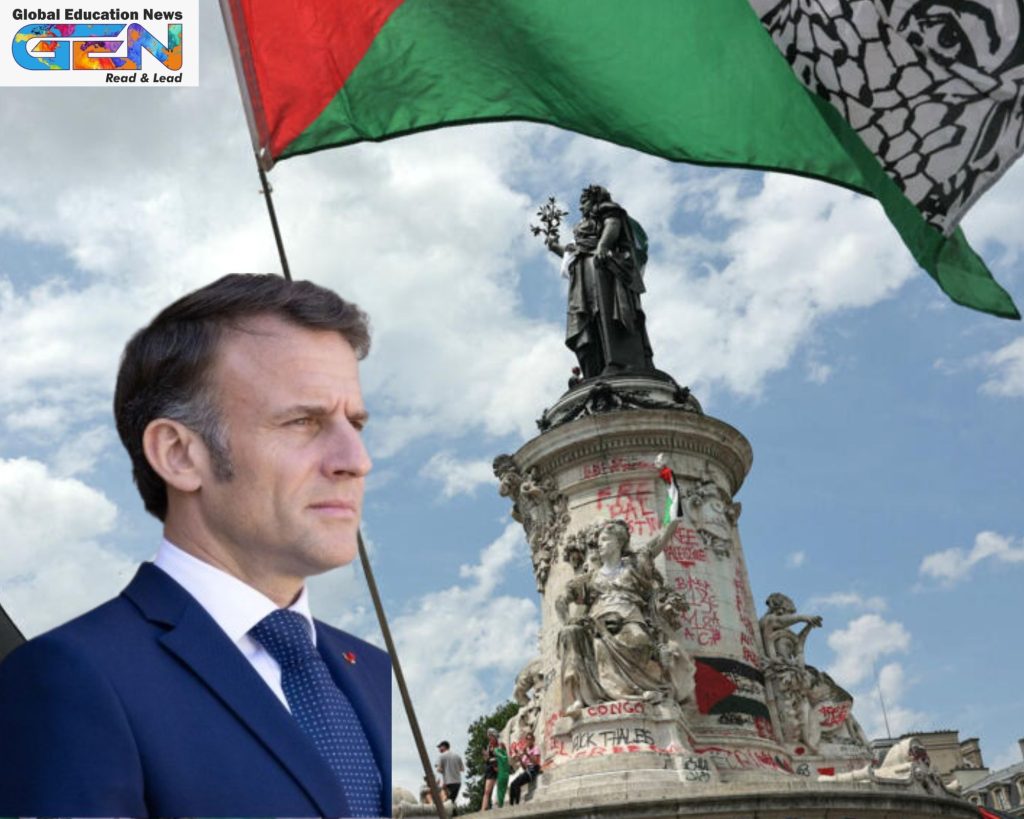
On July 25, 2025, France announced a groundbreaking decision to officially recognize the State of Palestine in September 2025, making it the first G7 nation to do so. President Emmanuel Macron’s bold move marks a seismic shift in Europe’s approach to the Israeli-Palestinian conflict, a seven-decade struggle over land, sovereignty, and peace. As a UN Security Council permanent member, France’s decision carries global weight, aiming to spark progress toward peace and challenge the status quo in Middle East diplomacy.
- France to recognize State of Palestine in September 2025, led by President Emmanuel Macron.
- First G7 country to take this step, breaking from US and UK positions.
- Aims to support ceasefire in Gaza and a two-state solution.
Why Now? A Response to Crisis
Key Points:
- Driven by Gaza’s humanitarian crisis and stalled peace talks.
- Over 140 UN member states already recognize Palestine since 1988.
- Follows October 2023 Hamas attacks and escalating violence.
The Gaza conflict, intensified since the October 2023 Hamas attacks, has fueled global outrage over civilian casualties and infrastructure devastation. With 41,000 deaths reported in Gaza by July 2025, per UN estimates, France’s recognition reflects growing European frustration with the lack of progress toward a two-state solution. While 140+ UN nations, including India, recognize Palestine, major powers like the US and UK have hesitated, awaiting a negotiated peace. France’s move signals a new urgency to address the crisis head-on.
Macron’s Vision for Peace
Key Points:
- Push for an immediate ceasefire in Gaza to halt violence.
- Support demilitarization of Hamas and Gaza reconstruction.
- Establish a viable Palestinian state that recognizes Israel’s right to exist.
President Macron outlined clear goals: an immediate ceasefire, Hamas demilitarization, and Gaza’s rebuilding to create a stable Palestinian state that acknowledges Israel’s right to exist. France aims to foster regional stability by supporting a state with defined borders, a unified government, and a commitment to peace. This vision aligns with France’s broader push for humanitarian aid, with €500 million pledged for Gaza’s reconstruction, focusing on schools, hospitals, and water systems.
Global Reactions: Applause and Outrage
Key Points:
- Palestinian Authority hails decision as aligned with international law.
- Israel condemns it as “rewarding terror” post-2023 attacks.
- Saudi Arabia and 100+ global organizations back France; US calls it “reckless”.
The announcement sparked a polarized response. Palestinian officials celebrated, with PLO leader Hanan Ashrawi calling it a “step toward justice.” Saudi Arabia, Qatar, and over 100 NGOs praised France’s courage. Conversely, Israel’s Foreign Ministry slammed the move, arguing it emboldens Hamas after the October 2023 attacks that killed 1,200 Israelis. The US, a key Israeli ally, labeled it “reckless,” while UK PM Keir Starmer hinted at openness to recognition post-ceasefire. X posts reflect divided sentiments, with some praising France’s moral stand and others warning of diplomatic fallout.
Challenges on the Horizon
Key Points:
- Unresolved issues: Jerusalem’s status, borders, and security concerns.
- Divided Palestinian leadership between PA and Hamas complicates governance.
- US opposition may limit broader Western support.
Recognition is a bold step, but it doesn’t solve core issues. The status of Jerusalem, border disputes, and Israel’s security concerns remain contentious. The Palestinian Authority in the West Bank and Hamas in Gaza lack unified leadership, hindering state-building. US opposition, backed by veto power in the UN, could slow global momentum. X users highlight fears of escalating tensions, with some calling for France to mediate direct talks to address these hurdles.
India’s Perspective and Role
Key Points:
- India recognized Palestine in 1988, supports two-state solution.
- Maintains balanced ties with Israel and Palestine, aiding Gaza humanitarian efforts.
- France’s move aligns with India’s push for Middle East peace.
India, a long-time supporter of Palestine since 1988, welcomes France’s decision, aligning with its advocacy for a two-state solution. With strong ties to both Israel (via defense and tech partnerships) and Palestine (through humanitarian aid), India plays a neutral role. In 2024, India sent $10 million in aid to Gaza via UNRWA. France’s recognition may bolster India’s diplomatic efforts to mediate peace, especially as it hosts G20 summits and pushes for multilateral solutions.
A Ripple Effect in Global Diplomacy
Key Points:
- May inspire EU nations like Spain or Ireland to follow suit.
- Pressures US and UK to reconsider their stance on recognition.
- Strengthens France’s role as a Middle East mediator.
France’s decision could spark a domino effect. Spain, Ireland, and Norway, which recognized Palestine in 2024, may push other EU nations to act. The move pressures US and UK policies, especially as public opinion, reflected on X, demands action on Gaza’s crisis. As a UNSC member, France is positioning itself as a key mediator, building on its history of hosting peace talks. The Paris Peace Forum 2025 could see France lead discussions on Gaza’s future.
Toward a New Middle East?
Key Points:
- Recognition boosts Palestine’s diplomatic legitimacy globally.
- Supports Gaza reconstruction and long-term stability.
- Challenges lie in uniting Palestinian factions and securing peace.
France’s recognition of Palestine in September 2025 is a bold stride toward peace, but the road ahead is fraught. By championing a ceasefire, Hamas demilitarization, and a viable Palestinian state, France is reshaping Middle East diplomacy. Yet, uniting PA and Hamas, resolving border disputes, and overcoming US resistance are critical. As India and the global community watch, France’s move could ignite hope for a two-state solution, turning a decades-long conflict into an opportunity for lasting peace.