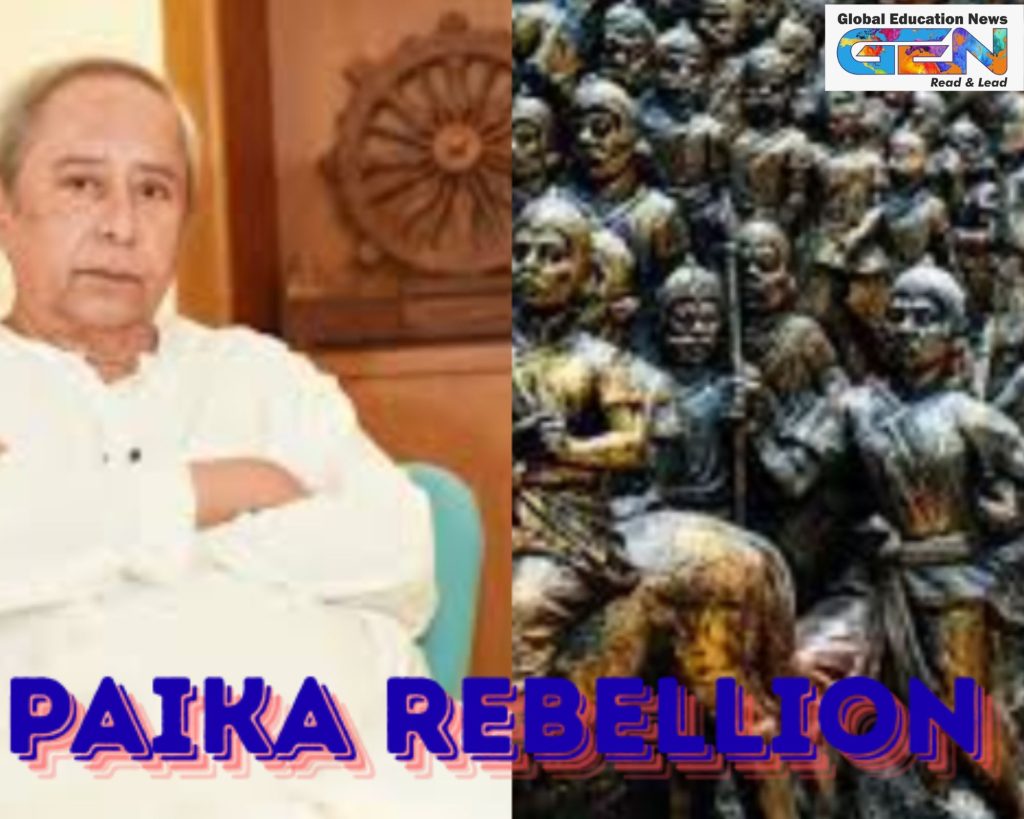
On July 22, 2025, former Odisha Chief Minister and BJD leader Naveen Patnaik sparked a heated debate by slamming the National Council of Educational Research and Training (NCERT) for reportedly dropping the Paika Rebellion of 1817 from its Class 8 Social Science textbook, Exploring Society: India and Beyond. Calling it a “huge dishonor” to Odisha’s legacy, Patnaik urged Odisha CM Mohan Charan Majhi and Union Education Minister Dharmendra Pradhan to restore the rebellion’s place in the curriculum. NCERT clarified that the topic will appear in the second volume, set for release by September–October 2025, but the controversy has ignited discussions about regional history and national education. Here’s a deep dive into the issue and its implications!
- Why It’s Significant: The Paika Rebellion is seen as a precursor to India’s freedom struggle, predating the 1857 Sepoy Mutiny.
- Patnaik’s Plea: Calls for recognizing it as the “first war of independence.”
- Check Updates: Visit indiatoday.in or ncert.nic.in for the latest.
What is the Paika Rebellion?
The Paika Rebellion (Paika Bidroha) of 1817, led by Buxi Jagabandhu Bidyadhar Mohapatra in Odisha’s Khurda district, was a landmark uprising against British colonial rule. The Paikas, traditional peasant militias or “foot soldiers” serving the King of Khurda, revolted when the East India Company imposed oppressive taxes on their rent-free lands and disrupted local power structures. Supported by rajas, zamindars, and peasants, the rebellion saw widespread resistance, including attacks on British buildings, making it a symbol of early anti-colonial defiance.
- Historical Context: Occurred 40 years before the 1857 Sepoy Mutiny, often called India’s first war of independence.
- Scale: Involved diverse communities in a broad-based people’s movement.
- Legacy: Celebrated as a “torchbearer” for later freedom struggles, with PM Narendra Modi felicitating Paika descendants in 2017 and allocating ₹200 crore for its bicentennial.
Fun Fact: The rebellion’s leader, Buxi Jagabandhu, inspired Odisha’s water supply scheme named after him in 2017
The Controversy: Why the Outcry?
Naveen Patnaik, in a fiery X post on July 22, 2025, expressed “deep concern” over the NCERT’s alleged omission of the Paika Rebellion from its new Class 8 textbook, accusing it of dishonoring the Paikas’ bravery. He reiterated his long-standing demand to declare the rebellion the “first war of independence,” arguing its exclusion erases a pivotal chapter of Odisha’s history. The new textbook, aligned with the National Curriculum Framework for School Education (NCF-SE) 2023 and NEP 2020, covers other resistance movements like the Sannyasi-Fakir, Kol, Santhal, and Indigo revolts but omits the Paika Rebellion in its first volume.
- Patnaik’s Critique: Called the omission a “huge dishonor” to Odisha’s heroes, urging immediate action.
- Social Sentiment: X users like @Amar4Odisha echoed Patnaik, decrying the relegation of the rebellion to a “regional footnote.”
- Political Tensions: Patnaik’s remarks come amid his reinvigorated role as a vocal opposition leader post-2024 election losses.
NCERT’s Clarification: Not Omitted, Just Delayed
Facing backlash, NCERT issued a statement on July 21, 2025, clarifying that the Paika Rebellion is not excluded but will be featured in the second volume of the Class 8 Social Science textbook, expected by September–October 2025. This volume will cover regional resistance movements, including the Paika Rebellion and Punjab’s Kuka Movement. The council emphasized that the first volume, already released, focuses on broader themes, while the second will dive into specific uprisings.
- NCERT’s Stance: The rebellion remains part of the curriculum, with detailed coverage planned.
- Odisha Ministers’ Rebuttal: Health Minister Mukesh Mahaling and School Education Minister Nityananda Gond accused Patnaik of spreading “misleading” claims for political gain, calling his remarks “laughable.”
- X Reactions: Users like @UpasnaMohapatra supported NCERT’s clarification, urging calm, while @sasmitpatra criticized the “regional” label as diminishing the rebellion’s national significance.
Why the Paika Rebellion Matters
The Paika Rebellion’s inclusion in textbooks is more than a regional issue—it’s about recognizing India’s diverse freedom struggle. Historians argue its 1817 timing and broad-based nature make it a contender for the “first war of independence,” a title traditionally given to the 1857 Sepoy Mutiny. Patnaik has long championed this cause, with past efforts including:
- 2017 Advocacy: Odisha’s cabinet, under Patnaik, urged the Centre to recognize the rebellion, backed by PM Modi’s felicitation of Paika descendants and a ₹600 crore commemoration fund.
- Memorial: In 2019, then-President Ram Nath Kovind laid the foundation for a Paika memorial in Khurda.
- Cultural Pride: The rebellion symbolizes “Odia Asmita” (Odisha’s pride), resonating deeply in the state’s identity.
By the Numbers: The rebellion mobilized thousands across Odisha, burning British offices and inspiring later uprisings, yet it’s often overshadowed in national narratives.
Political and Educational Implications
The controversy highlights broader debates about India’s history curriculum:
- Textbook Revisions: NCERT’s recent changes, including 1,334 updates in 2017 and Mughal-related deletions in 2022–23, have sparked accusations of selective history-telling. The Paika omission fueled similar concerns.
- Regional Representation: Critics argue that prioritizing certain revolts (e.g., Santhal, Indigo) over the Paika Rebellion marginalizes Odisha’s contributions.
- Political Heat: Odisha ministers accused Patnaik of politicizing the issue, while BJD supporters see it as a fight for “Odia Asmita” against BJP’s central narrative.
X Buzz: Posts like @eOrganiser called the omission a “distortion” of India’s first war of independence, while others urged NCERT to ensure comprehensive coverage.
Challenges and Path Forward
The debate underscores challenges in balancing national and regional histories:
- Curriculum Space: NCERT’s two-volume approach aims to cover more ground, but delays in the second volume fueled perceptions of exclusion.
- Political Sensitivities: The clash between Patnaik and BJP leaders reflects Odisha’s charged political climate post-2024 elections.
- Public Awareness: Ensuring students learn about the Paika Rebellion requires clear communication and timely textbook releases.
Solutions:
- Expedite Volume 2: NCERT should fast-track the second volume’s release to address concerns.
- Highlight National Significance: Frame the Paika Rebellion as a national, not just regional, milestone.
- Engage Stakeholders: Involve Odisha historians and educators to ensure accurate portrayal.
Tips for Stakeholders
- Students and Parents: Stay updated on NCERT’s second volume at ncert.nic.in and explore Paika Rebellion resources on odisha.gov.in.
- Educators: Teach interim lessons on the rebellion using state archives or online sources like indiatoday.in.
- Policymakers: Ensure regional histories are balanced in national curricula to avoid perceptions of bias.
- Historians: Advocate for the Paika Rebellion’s prominence in NEP 2020’s “rooted yet futuristic” education vision.
Honoring the Paika Legacy
The Paika Rebellion of 1817, a bold stand against British oppression, deserves its place in India’s history books. Naveen Patnaik’s passionate plea on July 22, 2025, has reignited the fight to recognize it as the “first war of independence.” While NCERT’s clarification promises inclusion by September–October 2025, the controversy underscores the need for inclusive, transparent curriculum design. As Odisha’s pride clashes with national narratives, the Paikas’ bravery must not be a footnote. Visit indiatoday.in or ncert.nic.in for updates, and join the call to honor India’s unsung heroes!