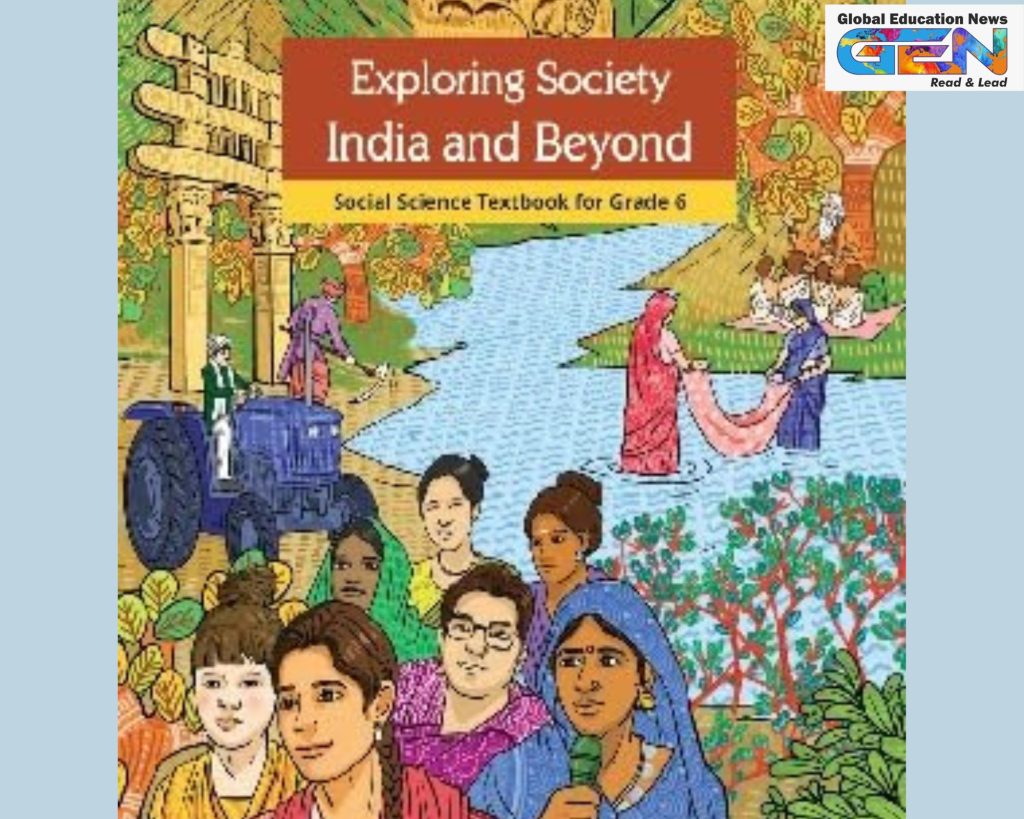
The National Council of Educational Research and Training (NCERT) has stirred a heated debate with its newly revised Class 8 social science textbook, Exploring Society: India and Beyond – Part 1. The updated chapter on the colonial period explicitly labels Mir Jafar, the Nawab of Bengal’s army general, a “traitor” for his role in the 1757 Battle of Plassey, while entirely omitting Tipu Sultan, Haider Ali, and the Anglo-Mysore Wars (1767–1799). These changes have sparked accusations of selective history and raised questions about the portrayal of key figures in India’s past.
Key Points:
- Mir Jafar labelled a “traitor” for betraying Nawab Siraj ud-Daulah in the Battle of Plassey.
- Tipu Sultan, Haider Ali, and Anglo-Mysore Wars removed from the colonial history chapter.
- Critics argue the changes reflect a biased narrative, while supporters claim they simplify the curriculum.
Mir Jafar: The Traitor Tag
Mir Jafar’s role in the Battle of Plassey, where he conspired with the British East India Company to overthrow Nawab Siraj ud-Daulah, has long been controversial. The NCERT’s decision to explicitly call him a “traitor” in the textbook has intensified discussions about historical judgment in education. Critics argue that such loaded terms oversimplify complex historical contexts, while others see it as a factual depiction of his betrayal.
Key Points:
- Mir Jafar’s alliance with Robert Clive led to the British victory at Plassey, marking the start of colonial rule in Bengal.
- The “traitor” label aligns with historical narratives in India, Pakistan, and Bangladesh, where Jafar is a symbol of betrayal.
- Debate centers on whether textbooks should use judgmental language or present neutral facts.
Tipu Sultan and Haider Ali: Erased from History?
The omission of Tipu Sultan, Haider Ali, and the Anglo-Mysore Wars has drawn sharp criticism, particularly from groups who view Tipu as a heroic freedom fighter. Known as the “Tiger of Mysore,” Tipu Sultan was a formidable opponent of the British, celebrated for his military innovations, including early rocket technology, and his resistance in the 1784 Treaty of Mangalore. His absence, along with that of his father, Haider Ali, has led to accusations of “historical erasure” and political bias.
Key Points:
- Tipu Sultan’s resistance against the British, including the Anglo-Mysore Wars, is absent from the revised textbook.
- Critics, including the Social Democratic Party of India (SDPI), condemn the omission as an attempt to suppress regional heroes.
- Supporters of the changes argue that the curriculum has been streamlined to focus on broader colonial themes.
Public and Political Reactions
The textbook revisions have ignited a polarized debate. On one hand, some social media voices and political groups claim the changes push a “Hindu-centric narrative,” pointing to Tipu Sultan’s portrayal in some circles as a “fanatic Muslim” by BJP leaders in the past. Others argue that Tipu’s controversial actions, such as alleged forced conversions, justify his exclusion. The debate reflects broader tensions over how history is taught in India.
Key Points:
- Social media posts highlight Tipu’s contributions, like temple aid and rocket technology, as evidence against his erasure.
- Past controversies, like Karnataka’s 2019 push to remove Tipu from textbooks, resurface in current debates.
- The RSS and BJP have historically opposed glorifying Tipu, citing allegations of religious bigotry.
Historical Accuracy vs. Political Agenda
The controversy raises questions about balancing historical accuracy with educational goals. Critics argue that omitting Tipu Sultan and Haider Ali distorts the narrative of resistance against British colonialism, while the “traitor” label for Mir Jafar risks oversimplifying his motivations. Historians like Ramachandra Guha have previously cautioned against state-backed glorification of historical figures, advocating for a balanced approach.
Key Points:
- Omitting the Anglo-Mysore Wars erases a significant chapter of anti-colonial resistance.
- The “traitor” label for Mir Jafar may reflect cultural sentiment but lacks nuanced historical context.
- Calls for transparent revisions and expert consultation to ensure unbiased curricula.
How to Engage with the Debate
The NCERT controversy invites students, educators, and citizens to critically examine how history is presented. Engaging with primary sources, historical records, and diverse perspectives can foster a deeper understanding of figures like Mir Jafar and Tipu Sultan. Public forums and academic discussions are vital for shaping a balanced curriculum.
Key Points:
- Explore primary sources, such as Tipu’s letters or British accounts, to understand historical complexities.
- Advocate for inclusive history education through discussions with educators and policymakers.
- Stay informed via credible news outlets and academic platforms to follow curriculum updates.