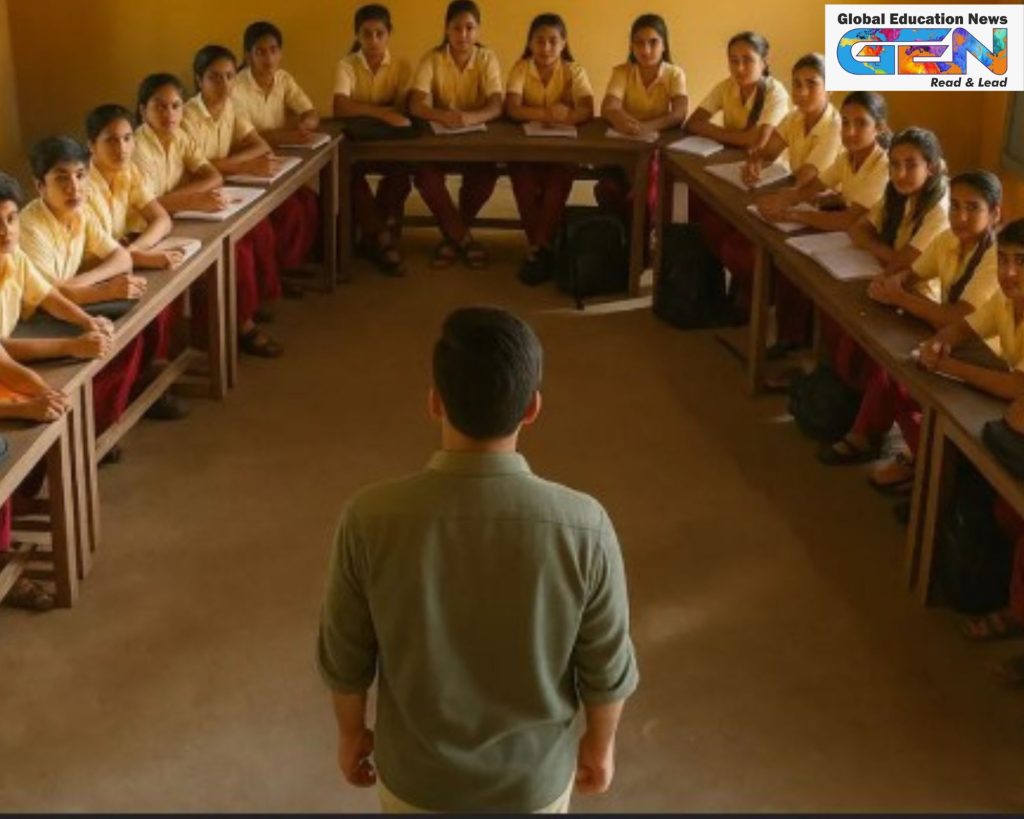
Imagine a classroom where every student is a front-row star, no one hides in the back, and teachers connect with every child equally. Sounds like a dream? Not in Kerala! Inspired by the 2024 Malayalam movie Sthanarthi Sreekuttan, schools across the state are tossing out traditional rows for a game-changing U-shaped seating arrangement. Led by Ramavilasom Vocational Higher Secondary School (RVHSS) in Valakom, this innovative setup is banishing the “backbencher” stigma and sparking a nationwide buzz. Ready to dive into this classroom revolution? Let’s explore how it’s transforming learning and why it’s got everyone talking!
Kerala’s Classroom Makeover: A Movie That Moved Desks
- Inspired by Cinema: Sthanarthi Sreekuttan’s climax scene, where a student proposes U-shaped seating, sparked real-world change.
- Pioneer School: RVHSS in Valakom, Kollam, led the charge after Minister K B Ganesh Kumar saw the film’s preview.
- Nationwide Ripple: Eight Kerala schools and one in Punjab have adopted the model, with more showing interest.
- Reviving Old Ideas: The setup echoes the 1994 District Primary Education Programme (DPEP), now making a comeback.
It all started with a single scene in Sthanarthi Sreekuttan, a heartwarming film about a backbencher’s journey. A Class VII student, tired of being overlooked, suggests a semi-circular seating layout to make every student feel included. This idea struck a chord with Kerala’s Transport Minister K B Ganesh Kumar, whose family runs RVHSS. After a preview in 2023, he rallied teachers to test it in Class 1. The results? So stellar that it’s now in all lower primary classes, with schools in Kollam, Kannur, Thrissur, and even Punjab following suit. Director Vinesh Viswanath was stunned when schools tagged his Instagram, saying, “I never thought a movie scene would spark such change!”
Why Ditch the Backbench? The Power of U-Shaped Seating
- Equal Attention: Teachers can see and engage every student, no one’s left in the shadows.
- Boosted Participation: Students face each other and the teacher, sparking lively discussions.
- Confidence Surge: Kids once labeled “backbenchers” feel valued and motivated.
- Global Inspiration: Mirrors Finland and Norway’s student-centric classroom models.
Traditional rows often left backbenchers feeling ignored or stereotyped as troublemakers. The U-shaped seating flips this script, placing desks along classroom walls or in a semi-circle, with teachers at the center. Meera, a 29-year veteran teacher, gushes, “I can connect with every child now. They’re happier, more focused, and love seeing each other’s faces!” Headmaster Sunil P Sekhar adds, “It’s easier to monitor and engage everyone, erasing the backbencher taboo.” Education experts note this setup, seen in progressive systems like Finland’s, fosters collaboration and reduces classroom hierarchy.
From Kerala to Beyond: A Growing Movement
- Spreading Fast: Schools in Thrissur, Kannur, Palakkad, and Punjab have adopted the model.
- J&K’s Interest: Jammu & Kashmir is studying Kerala’s approach for potential rollout.
- Social Media Buzz: Anand Mahindra praised it but admitted he’d miss his “skydeck” backbench days.
- Challenges Raised: Critics question feasibility in overcrowded classrooms with 80+ students.
The U-shaped revolution isn’t just a Kerala story. A Punjab school jumped on board after its principal watched Sthanarthi Sreekuttan on Saina Play, even screening it for students. Jammu & Kashmir’s Education Minister Sakina Itoo is exploring the model, though she notes infrastructure challenges in government schools. Industrialist Anand Mahindra tweeted support, calling it an “intriguing experiment,” but reminisced fondly about backbench creativity. Meanwhile, X users are split—some cheer the equality, others defend the backbench as a hub for quiet thinkers.
Not All Smooth Sailing: Challenges and Criticisms
- Overcrowding Concerns: X posts highlight issues in classrooms with 80+ students, deemed illegal by norms.
- Ergonomic Worries: Some argue U-shaped setups may strain students’ necks.
- Backbencher Nostalgia: Students like Aalbert miss the “escape” of back rows.
- Infrastructure Needs: J&K’s Prof. Arshad Hussain warns government schools need better facilities first.
While the model’s a hit, it’s not without hurdles. Social media critics on X flagged overcrowded classrooms, with Vinesh Viswanath noting authorities are cracking down on such violations. Some students lament losing the backbench’s “creative freedom,” and ergonomic concerns linger. In J&K, experts stress that many government schools lack basic desks, making adoption tricky. Still, Kerala’s success is pushing others to rethink classroom dynamics.
Tips to Embrace the Classroom Revolution
- Advocate Locally: Parents and teachers can pitch U-shaped seating to school boards.
- Start Small: Test the setup in one class, like RVHSS did, to gauge impact.
- Train Teachers: Equip educators to maximize engagement in new layouts.
- Upgrade Infrastructure: Push for better classroom facilities to support innovative designs.
Kerala’s classroom innovation is a bold step toward inclusive education, proving a movie can spark real change. With Sthanarthi Sreekuttan’s message of equality resonating, schools nationwide are eyeing this model. Will your school join the U-shaped revolution? Dive into this new era of learning where every student shines!