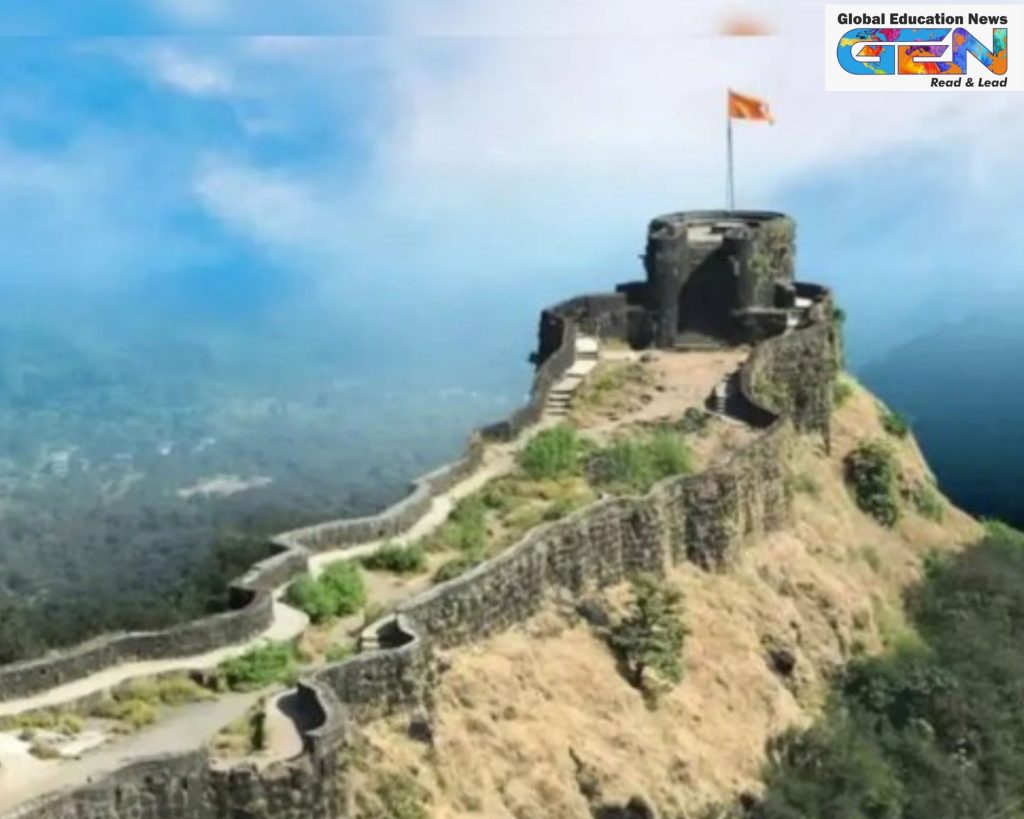
On July 11, 2025, the Maratha Military Landscapes of India, a network of 12 iconic forts, were inscribed on the UNESCO World Heritage List during the 47th session of the World Heritage Committee in Paris. Marking India’s 44th UNESCO site, this prestigious recognition celebrates the Maratha Empire’s architectural genius, strategic military vision, and enduring cultural legacy from the 17th to 19th centuries. Hailed by Prime Minister Narendra Modi, Union Home Minister Amit Shah, and Maharashtra CM Devendra Fadnavis, this milestone underscores India’s rich heritage and global cultural influence.
- Key Points:
- India’s 44th UNESCO World Heritage Site, announced on July 11, 2025.
- Includes 12 forts across Maharashtra and Tamil Nadu.
- Recognizes Maratha Empire’s military and architectural prowess.
The 12 Pillars of Maratha Glory
The Maratha Military Landscapes comprise 12 forts: Salher, Shivneri, Lohgad, Khanderi, Raigad, Rajgad, Pratapgad, Suvarnadurg, Panhala, Vijaydurg, Sindhudurg in Maharashtra, and Gingee Fort in Tamil Nadu. These forts, developed between the 17th and 19th centuries under Chhatrapati Shivaji Maharaj and his successors, showcase a masterful blend of terrain and military strategy across the Sahyadri mountains, Konkan Coast, Deccan Plateau, and Eastern Ghats. From hilltop strongholds to island fortresses, each site reflects the Marathas’ ingenuity in guerrilla warfare and defense.
- Key Points:
- Forts include hill, coastal, and island types, showcasing diverse architecture.
- Eight forts protected by the Archaeological Survey of India (ASI), four by Maharashtra’s Directorate of Archaeology.
- Gingee Fort, dubbed the “Troy of the East,” served as a Maratha capital against Mughal forces.
Architectural Brilliance Meets Strategic Mastery
The Maratha forts, nominated under UNESCO criteria (iv) and (vi), are celebrated for their architectural and technological significance and their testimony to a living cultural tradition. Shivneri Fort, the birthplace of Shivaji Maharaj, and Pratapgad, where he defeated Adilshahi general Afzal Khan, embody the empire’s strategic brilliance. Coastal forts like Vijaydurg and island forts like Sindhudurg highlight the Marathas’ naval prowess, while Gingee Fort in Tamil Nadu stood as a bastion against Mughal invasions. These sites reflect a unique integration of geography and military engineering.
- Key Points:
- Nominated for architectural excellence and historical significance.
- Reflects Maratha mastery in adapting forts to diverse terrains.
- Pratapgad and Gingee Fort linked to key historical victories.
A Rigorous Path to Global Recognition
The journey to UNESCO status began with the Maratha Military Landscapes’ inclusion on the Tentative List in 2021, followed by India’s nomination for the 2024-25 cycle in January 2024. After an 18-month evaluation, including technical consultations and a site review by ICOMOS, 18 out of 20 State Parties supported the proposal during a 59-minute discussion at the Paris session. The forts’ Outstanding Universal Value (OUV) was recognized for their cultural and historical impact, cementing India’s rank as the sixth globally and second in the Asia-Pacific for World Heritage Sites.
- Key Points:
- On UNESCO Tentative List since 2021, nominated in January 2024.
- Supported by 18 of 20 State Parties after rigorous evaluation.
- India now has 44 World Heritage Sites, with 62 on the Tentative List.
A Proud Moment for India and Maharashtra
PM Narendra Modi called the inscription a “proud moment for every Indian,” urging citizens to visit these forts to explore the Maratha legacy of governance, military strength, and cultural pride. Amit Shah described the forts as “pillars of Hindu Swaraj,” inspiring language and cultural preservation. CM Devendra Fadnavis thanked Culture Minister Gajendra Singh Shekhawat for his support, emphasizing Maharashtra’s pride in its heritage. The Archaeological Survey of India and Maharashtra’s Directorate of Archaeology were lauded for their conservation efforts.
- Key Points:
- PM Modi encourages visits to explore Maratha heritage.
- Amit Shah highlights forts’ role in cultural preservation.
- Conservation efforts by ASI and Maharashtra government praised.
Why This Matters for India’s Legacy
The UNESCO listing of the Maratha Military Landscapes elevates India’s global cultural footprint, spotlighting the Maratha Empire’s role in shaping regional identity and resisting external forces. These forts, from the rugged hills of Salher to the sea-surrounded Suvarnadurg, are living testaments to India’s resilience and innovation. As historian Gurmeet Rai noted, their advanced military engineering deserves global recognition, inspiring future conservation efforts. With 62 sites on UNESCO’s Tentative List, India continues to champion its diverse heritage.
- Key Points:
- Elevates Maratha Empire’s global historical significance.
- Inspires continued conservation of India’s 390+ forts.
- Strengthens India’s position with 62 tentative UNESCO sites.
A Call to Celebrate and Preserve
The inscription of the Maratha Military Landscapes is a clarion call to celebrate India’s storied past while safeguarding its future. These forts, steeped in tales of bravery and ingenuity, invite travelers, historians, and culture enthusiasts to explore their rugged beauty and profound history. As India basks in its 44th UNESCO accolade, the Maratha forts stand tall as symbols of pride, resilience, and cultural legacy for generations to come.
- Key Points:
- Invites global visitors to explore Maratha forts’ history.
- Reinforces India’s commitment to cultural preservation.
- A milestone in celebrating the Maratha Empire’s enduring legacy.