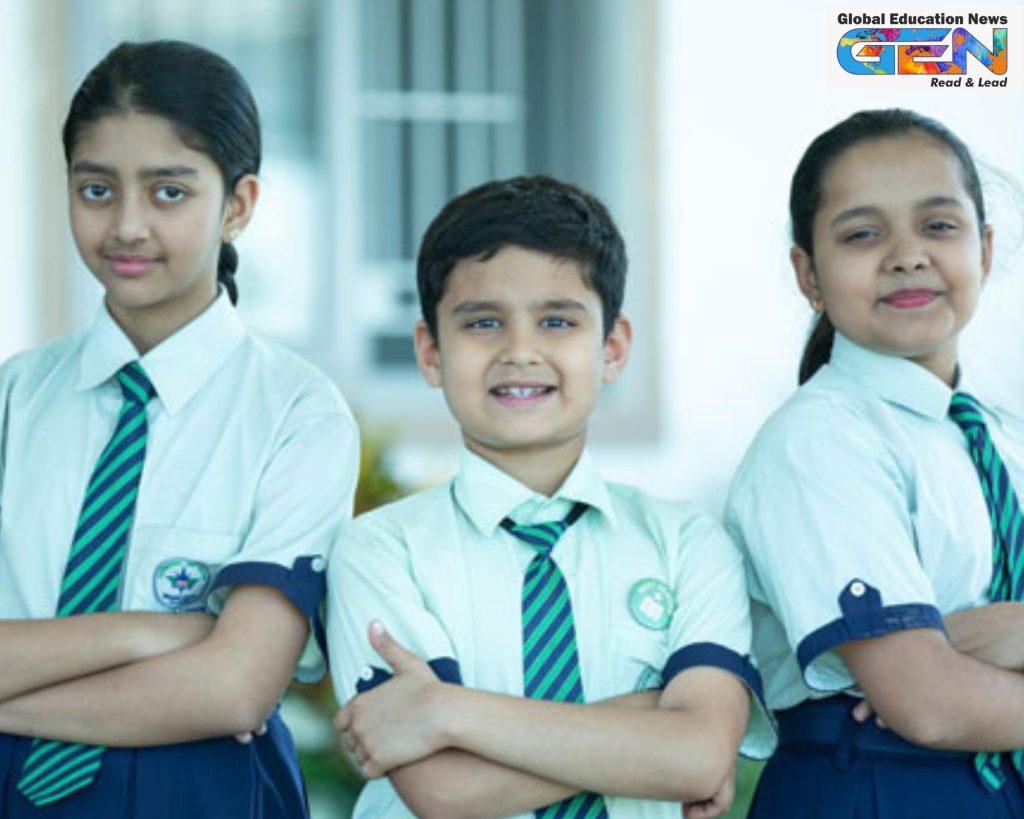
Imagine a program designed to uplift Scheduled Caste (SC) students by offering free residential schooling, only to find schools demanding money under sneaky pretexts. The Scheme for Residential Education for Students in High Schools in Targeted Areas (SHRESHTA), launched to provide quality education to SC students, is facing a major controversy. Despite clear guidelines ensuring no fees should be charged, many schools are reportedly exploiting families by demanding payments for admission, uniforms, books, and even picnics! This betrayal of trust is shaking the foundation of a scheme meant to empower underprivileged students.
- SHRESHTA scheme aims to provide free residential high school education for Scheduled Caste (SC) students.
- Schools found charging deposits and fees for uniforms, books, and other expenses.
- Social Justice Ministry issues strict warning to comply with free education guidelines.
What is the SHRESHTA Scheme?
Key Points:
- Targets SC students with parental income below ₹2.5 lakh annually.
- Covers school and hostel fees until Class 12.
- Includes private and NGO-run residential schools under CBSE affiliation.
The SHRESHTA scheme is a beacon of hope for SC students, offering free residential education in CBSE-affiliated schools to bridge educational gaps. It supports around 3,000 students annually, covering all costs from tuition to hostel expenses. The scheme operates in two modes: partnering with private residential schools and supporting NGO-run institutions. Its goal? To ensure quality education without financial burdens for families already facing economic challenges. But when schools start charging fees, this noble vision gets tarnished.
The Fee-Charging Scandal Unveiled
Key Points:
- Complaints highlight schools charging for admission, uniforms, books, medical expenses, and more.
- Ministry warns of strict action through CBSE for non-compliance.
- Schools were informed of no-fee policy at the outset of the scheme.
The Social Justice Ministry dropped a bombshell on July 7, 2025, revealing that numerous schools under SHRESHTA are flouting rules by demanding deposits and fees. Parents and students have reported being asked to pay for everything from security deposits to stationery costs, despite the scheme’s explicit no-fee mandate. In a strongly worded letter, the Ministry reminded schools of their commitment to free education, warning that violations could lead to severe consequences, including CBSE intervention. This isn’t just a policy breach—it’s a direct blow to the trust of vulnerable families.
A Broader Issue in Indian Education
Key Points:
- Similar issues reported in RTE Act implementations, with private schools charging for “extra facilities.”
- Karnataka and Delhi face challenges with private school fee hikes of 30-40%.
- Government schools offer a cost-effective alternative with free resources like uniforms and meals.
This isn’t an isolated problem. Across India, private schools have been caught charging excessive fees, often bypassing regulations like the Right to Education (RTE) Act, which mandates free education for children aged 6-14. In Bengaluru, three prestigious schools faced notices for charging exorbitant fees, while Delhi parents protested fee hikes as high as 40-80%. Meanwhile, government schools are stepping up, offering free uniforms, books, and meals, proving to be a viable alternative for families struggling with private school costs.
The Impact on SC Students and Families
Key Points:
- Unauthorized fees create financial burdens for low-income SC families.
- Risk of discontinuation of studies due to inability to pay.
- Undermines the goal of inclusive education and social equity.
For SC families, these unexpected fees are more than just an inconvenience—they’re a roadblock to education. Many students, whose parents earn less than ₹2.5 lakh annually, face the risk of dropping out when schools demand payments they can’t afford. This directly contradicts the SHRESHTA scheme’s mission to provide inclusive, equitable education. The emotional and financial toll on families is immense, turning a promise of opportunity into a source of stress and disillusionment.
Government’s Response and Next Steps
Key Points:
- Ministry demands strict adherence to SHRESHTA guidelines.
- Threatens CBSE penalties for non-compliant schools.
- Calls for increased transparency and accountability in fee structures.
The Social Justice Ministry isn’t staying silent. On July 7, 2025, it issued a directive to all SHRESHTA schools, emphasizing that no fees of any kind should be charged. Non-compliance could lead to serious repercussions, including action through the Central Board of Secondary Education (CBSE). This move signals a push for greater accountability, but the real challenge lies in enforcement. Will schools comply, or will loopholes persist?
A Call for Fairness in Education
Key Points:
- Parents urged to report violations to Block Education Officers or authorities.
- Need for stronger fee regulation committees to monitor private schools.
- Government schemes like Samagra Shiksha and Kasturba Gandhi Balika Vidyalaya offer free education alternatives.
This controversy highlights a critical need for transparency in school fee structures across India. Parents are encouraged to report violations to Block Education Officers or local authorities to hold schools accountable. Meanwhile, schemes like Samagra Shiksha and Kasturba Gandhi Balika Vidyalaya continue to provide free education, proving that accessible learning is possible. It’s time for the government to tighten regulations and ensure that free education remains truly free for those who need it most.
How You Can Take Action
Key Points:
- Report fee violations to CBSE or the Social Justice Ministry.
- Explore government schools or schemes like PM CARES for Children for free education options.
- Stay informed about your rights under the RTE Act and SHRESHTA guidelines.
If you’re a parent or student affected by these fees, don’t stay silent. Contact your local Block Education Officer or the Social Justice Ministry to report violations. Explore alternatives like government schools, which offer free resources, or schemes like PM CARES for Children, which support vulnerable students with free uniforms and textbooks. Above all, know your rights under the RTE Act and SHRESHTA—education should be a right, not a privilege.
The Road to True Educational Equity
The SHRESHTA scheme’s vision of free, quality education for SC students is a powerful step toward inclusivity, but its success depends on accountability. Schools charging unauthorized fees undermine this mission, leaving families in distress and students at risk. As India strives for educational equity under schemes like NEP 2020 and RTE, it’s crucial to close these loopholes and ensure that every child can learn without financial barriers. Let’s demand transparency and fairness—because every student deserves a chance to shine.