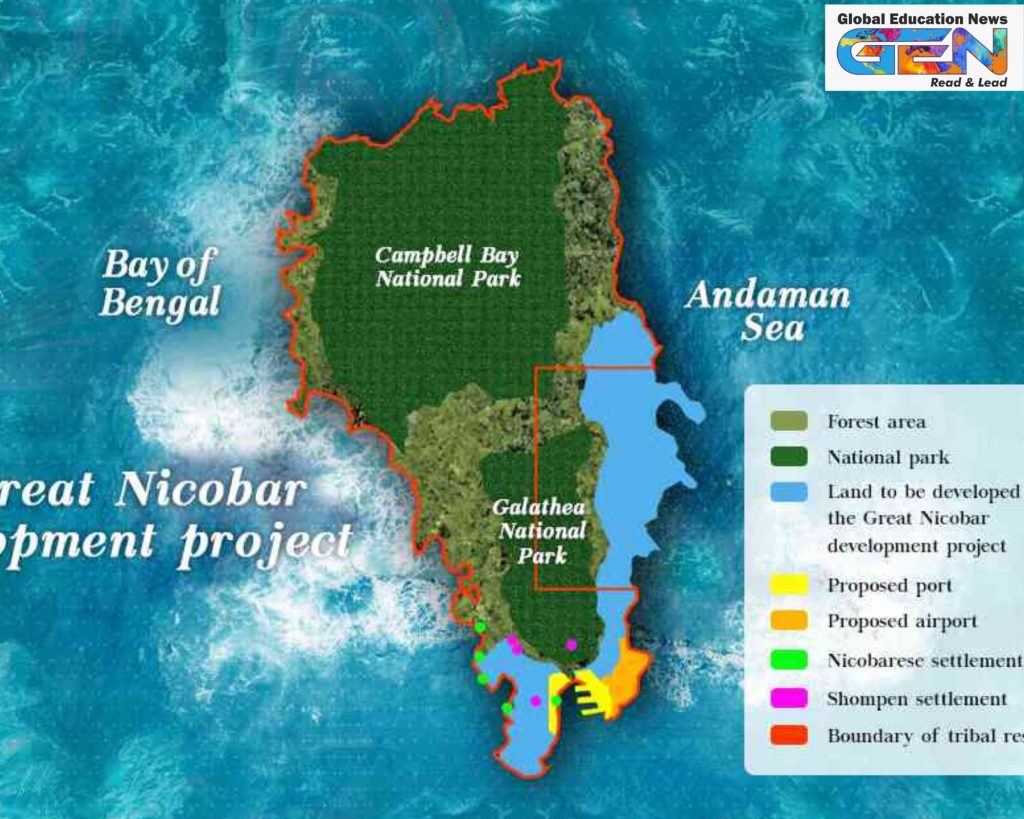
The Great Nicobar Infrastructure Project (GNIP), a ₹80,000-crore brainchild of NITI Aayog, dreams big: transforming Great Nicobar Island, India’s southernmost tip, into a global hub for trade, tourism, and defense. With plans for an International Container Transshipment Terminal (ICTT) at Galathea Bay, a greenfield international airport, a sprawling township, and a 450 MVA gas and solar power plant, the project promises economic growth and strategic clout. But there’s a catch—this paradise sits on the volatile Ring of Fire, where earthquakes and tsunamis are a constant threat.
- Mega Project Scope: Includes a transshipment port, international airport, township, and power plant.
- Strategic Importance: Aims to position India as a maritime hub near the Malacca Strait.
- Cost and Scale: Estimated at ₹80,000 crore, covering 166 sq km of the island.
Earthquake Risks: A Ticking Time Bomb?
Key Points:
- Seismic Hotspot: Great Nicobar lies on the Andaman-Sumatra fault line, prone to mega quakes.
- 2004 Tsunami Lesson: The island saw 15 feet of subsidence during the 9.2 Mw earthquake.
- Expert Warnings: Scientists urge site-specific seismic studies to assess risks.
The Andaman and Nicobar Islands are no strangers to geological drama. Located in the Ring of Fire, the region experiences frequent earthquakes—around 44 annually, with magnitudes often between 4.0 and 6.6. The 2004 tsunami, triggered by a 9.2 Mw quake near Indonesia, submerged parts of Great Nicobar, including Indira Point, by about 15 feet. Scientists like Javed Malik from IIT-Kanpur warn that the Environmental Impact Assessment (EIA) for the GNIP downplays these risks, lacking site-specific studies. Experts argue that a mega quake could devastate infrastructure, cause oil spills, and trigger environmental disasters in this biodiversity hotspot.
Ecological and Tribal Concerns Amplify the Stakes
Key Points:
- Biodiversity Threat: Felling of 9.6–10 million trees and loss of coral reefs and turtle nesting sites.
- Indigenous Impact: Shompen and Nicobarese tribes face displacement and cultural risks.
- Legal Violations: Alleged lack of tribal consultation and Forest Rights Act breaches.
Beyond seismic risks, the GNIP threatens Great Nicobar’s pristine ecosystem. The project requires clearing 130 sq km of rainforest—15% of the island’s area—home to endangered species like leatherback turtles and Nicobar megapodes. The Shompen, a Particularly Vulnerable Tribal Group (PVTG), and Nicobarese communities risk losing their ancestral lands, with critics alleging inadequate consultation and violations of the Forest Rights Act (2006). The denotification of 84 sq km of tribal reserve land has sparked outrage, with fears of cultural erosion and even genocide.
Environmental Clearances Under Fire
Key Points:
- EIA Shortcomings: Critics say the EIA ignores seismic and tribal impacts.
- Coastal Regulation Zone (CRZ) Issues: Project areas overlap with protected CRZ 1A zones.
- NGT Oversight: A high-powered committee is reviewing clearances amid legal challenges.
The Environmental Impact Assessment (EIA) conducted by Vimta Labs has been slammed for glossing over earthquake risks and failing to address the Shompen and Nicobarese communities in its Social Impact Assessment (SIA). Parts of the project, including the port at Galathea Bay, initially fell in the ecologically sensitive CRZ 1A zone, but a controversial reclassification to CRZ 1B by the National Centre for Sustainable Coastal Management has raised transparency concerns. The National Green Tribunal (NGT) ordered a review in 2023, but critics argue the process lacks independence and public disclosure.
Strategic Gains vs. Catastrophic Risks
Key Points:
- Geopolitical Edge: Enhances India’s presence near key Indo-Pacific trade routes.
- Economic Promise: Aims to rival ports in Singapore and Colombo.
- Risky Bet: Seismic and ecological costs could outweigh benefits.
The GNIP’s strategic allure is undeniable. Its proximity to the Malacca Strait positions Great Nicobar as a potential rival to global transshipment hubs like Singapore. The project aligns with India’s Act East Policy and Maritime India Vision 2030, boosting defense and trade. Yet, experts warn that the seismic vulnerability—evidenced by frequent quakes and the 2004 subsidence—makes the investment precarious. A single mega quake could wipe out infrastructure and trigger environmental havoc, questioning the project’s long-term viability.
A Path Forward: Balancing Ambition and Responsibility
Key Points:
- Disaster-Resilient Design: Infrastructure must withstand quakes and tsunamis.
- Tribal Inclusion: Meaningful consultation with indigenous communities is critical.
- Transparent Assessments: Independent, site-specific studies are non-negotiable.
To move forward, the GNIP needs a rethink. Climate-resilient infrastructure and rigorous seismic studies are essential to safeguard investments and lives. Engaging the Shompen and Nicobarese in decision-making, as mandated by law, is crucial to protect their rights. Transparent, independent environmental and social impact assessments can rebuild trust. As environmentalists and tribal advocates rally against the project, the government faces a tough choice: pursue a high-stakes dream or prioritize the island’s fragile ecology and indigenous heritage.
Will Great Nicobar’s Dream Survive the Shakes?
The Great Nicobar Infrastructure Project is a bold gamble—a vision of economic and strategic glory set against a backdrop of seismic uncertainty and ecological fragility. With experts sounding alarms over earthquake risks, biodiversity loss, and tribal rights, the project’s future hangs in the balance. Can India build a global hub without sacrificing its natural and cultural treasures? Only time—and the earth’s restless plates—will tell.