In a historic first, Russia has officially recognized the Taliban government in Afghanistan on July 4, 2025, marking a seismic shift in global diplomacy. After accepting the credentials of Afghanistan’s new ambassador, Gul Hassan Hassan, Russia became the first nation to formally acknowledge the Islamic Emirate of Afghanistan since the Taliban’s takeover in August 2021. This bold decision, hailed as “courageous” by Taliban Foreign Minister Amir Khan Muttaqi, could reshape international relations. But what does it mean for Afghanistan, Russia, and the world? Let’s unpack this game-changing moment
Key Points:
- Historic Recognition: Russia is the first country to formally recognize the Taliban since 2021.
- Ambassador Credentials: Accepted from Gul Hassan Hassan on July 4, 2025.
- Taliban’s Reaction: Muttaqi calls it a “brave decision” and an example for others.
Why Russia Took the Leap
Russia’s decision follows years of warming ties with the Taliban. In April 2025, Moscow lifted its 2003 ban on the Taliban, removing their “terrorist” designation after the Supreme Court’s ruling. Driven by shared security interests, particularly against Islamic State Khorasan (ISIS-K), Russia sees the Taliban as an ally in combating terrorism. The Russian Foreign Ministry highlighted “productive bilateral cooperation” in energy, transport, agriculture, and infrastructure, aiming to stabilize Afghanistan and boost trade. President Vladimir Putin, advised by Foreign Minister Sergey Lavrov, emphasized a “pragmatic, non-ideologized policy” toward the Taliban.
Key Points:
- Security Alliance: Cooperation against ISIS-K, responsible for attacks like the 2024 Moscow concert hall massacre.
- Economic Opportunities: Focus on energy, transport, and agriculture projects.
- Policy Shift: Russia lifted the Taliban’s terrorist ban in April 2025.
Taliban’s Quest for Legitimacy
Since seizing power in 2021 after the U.S. and NATO withdrawal, the Taliban have craved international recognition. Only Saudi Arabia, Pakistan, and the UAE recognized their 1996–2001 rule, but no country had formally endorsed their current regime until now. The Taliban’s white flag now flies at the Afghan embassy in Moscow, symbolizing a diplomatic victory. Muttaqi called it “a new phase of positive relations,” hoping other nations follow Russia’s lead.
Key Points:
- Diplomatic Win: First formal recognition since 2021 takeover.
- Symbolism: Taliban flag raised at Afghan embassy in Moscow.
- Global Example: Taliban hopes Russia’s move inspires others.
The Human Rights Controversy
Russia’s decision has sparked outrage, particularly over the Taliban’s human rights record. Since 2021, the Taliban have imposed strict Sharia laws, banning girls from education beyond sixth grade, restricting women’s access to jobs and public spaces, and enforcing dress codes and male guardianship. The United Nations has labeled these policies “gender apartheid,” with recent “virtue” laws banning women from speaking outside their homes. Afghan activist Fawzia Koofi, a former MP, warned that recognition “legitimizes impunity” and endangers global security.
Key Points:
- Women’s Rights: Taliban bans girls’ education and women’s public participation.
- Global Criticism: UN calls restrictions “gender apartheid.”
- Activist Backlash: Koofi says recognition risks global stability.
Global Reactions and Implications
The move has raised eyebrows worldwide. The United States, which froze $9 billion in Afghan assets and imposed sanctions on Taliban leaders, is closely watching. While China, Pakistan, and the UAE have accepted Taliban ambassadors, they’ve stopped short of formal recognition due to human rights concerns. Russia’s pragmatic approach, prioritizing counter-terrorism and economic ties, contrasts with Western reluctance. This could shift regional dynamics, with Afghanistan potentially becoming a gas transit hub for Southeast Asia.
Key Points:
- U.S. Stance: Maintains sanctions and frozen Afghan assets.
- Regional Dynamics: China, Pakistan engage but don’t recognize Taliban.
- Economic Plans: Russia eyes Afghanistan as a gas transit hub.
Challenges Ahead
Russia’s recognition doesn’t erase Afghanistan’s challenges. The Taliban face international sanctions, with senior figures listed by the UN. The country’s banking sector is cut off from global systems, and humanitarian crises persist after decades of war. Critics argue Russia’s move may embolden the Taliban’s repressive policies, while supporters see it as a step toward stabilizing a volatile region. The world awaits to see if other nations follow suit.
Key Points:
- Sanctions: UN and U.S. sanctions limit Taliban’s global integration.
- Humanitarian Crisis: Afghanistan recovers from 40 years of conflict.
- Global Divide: Recognition may deepen tensions with the West.
What’s Next?
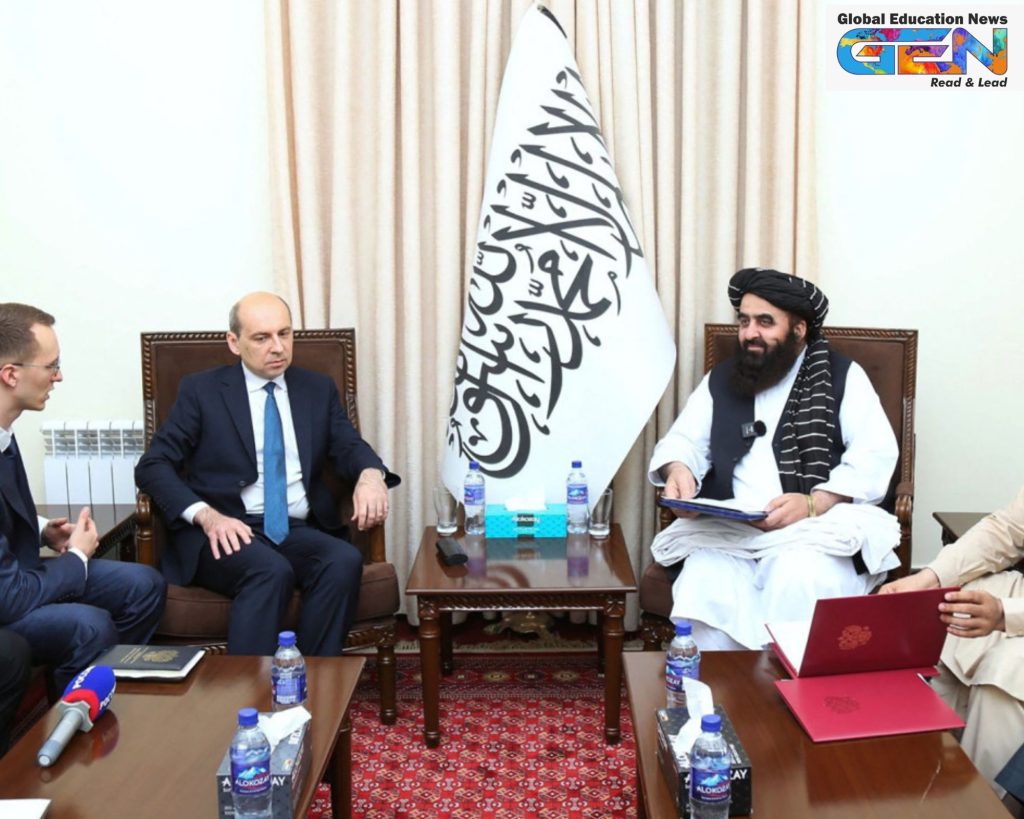
As the first country to recognize the Taliban, Russia has set a bold precedent. The July 4, 2025, announcement, marked by a meeting between Amir Khan Muttaqi and Dmitry Zhirnov, signals deeper ties. Follow updates via @mfa_russia or @MoFA_AFG on X, or check tass.com for official statements. Will other nations follow Russia’s lead, or will human rights concerns hold them back? The global stage is watching.
Key Points:
- Historic Meeting: Muttaqi and Zhirnov sealed the deal in Kabul.
- Stay Informed: Track @mfa_russia or tass.com for updates.
- Global Impact: Russia’s move could reshape diplomacy.