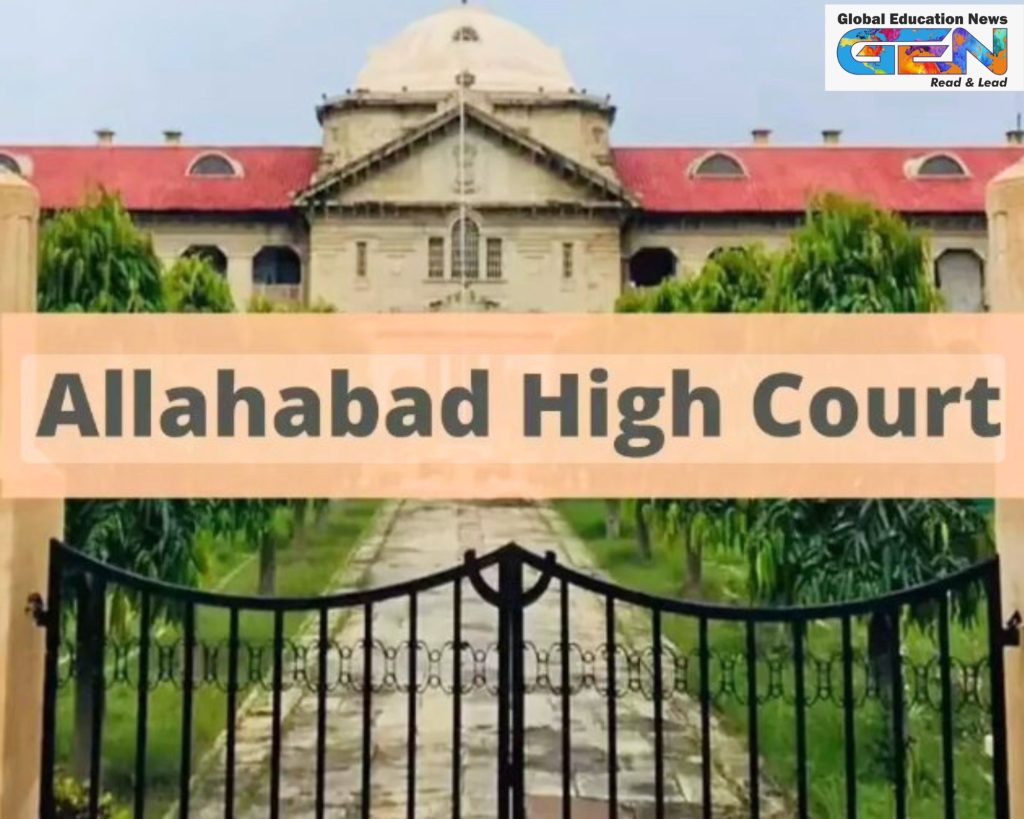
The Uttar Pradesh government’s bold move to merge primary and upper primary schools with fewer than 50 students has sparked a firestorm. On July 4, 2025, the Lucknow bench of the Allahabad High Court, led by Justice Pankaj Bhatia, will hear a critical case challenging this decision. The court has demanded the Yogi Adityanath-led government present a survey report and a fully prepared defense to justify the merger, warning of a ₹1 lakh fine for non-compliance. With opposition parties and petitioners crying foul, this policy is under intense scrutiny. Here’s the full scoop on what’s at stake!
Key Points:
- Court’s Demand: UP government must submit a survey report and justify the merger by July 4, 2025.
- Scale of Merger: Plans to merge 27,764 schools with low enrollment.
- Legal Challenge: Writ petition filed by Krishna Kumari and 50 others from Sitapur.
Why Merge Schools? The Government’s Case
The UP government defends the merger as a step to make education “more functional and viable.” With 1.40 lakh primary and upper primary schools in the state, 29,000 have 50 or fewer students, including 56 schools with zero enrollment. The plan aims to shift students to nearby schools with better facilities and optimize resources like teachers and infrastructure. Government lawyers, including Additional Advocate General Anuj Kudesia, argue that low enrollment justifies consolidation for efficient resource use.
Key Points:
- Low Enrollment: 29,000 schools have 50 or fewer students; 56 schools have none.
- Resource Optimization: Shift students to larger campuses with better facilities.
- Government’s Stand: Merger aligns with improving educational efficiency.
Opposition’s Outcry: “Anti-Poor and Unjust”
Opposition leaders have slammed the merger as a “conspiracy” against rural and marginalized communities. Samajwadi Party chief Akhilesh Yadav calls it a move to “deprive future generations of education,” arguing it promotes privatization and threatens jobs for 1.35 lakh assistant teachers and 27,000 headmasters. BSP leader Mayawati labeled it “unfair and anti-poor,” warning it could deny crores of poor children accessible education. Congress and Aam Aadmi Party (AAP) have also protested, with AAP’s slogan “Madhushala Nahin, Pathshala Chahiye” (We want schools, not liquor shops) resonating across rural UP.
Key Points:
- Akhilesh Yadav’s Charge: Alleges BJP aims to create an “uneducated populace” for manipulation.
- Mayawati’s Appeal: Calls merger “anti-poor,” urges withdrawal.
- Protests: Congress, AAP, and others demand scrapping the plan.
The Legal Battle: High Court Steps In
The Allahabad High Court is not letting this slide. On Wednesday, petitioners, led by Krishna Kumari, argued that the merger violates the Right to Education (RTE) Act, 2009, which mandates free and compulsory education for children aged 6-14 under Article 21A of the Constitution. The court, frustrated by the government’s failure to present a survey report, postponed the hearing to July 4, 2025, with a stern warning: no further delays, or a ₹1 lakh fine looms. Justice Pankaj Bhatia emphasized that administrative orders cannot override legislative provisions like the RTE Act.
Key Points:
- Court’s Ire: Government reprimanded for lacking survey evidence.
- RTE Violation: Petitioners argue merger undermines constitutional right to education.
- Deadline: No further postponements beyond July 4, 2025.
Impact on Rural Education
The merger plan has raised alarms about access to education, especially for rural and marginalized students. Critics argue that consolidating schools could force children, particularly girls, to travel long distances, increasing dropout rates. Swami Prasad Maurya highlighted that these schools serve children of farmers, laborers, and economically weaker sections. With 42 lakh children reportedly dropping out of UP government schools in four years, including 8 lakh in one year, the stakes are high.
Key Points:
- Access Issues: Longer travel distances may deter girls’ education.
- Dropout Crisis: 42 lakh children left government schools in four years.
- Marginalized Hit Hard: Poor and rural students most affected.
Challenges and Concerns
The merger plan faces practical and ethical hurdles. Critics question the lack of a transparent survey to justify the decision, with the High Court demanding hard data. Rural areas often lack reliable transport, making school consolidation a logistical nightmare. Opposition leaders also fear the move could pave the way for privatization, limiting affordable education options. The government’s claim of “better facilities” at merged schools remains untested, raising doubts about implementation.
Key Points:
- No Survey Data: Court demands evidence of pre-merger surveys.
- Privatization Fears: Opposition alleges a push toward private education.
- Logistical Issues: Rural transport gaps could hinder access.
What’s Next for UP Schools?
The July 4, 2025, hearing is a make-or-break moment. If the UP government fails to present a convincing case, the merger could be stalled or scrapped. Meanwhile, protests are intensifying, with parties like Congress, SP, BSP, and AAP rallying against the policy. Students and parents can follow updates via @UPGovt or @AllahabadHC on X, or check official portals like up.gov.in for court outcomes.
Key Points:
- Critical Hearing: July 4, 2025, decides merger’s fate.
- Growing Protests: Opposition parties vow to fight on.
- Stay Updated: Follow @UPGovt or up.gov.in for news.
The Bigger Picture
The UP school merger controversy is a battle over the future of education. Will the government’s push for efficiency hold up, or will the High Court and public outcry force a rethink? For millions of rural students, the outcome will shape access to their constitutional right to education. Stay tuned for July 4, 2025, as the Allahabad High Court delivers its verdict!
Key Points:
- Education at Stake: Merger could reshape UP’s education landscape.
- Public Voice: Protests highlight rural communities’ concerns.
- Call to Action: Keep an eye on up.gov.in for the latest updates.