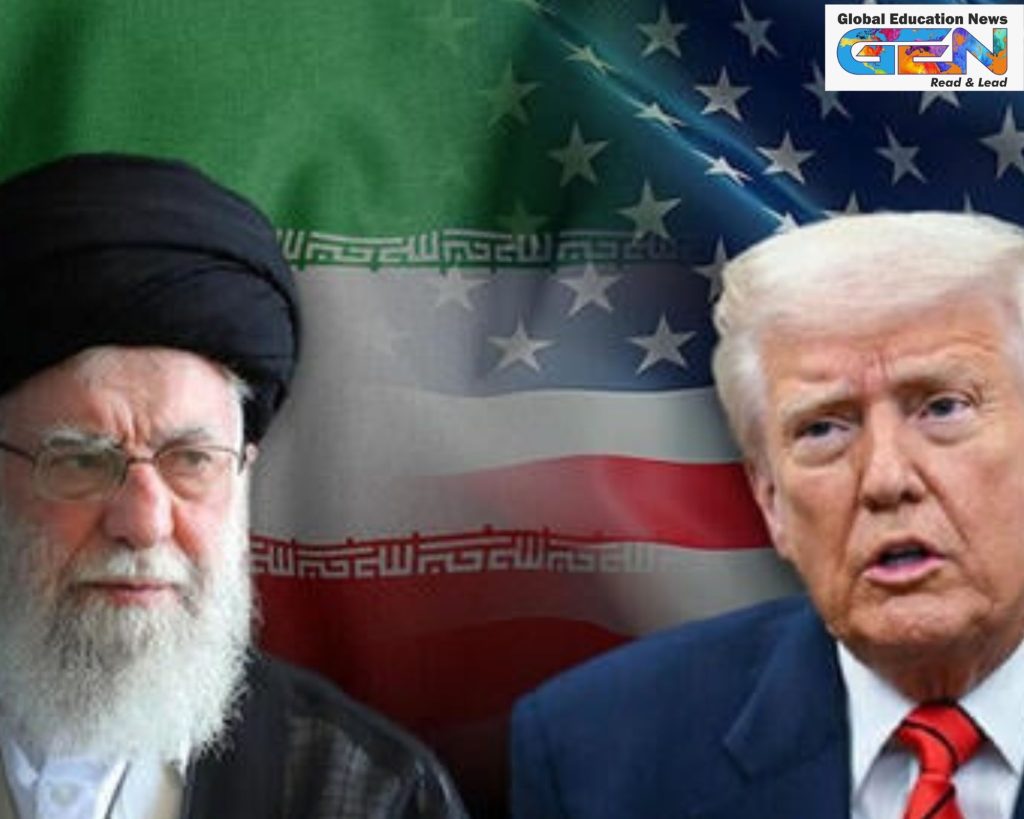
On June 21, 2025, the US launched Operation Midnight Hammer, bombing Iran’s key nuclear facilities—Fordow, Natanz, and Isfahan—in a dramatic escalation of the Israel-Iran conflict. This shift from a supportive US role to active combatant alongside Israel signals a new phase in Middle East tensions. With Iran vowing retaliation and the Strait of Hormuz at risk, the region teeters on the edge of chaos, impacting global energy markets and nations like India. Here’s what’s at stake.
- US strikes Iran’s Fordow, Natanz, and Isfahan nuclear sites on June 21, 2025.
- Marks US shift from Israel’s ally to direct participant in Iran conflict.
- Raises fears of broader war and Strait of Hormuz disruption.
US-Israel Alliance: A Strategic Powerhouse
Key Points:
- US joins Israel’s Operation Rising Lion with B-2 bombers and bunker busters.
- Targets Iran’s nuclear and missile capabilities, bolstering Israel’s air dominance.
- Deepens US-Israel military ties, shifting from intelligence to direct action.
The US-Israel partnership reached a pivotal moment with 125 aircraft, including seven B-2 Spirit bombers, dropping 14 Massive Ordnance Penetrators (MOPs) on Iran’s fortified Fordow facility, alongside Tomahawk missiles hitting Isfahan. Israel’s Operation Rising Lion, aimed at crippling Iran’s nuclear and missile programs, gained firepower from US involvement. Israel’s prior strikes had weakened Iran’s defenses, allowing unchallenged US sorties. This marks a departure from the US’s previous role of providing intelligence and logistics, cementing a joint military front against Iran’s nuclear ambitions, which Israel calls an “existential threat.”
Trump’s Policy U-Turn: From Isolation to Intervention
Key Points:
- Trump’s strikes contradict his “no endless wars” pledge.
- Critics compare action to 2003 Iraq invasion, citing legal concerns.
- Move follows failed nuclear talks and Israel’s June 13 strikes.
President Donald Trump, once vocal against Middle East entanglements, stunned critics with the Iran strikes, calling them a “spectacular military success” that “obliterated” Iran’s nuclear sites. His earlier promises to exit conflicts in Ukraine and Gaza clash with this intervention, drawing parallels to the 2003 Iraq invasion over unverified weapons claims. Democrats like Rep. Jim Himes slammed the move as a “violation of Congressional war powers,” while even MAGA allies like Rep. Marjorie Taylor Greene questioned its necessity. The strikes followed Israel’s June 13 attacks and stalled nuclear negotiations, with Trump citing Iran’s refusal to “surrender” as justification.
Israel’s Upper Hand: Iran’s Defenses Crumble
Key Points:
- Israel’s strikes decimate Iran’s missile bases and air defenses.
- US hits further degrade Iran’s military, ensuring Israel’s air superiority.
- Netanyahu claims strikes bring Israel “close to victory.”
Israel’s relentless campaign, dubbed Operation Rising Lion, has crippled Iran’s military infrastructure. Strikes on missile bases in Esfahan and Tehran, plus the killing of Quds Force commanders, have slashed Iran’s retaliatory capacity. The US’s bunker-buster bombs on Fordow and Natanz—Iran’s largest enrichment sites—inflicted “severe damage,” per Pentagon assessments. Iran’s air defenses failed to detect US B-2s, and its fighters stayed grounded, cementing Israel’s air dominance. Prime Minister Benjamin Netanyahu hailed the US strikes, claiming they bring Israel “very close” to its goal of neutralizing Iran’s nuclear threat.
Iran’s Precarious Position: A Regime Under Siege
Key Points:
- Iran loses key military leaders and nuclear infrastructure.
- Aging Supreme Leader faces internal and external pressures.
- Retaliation risks include missile strikes or Strait of Hormuz closure.
Iran is reeling. Over 400 civilian deaths from Israeli strikes, plus losses of military leadership and nuclear facilities, have exposed regime vulnerabilities. The Islamic Revolutionary Guard Corps (IRGC) is weakened, and proxies like Hezbollah and Hamas are battered, limiting Iran’s regional clout. Supreme Leader Ayatollah Ali Khamenei, aging and under pressure, faces a regime teetering on instability. Iran’s Foreign Minister Abbas Araghchi vowed “everlasting consequences,” with options like missile strikes on US bases or mining the Strait of Hormuz. Yet, Iran’s parliament approved a potential strait closure, a move analysts call “massively escalatory.”
Echoes of Iraq: Ethical and Legal Questions
Key Points:
- Strikes recall 2003 Iraq invasion over unverified WMD claims.
- Iran denies nuclear weapon pursuit, backed by IAEA findings.
- UN Security Council urged to enforce ceasefire.
Critics draw chilling parallels to the 2003 Iraq invasion, where the US justified action with unproven claims of weapons of mass destruction. Iran insists its nuclear program is peaceful, a stance supported by the IAEA, which found no evidence of weaponization post-2003. The UN nuclear watchdog reported no radiation leaks post-strikes, suggesting limited nuclear material at targeted sites. Nations like Russia, China, and Cuba condemned the US action as a breach of international law, urging a UN Security Council ceasefire. The lack of Congressional approval fuels debates over the strikes’ legality.
Iran’s Nuclear Future: Resilience Amid Ruins
Key Points:
- Strikes set back but don’t destroy Iran’s nuclear program.
- Iran may withdraw from Nuclear Non-Proliferation Treaty (NPT).
- Scientific community key to rebuilding efforts.
Despite Trump’s claim that Iran’s nuclear program is “totally obliterated,” experts doubt the strikes fully destroyed it. Fordow’s deep underground structure and Natanz’s dispersed centrifuges suggest partial damage, with Iran likely moving enriched uranium beforehand. Iran’s Atomic Energy Organization vowed to continue its program, and experts predict a possible NPT withdrawal, signaling defiance. Iran’s scientific community, resilient despite past sabotage, will drive recovery efforts, though delays could last years. X posts speculate Iran may pursue covert nuclear ambitions, escalating global concerns.
Regional Chaos Looms: Oil and Allies at Risk
Key Points:
- Strait of Hormuz closure could spike oil to $100/barrel.
- Iran’s proxies may target US bases in Iraq, Syria, or Yemen.
- Gulf allies like Bahrain urge de-escalation.
The Middle East faces turmoil. A Strait of Hormuz blockade could disrupt 20-25% of global oil trade, pushing prices toward $100/barrel and hammering economies like Japan and South Korea. Iran’s proxies—Houthis in Yemen or Iraqi militias—may strike US bases, though their weakened state limits impact. Gulf states like Bahrain and Qatar called for restraint, wary of regional fallout. Oil prices already jumped to $80.28 (Brent) post-strikes, with markets bracing for Iran’s response. X users fear a “global energy crisis” if the strait closes.
India’s High Stakes: Energy and Expat Safety
Key Points:
- India’s 84% oil imports via Strait of Hormuz at risk.
- 8 million Indian expats in Gulf face safety concerns.
- India urges diplomacy to protect economic interests.
India is on edge. With 84% of its crude oil imports transiting the Strait of Hormuz, a closure would trigger fuel price spikes and economic strain. India’s 8 million expatriates in the Gulf, especially in UAE and Saudi Arabia, face risks if conflict widens, prompting New Delhi to prioritize their safety. India’s energy security and economic growth hinge on Middle East stability, pushing it to advocate for diplomacy and de-escalation. X posts urge India to bolster strategic oil reserves and diversify imports to mitigate risks.
What’s Next for the Middle East?
Key Points:
- Iran’s response—military or diplomatic—will shape conflict trajectory.
- US and Israel signal readiness for further strikes.
- Global calls for ceasefire grow amid economic fears.
The Middle East stands at a crossroads. Iran’s retaliation options—from missile strikes to cyberattacks or Strait of Hormuz disruption—carry high risks but may be tempered to avoid all-out war. The US and Israel, emboldened by military success, warn of more strikes if Iran escalates. Global leaders, from China to Chile, urge a return to diplomacy, with the UN Security Council pushing for a ceasefire. For India and the world, the stakes are clear: de-escalation is critical to avert an energy crisis and regional war. Stay vigilant—this conflict’s ripples will shape 2025.