Reinforcing Environmental Protection Over Retrospective Approvals
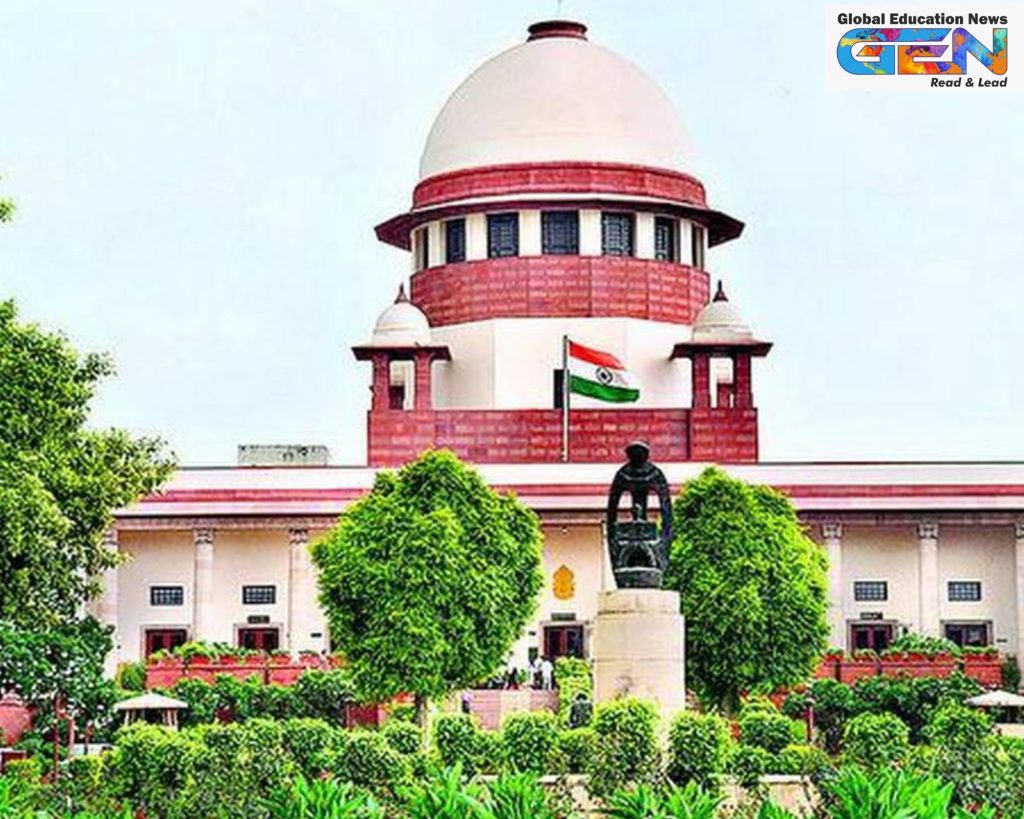
In a landmark decision on May 16, 2025, the Supreme Court of India invalidated the 2017 notification and the 2021 office memorandum (OM) that permitted ex-post facto environmental clearances for projects that began without prior approval. This ruling reinforces the mandatory requirement for prior environmental assessments under the Environmental Impact Assessment (EIA) Notification 2006, emphasizing that development cannot compromise environmental integrity. The decision, hailed as a victory for environmental rule of law, aligns with India’s commitment to sustainable development and the precautionary principle.
Why It Matters: The ruling halts the practice of regularizing projects that bypass mandatory environmental clearances, potentially impacting over 100 projects, including coal mines and cement plants, and setting a precedent for stricter compliance.
Background of Environmental Clearances
- EIA Notification 2006: Mandates prior environmental clearance for projects like mining, dams, and infrastructure to assess and mitigate environmental impacts.
- 2017 Notification: Introduced a six-month amnesty window (closed September 2017) for projects that started without clearance, intended as a one-time measure.
- Legal Challenges: The notification faced scrutiny for undermining the precautionary principle, which requires assessing impacts before project initiation.
The EIA Notification 2006 is a cornerstone of India’s environmental framework, requiring projects to undergo rigorous assessments before starting operations. The 2017 notification, however, allowed projects that violated this rule to seek retrospective clearance, sparking debates over its legality and environmental consequences.
Supreme Court’s Rationale
- Illegality of Ex-Post Facto Clearances: The Court ruled that retrospective clearances violate environmental jurisprudence and the EIA 2006’s mandate for prior approval.
- Precautionary Principle: Environmental assessments must precede projects to prevent irreparable harm, as post-facto evaluations cannot undo damage.
- Article 21 Violation: Allowing violations infringes on the constitutional right to a pollution-free environment under Article 21.
- Development vs. Environment: The Court questioned, “Can there be development at the cost of the environment?” emphasizing sustainable development.
The bench, led by Justices Abhay S. Oka and Ujjal Bhuyan, declared the 2017 notification and 2021 OM “illegal and arbitrary,” citing their conflict with prior rulings like Common Cause (2017) and Alembic Pharmaceuticals (2020). These judgments had established that ex-post facto clearances are “alien to environmental jurisprudence” and undermine the purpose of environmental laws.
Key Quote: “The persons who acted without ECs were not illiterate persons. They are companies, real estate developers, public sector undertakings, mining industries… knowingly committing illegalities.” – Justice Oka, highlighting deliberate violations.
Impact of the 2021 Office Memorandum
- Purpose: The 2021 OM established a Standard Operating Procedure (SOP) to regularize projects that started without clearance, extending beyond the 2017 window.
- Criticism: It effectively normalized violations by treating the SOP as a substantive procedure for new clearance applications.
- Scope Expansion: The January 2022 OM generalized the SOP nationwide, ignoring earlier court stays limited to Tamil Nadu.
The 2021 OM, issued 15 years after the EIA 2006, was seen as protecting violators who knowingly flouted regulations. The Court criticized the Ministry’s “crafty drafting” that avoided explicitly using “ex-post facto” but achieved the same effect, undermining the EIA’s preventive framework.
Government’s Defence
- Polluter Pays Principle: The Ministry argued that the 2021 OM addressed violations by imposing penalties, aligning with the Environment (Protection) Act, 1986.
- Environmental Harm of Demolition: Denying regularization could lead to demolitions, like the 2021 Supertech Twin Towers, causing further environmental damage.
- Regulatory Framework: The OM was presented as a necessary mechanism to handle violations absent in the EIA 2006.
Additional Solicitor General Aishwarya Bhati defended the OM, claiming it balanced environmental protection with practical realities. However, the Court rejected this, asserting that environmental laws cannot be relaxed to accommodate deliberate violations.
Consequences of the Ruling
- Project Scrutiny: Over 100 projects, including coal mines, cement plants, and industrial units cleared under the violation category, may face re-evaluation.
- Existing Clearances: Projects already granted clearances under the 2017 notification and 2021 OM remain unaffected, avoiding immediate disruptions.
- Legal Precedent: The ruling strengthens the mitigation hierarchy of “avoid, minimize, restore, offset” in development projects.
While the decision protects existing clearances, it signals a crackdown on future violations. Projects operating without prior clearance may face stricter penalties or closure, prompting industries to prioritize compliance
Future of Environmental Clearances
- Stricter Enforcement: The ruling mandates prior clearances, aligning with India’s Sustainable Development Goals and international treaties like the Rio Declaration.
- Policy Shift: The government is restrained from issuing similar notifications, ensuring preventive rather than corrective measures.
- Public Trust: The decision restores faith in environmental governance, addressing concerns raised by NGOs like Vanashakti.
Experts view this as a “victory for environmental rule of law,” reinforcing the precautionary principle and encouraging proactive compliance. However, some, like Debi Goenka, argue that sparing existing violators weakens accountability.
Role of Expert Appraisal Committees (EACs)
- Evaluation Role: EACs assess projects for environmental impacts, recommending clearances or conditions.
- 2017–2021 Activity: EACs frequently met to evaluate violation cases, influencing the regularization process under the 2017 and 2021 frameworks.
- Criticism: Their recommendations often enabled ex-post facto clearances, bypassing the EIA’s preventive intent.
EACs’ role in processing violation cases drew scrutiny for diluting environmental standards. The ruling indirectly calls for stricter oversight of EAC decisions to align with legal mandates.
Social Sentiment: Posts on X celebrated the ruling as a win for environmental justice, with users like @LiveLawIndia and @kalpana1947 praising its alignment with sustainable development, though some noted gaps in addressing past violators.
The Path Forward
The Supreme Court’s ruling marks a pivotal moment in India’s environmental governance, prioritizing prevention over regularization. By striking down the 2017 notification and 2021 OM, the Court has reaffirmed the sanctity of prior environmental assessments, ensuring that development aligns with environmental protection. While challenges remain, such as addressing existing projects and ensuring EAC accountability, this decision strengthens India’s commitment to sustainable development and a pollution-free future