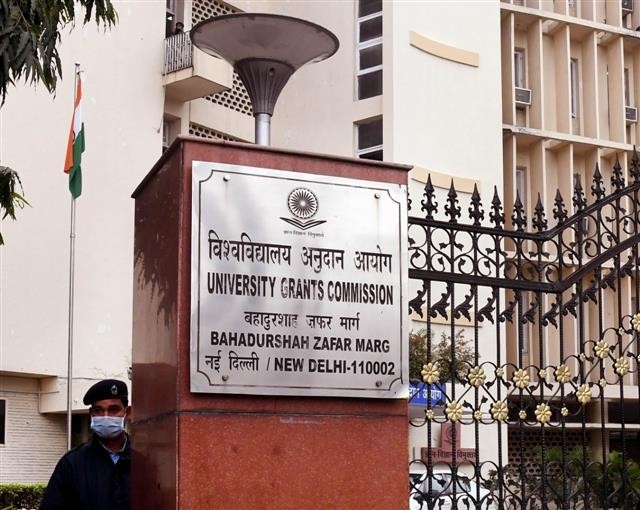
In a major move aimed at safeguarding students and preserving the credibility of India’s higher education system, the University Grants Commission (UGC) has launched a fresh crackdown on EdTech companies offering degree and diploma programmes through unauthorised partnerships with universities. Simultaneously, the regulator has reiterated that 32 fake universities identified across the country continue to remain under its watch and has urged students to verify the authenticity of institutions before enrolling.
The latest advisory comes at a time when online education is witnessing unprecedented growth, with millions of students exploring digital learning opportunities. While technology has expanded access to higher education, the UGC has cautioned that not every online programme marketed through private platforms carries official recognition.
————————————————–
UGC Warns Against Franchise-Style EdTech Partnerships
The UGC has observed that several EdTech companies are advertising Open and Distance Learning (ODL) and online degree programmes in collaboration with UGC-recognised universities through newspapers, television, websites and social media.
However, the Commission has made it clear that franchise-style arrangements are not permitted under existing regulations. Recognition granted to a university does not automatically extend to programmes marketed or delivered through unauthorised third-party platforms. Consequently, degrees obtained through such arrangements do not enjoy UGC recognition, regardless of the university’s status.
The regulator has warned that legal action may be initiated against both defaulting EdTech companies and higher education institutions found violating applicable regulations.
————————————————–
Why the UGC Has Taken This Step
India’s online higher education sector has expanded rapidly in recent years, driven by technological advancements, flexible learning options and increasing demand for professional qualifications.
However, this growth has also created opportunities for misleading advertisements and unauthorised educational partnerships.
According to the UGC, some platforms have been using the names of recognised universities to market online degree programmes that fall outside the approved regulatory framework. Such practices can mislead students into believing they are enrolling in recognised courses when, in reality, the qualification may not be valid for employment, higher education or government recruitment.
————————————————–
32 Fake Universities Continue to Be Under UGC’s Watch
Alongside the advisory on EdTech collaborations, the UGC has reiterated that 32 institutions have been identified as fake universities, based on the latest list published in February 2026. These institutions are not authorised to award degrees under the UGC Act.
The Commission explained that institutions are added to the fake university list only after complaints are examined, notices are issued, explanations are sought, and the responses are found unsatisfactory.
————————————————–
How the UGC Identifies Fake Universities
To combat fraudulent institutions, the UGC operates an Anti-Mal-Practice Cell (AMPC), established to monitor organisations that illegally award degrees in violation of the UGC Act, 1956.
The Commission has adopted a multi-pronged strategy that includes:
- Issuing show-cause and warning notices.
- Publishing and periodically updating the list of fake universities.
- Advising students and parents through public awareness campaigns.
- Coordinating with state governments and Union Territories to initiate legal action, including registration of FIRs where necessary.
- Monitoring institutions that continue to operate despite regulatory action.
————————————————–
What Students Should Verify Before Taking Admission
The UGC has advised every prospective student to conduct due diligence before enrolling in any online or distance learning programme.
Students should ensure that:
- The university is officially recognised by the UGC.
- The specific online or ODL programme has the required recognition or entitlement.
- Admissions are being offered directly by the recognised institution and not through an unauthorised franchise arrangement.
- Programme details are verified through the UGC’s Distance Education Bureau (DEB) portal before making any payment.
————————————————–
Impact on India’s Online Education Ecosystem
The latest action is expected to have significant implications for the rapidly expanding EdTech industry.
Stronger Regulatory Oversight
Universities and EdTech firms will need to ensure that all collaborations comply with UGC regulations.
Greater Student Protection
The move aims to prevent students from investing time and money in programmes that may not carry legal recognition.
Improved Institutional Accountability
Higher education institutions entering into unauthorised commercial partnerships could face regulatory action.
Enhanced Transparency
Students will have clearer information about which online programmes are officially recognised.
————————————————–
Why This Matters for Students and Parents
Choosing the wrong institution can have long-term consequences. Degrees issued by fake universities or through unauthorised programmes may not be accepted for:
- Government employment.
- Higher education admissions.
- Professional licensing.
- Competitive examinations.
- Employer verification processes.
The UGC’s latest advisory serves as a reminder that verification is just as important as admission, particularly as digital education continues to expand.
————————————————–
A Broader Push for Quality in Higher Education
The crackdown aligns with the government’s broader efforts to improve quality assurance in higher education under the National Education Policy (NEP) 2020. Along with promoting digital learning, regulators are increasingly focusing on transparency, academic standards and student protection.
Experts believe that stricter oversight of online education will help build greater trust in legitimate digital programmes while discouraging misleading commercial practices.