As of September 21, 2026, the IIT Bombay situation involves several separate student deaths and, most recently, the death of Sahil Wakode, which has triggered a major campus protest, a police/Crime Branch investigation and allegations of caste discrimination. Because some details are disputed and the investigation is ongoing, it is important to separate confirmed developments, allegations and institutional responses.
1. Sahil Wakode case — September 2026
Sahil Ravindra Wakode was a second-year BTech student in IIT Bombay’s Energy Science and Engineering department. He died by suicide on September 18, 2026.
The immediate circumstances before his death have become the central issue in the investigation.
According to IIT Bombay, Wakode was found using a mobile phone during a mid-semester examination. The institute initially said the question paper had allegedly been uploaded to an AI platform to seek answers. IIT Bombay said no suspension or other disciplinary action had been initiated and that the instructor and department head had counselled him.
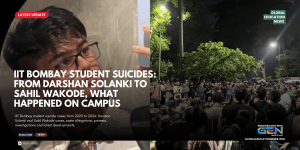
Students and Wakode’s family have presented a different account, alleging that he faced pressure and that he had been threatened with suspension. Those claims remain allegations and have not been established by the investigation.
2. Caste-discrimination allegations
After Wakode’s death, his parents alleged that he had experienced caste-based harassment on campus. His father named Professor Suryanarayana Doolla in the police complaint. The allegations include caste-related remarks and harassment.
IIT Bombay has denied caste discrimination, saying Wakode had not submitted a complaint to the institute administration or its SC/ST Cell. Director Shireesh Kedare has also denied the allegations.
Police subsequently registered a case based on the family’s complaint, including provisions relating to abetment of suicide and the Scheduled Castes and Scheduled Tribes (Prevention of Atrocities) Act. The investigation was transferred to the Mumbai Police Crime Branch.
So, at present, the caste-discrimination allegation should be described as an ongoing investigative allegation, not an established finding.
3. IIT Bombay apologises over its earlier statement
One significant development came on September 21.
IIT Bombay apologised for statements in its earlier communication about the circumstances surrounding Wakode’s death. The institute said the circumstances were still being investigated and acknowledged that it should not have characterised events before they were established through the investigation.
This became an important point in the student protests because students argued that the institute’s initial communication had prematurely framed what happened before the investigation was complete.
4. Professor Doolla suspended from his administrative post
On September 21, IIT Bombay suspended Professor Suryanarayana Doolla from his position as Dean of Administrative Affairs.
The suspension is from the administrative position; reports say he continues as a professor and as head of the Energy Science and Engineering department. IIT Bombay said further action would depend on the ongoing investigation.
This should therefore not be described as a finding that he caused Wakode’s death. The investigation is still underway.
5. Students launched major protests
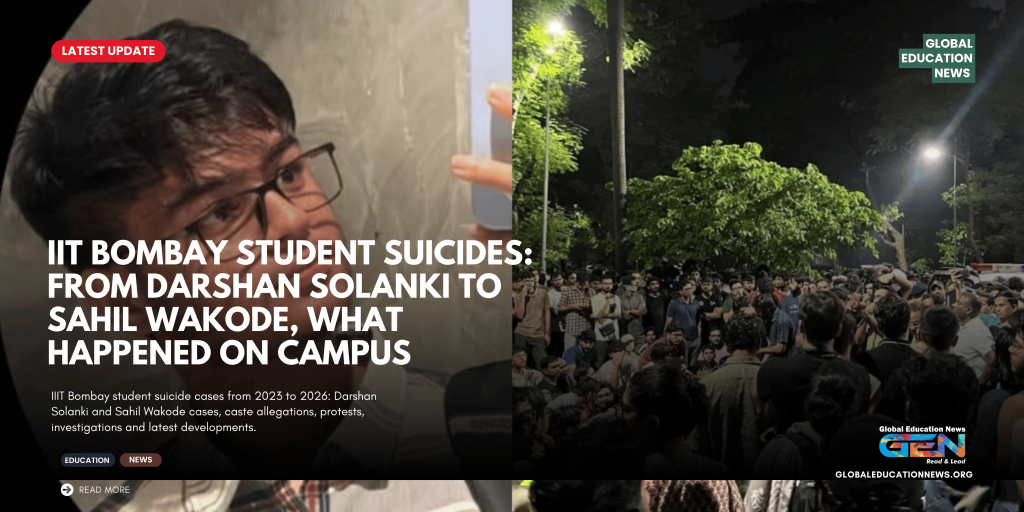
Wakode’s death led to protests at the Powai campus.
Students demanded answers about the circumstances surrounding his death, independent investigation, changes to disciplinary procedures and stronger student-welfare mechanisms. Reports indicate that the demonstrations grew substantially over the following days.
The students eventually submitted an 18-point charter of demands to the administration.
6. IIT Bombay director signed the 18-point charter
On Sunday night, IIT Bombay Director Shireesh Kedare held a lengthy meeting with protesting students and signed the students’ 18-point charter.
The demands reportedly include:
- an independent investigation into Wakode’s death;
- action against anyone found responsible;
- greater student representation;
- a mechanism for complaints against professors;
- changes in how academic-misconduct cases are handled;
- stronger counselling facilities;
- improved emergency medical services;
- mental-health sensitisation for faculty and staff;
- a student concerns/grievance portal;
- a student-wellbeing task force; and
- protection against disciplinary or other retaliation for students participating in the protests.
Some demands concern specific administrative actions and remain subject to due process and implementation.
7. There have been multiple reported student suicides at IIT Bombay in 2026
The Wakode case is particularly significant because it is not the only reported student suicide at IIT Bombay this year.
According to reporting on September 21, Wakode’s death was the third reported suicide at the Powai campus in 2026: one student died in February and another second-year BTech student died in July.
That sequence has intensified questions about student mental health, campus support and institutional response.
8. Darshan Solanki case — February 2023
The other major IIT Bombay case being discussed alongside Wakode’s is the Darshan Solanki case.
Solanki was an 18-year-old BTech student from Gujarat and a member of the Scheduled Caste community. He died by suicide in February 2023. His death led to protests and allegations that caste discrimination had played a role.
An IIT Bombay committee investigating the death said it did not find evidence establishing caste discrimination as the cause. Sections of the student community and activists disputed that conclusion, and the case subsequently became an important part of the national discussion about caste, inclusion and student welfare at elite educational institutions.
This is why Wakode’s death has revived memories of Solanki’s case: both cases have involved allegations concerning caste discrimination, but they are separate cases and their circumstances are not identical.
9. Earlier official IIT Bombay data
An IIT Bombay RTI response published on the institute’s website in 2024 recorded one student suicide in 2022 and one in 2023 in response to an RTI query about the preceding five years.
That official response predates the deaths reported in 2026, so it should not be treated as a complete current count.
10. Hostel safety and wall-mounted fans
Another issue that has emerged this year concerns hostel infrastructure.
Following student deaths, IIT Bombay began discussing/reviewing the replacement of ceiling fans with wall-mounted fans in hostel rooms. The institute has said this work forms part of broader hostel renovation/safety measures rather than being solely a reaction to one particular death.
The first batch of wall-mounted fans has reportedly reached campus, adding another dimension to the current debate about student safety and hostel infrastructure.
What is established vs. what remains under investigation
| Issue | Current status |
|---|---|
| Sahil Wakode died by suicide | Reported/established |
| Examination incident preceded his death | Reported by IIT Bombay and other sources |
| Threat of suspension | Disputed allegation |
| Caste-based harassment | Family allegation; denied by IIT Bombay; investigation ongoing |
| Police case | Registered |
| Crime Branch investigation | Underway |
| Professor Doolla’s administrative suspension | Confirmed |
| IIT Bombay apology over earlier communication | Confirmed |
| 18-point student charter | Signed by director |
| Darshan Solanki case | Separate 2023 case |
| Caste discrimination established as cause of Solanki’s death | Not established by IIT Bombay’s investigation; disputed by some groups |
| 2026 deaths at IIT Bombay | Three reported suicides by September 21, according to current reporting |
The bigger issue
The immediate investigation will have to establish what happened around Wakode’s examination incident and what, if anything, contributed to his death. Separately, the caste allegations will need to be assessed through evidence rather than assumptions.
The wider institutional questions raised by the protests are about student mental-health support, grievance redressal, academic-misconduct procedures, faculty accountability, caste-related complaints and how IIT Bombay communicates during sensitive incidents. Those questions are now at the centre of the 18-point charter and the continuing investigation.