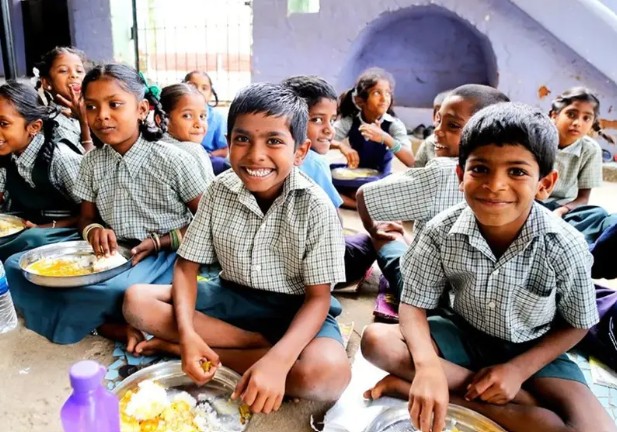
School meals have long been regarded as one of India’s most successful social welfare initiatives, helping improve nutrition, school attendance and learning outcomes among millions of children. However, a recent decision in West Bengal to introduce a vegetarian meal model in schools under a new implementation arrangement has reignited a nationwide discussion over the role of eggs in government school meals.
While the development has sparked political and public debate, it has also drawn attention to the approaches followed by states such as Tamil Nadu and Odisha, where governments have attempted to address nutritional needs while accommodating diverse dietary preferences.
The discussion goes beyond food choices—it raises important questions about child nutrition, public health, cultural diversity and policy implementation.
Why Are Eggs Considered Important in School Meals?
Nutrition experts have consistently identified eggs as one of the most cost-effective sources of high-quality protein for growing children.
An egg provides:
- High-quality protein
- Essential amino acids
- Vitamins A, D, B12 and folate
- Iron and zinc
- Healthy fats that support brain development
For children from economically weaker families, school meals may provide the most nutritious meal of the day. Because eggs are affordable, easy to distribute and widely accepted in many parts of India, several states have included them in their school nutrition programmes.
Health researchers have also linked regular protein intake with improved growth, cognitive development, classroom concentration and school attendance.
West Bengal’s New Mid-Day Meal Model
The recent policy discussion in West Bengal emerged after the state government announced that cooked meals in schools within the Kolkata Municipal Corporation area would be prepared through a new implementation model involving a religious charitable organisation.
Under the proposed arrangement, meals are expected to follow a vegetarian menu, replacing eggs with alternatives such as:
- Soybean
- Paneer
- Rajma
- Pulses and legumes
Supporters of the move argue that carefully planned vegetarian meals can meet children’s nutritional requirements when designed by nutrition experts.
However, critics have questioned whether these alternatives can consistently provide the same nutrient density and whether children accustomed to eggs as part of their weekly meals will readily accept the change. The issue has also generated debate over nutrition policy, food preferences and the role of implementing agencies in publicly funded welfare programmes.
Tamil Nadu: A Long-Standing Egg-Based Nutrition Model
Tamil Nadu is widely regarded as a pioneer in school nutrition programmes.
The state has been serving eggs in school meals for decades, gradually expanding the programme as part of its efforts to combat child malnutrition and improve educational outcomes.
Key Features of Tamil Nadu’s Model
- Eggs are served multiple times each week.
- Students who do not consume eggs are generally offered alternative nutritious options.
- Nutrition planning is integrated with broader child welfare initiatives.
- The programme aims to improve attendance, reduce classroom hunger and support physical development.
Tamil Nadu’s experience is frequently cited in public health discussions as an example of combining nutritional science with flexibility for students having different dietary preferences.
Odisha’s Alternative Approach: Nutrition with Choice
Odisha has also incorporated eggs into its school meal programme while addressing situations where implementing organisations follow vegetarian food practices.
Rather than eliminating eggs altogether, the state has adopted operational arrangements that allow eggs to continue being served through separate procurement and distribution mechanisms.
Highlights of Odisha’s Model
- Eggs remain part of the government nutrition programme.
- Alternative delivery arrangements ensure students continue receiving eggs even where meal providers do not prepare them.
- The focus remains on meeting nutritional standards without disrupting programme implementation.
This approach demonstrates how administrative flexibility can help balance institutional preferences with public nutrition objectives.
Nutrition Versus Dietary Preference: Understanding the Debate
The current discussion is not simply about vegetarian versus non-vegetarian food.
Instead, it reflects broader policy questions:
Child Nutrition
Should school meal planning prioritise foods that provide maximum nutritional value at the lowest cost?
Parental Choice
How can programmes respect the dietary preferences of different families while ensuring nutritional adequacy?
Operational Feasibility
Can alternative protein sources be supplied consistently across millions of school meals?
Public Health Outcomes
Will dietary changes influence child nutrition indicators over the long term?
These questions continue to shape debates among policymakers, educators, nutrition experts and civil society organisations.
What Do Nutrition Experts Say?
Public health specialists generally agree that a well-planned vegetarian diet can provide adequate nutrition. However, achieving equivalent protein quality and micronutrient intake often requires careful meal planning and a combination of multiple food sources.
Eggs remain widely recommended in child nutrition programmes because they are:
- Nutrient-dense
- Affordable
- Easy to cook and distribute
- Highly bioavailable
- Accepted by large sections of the population
Experts also emphasise that where eggs are not served, alternative foods should provide comparable nutritional value rather than simply replacing one food item with another.
Why School Meals Matter Beyond Nutrition
India’s school meal programme—now implemented under the PM POSHAN Scheme—is designed to achieve multiple objectives.
It seeks to:
- Improve children’s nutritional status
- Increase school enrolment and attendance
- Reduce classroom hunger
- Encourage retention, especially among disadvantaged students
- Promote social inclusion through shared meals
As a result, any changes to school menus often attract widespread public attention because they directly affect millions of children across the country.
Lessons from Different State Models
The experiences of West Bengal, Tamil Nadu and Odisha highlight that there is no single model for implementing school nutrition programmes.
However, successful systems generally share common principles:
- Nutrition remains the primary objective.
- Scientific dietary recommendations guide menu planning.
- Local food habits are taken into consideration.
- Alternative options are provided wherever necessary.
- Children’s health outcomes remain central to policy decisions.