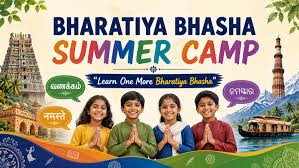
In a major push toward multilingual and culturally inclusive education, schools across India are set to organise the Bharatiya Bhasha Summer Camp 2026, an initiative aimed at introducing students to Indian languages, cultural heritage, and Indian Sign Language (ISL). The programme is being implemented as part of the broader goals of the National Education Policy (NEP) 2020, which promotes multilingualism, experiential learning, and preservation of India’s linguistic diversity.
The initiative is expected to involve students from different age groups through interactive activities, language exposure sessions, folk traditions, storytelling, art, music, and basic communication training in Indian Sign Language.
Education experts say the summer camp could become one of the largest school-level language and cultural immersion programmes introduced in India in recent years.
What Is the Bharatiya Bhasha Summer Camp?
The Bharatiya Bhasha Summer Camp is designed to encourage students to explore India’s linguistic and cultural diversity beyond textbook learning.
According to official details, schools will organise special sessions where students can learn:
- Basic communication in different Indian languages
- Folk songs and regional literature
- Traditional stories and cultural practices
- Local art and theatre forms
- Indian Sign Language basics
- Multilingual communication skills
The programme aims to create greater appreciation for India’s cultural and linguistic richness while promoting inclusivity and social understanding.
Indian Sign Language Included for Inclusive Education
One of the most notable aspects of the initiative is the inclusion of Indian Sign Language (ISL) as part of student learning activities.
Schools participating in the programme will introduce students to:
- Basic ISL gestures and communication
- Inclusive classroom interaction
- Awareness about hearing-impaired communities
- Sensitisation toward accessibility and inclusion
Education specialists believe early exposure to sign language can improve empathy, communication awareness, and social inclusivity among children.
The move also aligns with the government’s larger focus on inclusive education and accessibility under NEP 2020.
NEP 2020 and Multilingual Education
The Bharatiya Bhasha Summer Camp reflects the National Education Policy’s emphasis on multilingualism and mother-tongue learning.
NEP 2020 encourages schools to expose students to multiple Indian languages to strengthen:
- Cognitive flexibility
- Communication skills
- Cultural understanding
- National integration
- Respect for linguistic diversity
The policy also advocates experiential and activity-based learning methods instead of rote memorisation. (education.gov.in)
Experts say the summer camp model could help students develop curiosity about different regions and cultures while building stronger emotional connections with Indian languages.
Focus on Cultural Exchange and Experiential Learning
Unlike traditional language classes, the camp will focus on interactive and practical learning experiences.
Students may participate in:
- Regional language games
- Cultural exchange activities
- Theatre and storytelling workshops
- Traditional dance and music sessions
- Poetry recitations
- Community-based learning events
Schools are expected to involve local artists, language experts, educators, and community members to make the experience more immersive and engaging. (entrepreneurindia.com)
Why Indian Languages Are Getting More Attention
In recent years, India has witnessed a stronger policy focus on regional and Indian languages within the education system.
Several initiatives linked to NEP 2020 have promoted:
- Mother-tongue education
- Regional language textbooks
- Bilingual teaching
- Indian language digital platforms
- Translation of educational material
- Competitive exams in regional languages
Experts believe multilingual learning improves conceptual understanding, especially during foundational years of schooling.
There is also growing concern among policymakers about preserving linguistic diversity as several Indian languages face declining usage among younger generations.
Experts Say Multilingual Exposure Benefits Students
Educational researchers have consistently highlighted the cognitive and social benefits of multilingual learning.
Studies suggest that exposure to multiple languages can improve:
- Memory and concentration
- Problem-solving abilities
- Creativity and analytical thinking
- Communication skills
- Social adaptability
Experts also say learning sign language alongside spoken languages can strengthen non-verbal communication awareness and empathy in children.
Schools Expected to Play Key Role
The success of the Bharatiya Bhasha Summer Camp will largely depend on active participation from schools and teachers.
Schools may need to:
- Organise dedicated language activity sessions
- Invite regional language experts
- Develop multilingual learning materials
- Train teachers for activity-based learning
- Encourage student participation through projects and performances
Education authorities are expected to issue additional implementation guidelines and activity frameworks in the coming weeks.
Strengthening National Integration Through Language
Policymakers believe the initiative can also strengthen emotional unity and cultural understanding among students from diverse linguistic backgrounds.
By exposing children to languages beyond their own region, the programme aims to encourage:
- Respect for cultural diversity
- Cross-cultural communication
- National integration
- Inclusive social behaviour
The inclusion of Indian Sign Language further expands the programme’s vision beyond linguistic diversity to social inclusiveness.
A New Direction for School Education
The Bharatiya Bhasha Summer Camp 2026 signals a broader transformation in India’s education system — one that increasingly values culture, multilingual learning, inclusivity, and experiential education alongside academic achievement.
As schools prepare to host the programme, educators believe the initiative could help students see languages not merely as subjects, but as gateways to understanding people, traditions, and communities across India.
For many students, the summer of 2026 may become their first opportunity to explore India’s extraordinary linguistic and cultural diversity from inside the classroom itself.