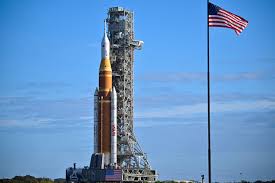
The National Aeronautics and Space Administration is gearing up to launch Artemis II, a groundbreaking mission that will send astronauts around the Moon — the first crewed lunar flight since Apollo 17 in 1972. With an April 1, 2026 launch target, this mission marks a major milestone in U.S. deep‑space exploration.
Mission Overview: Artemis II at a Glance
- Launch Date (Target): April 1, 2026
- Mission Duration: ~10 days
- Launch Site: Kennedy Space Center, Florida
- Spacecraft: Orion crew capsule atop the Space Launch System (SLS) rocket
- Mission Type: Crewed lunar flyby and systems test
- Astronaut Crew: Four — three NASA astronauts and one from the Canadian Space Agency
This mission will carry astronauts on a 10‑day journey that loops beyond the Moon and back to Earth — offering critical data for future lunar landings and deep‑space operations.
Crew and Their Historic Roles
The Artemis II astronaut roster includes:
- Reid Wiseman (Commander)
- Victor Glover
- Christina Koch
- Jeremy Hansen (Canadian Space Agency)
This flight is notable for its diversity and international collaboration: it will feature the first woman and the first non‑American astronaut to fly beyond Earth’s orbit.
Launch Preparations: Rollout and Quarantine
Rocket Rollout
NASA has begun moving the massive Artemis II SLS rocket and Orion spacecraft from the Vehicle Assembly Building to Launch Pad 39B at the Kennedy Space Center — a slow operation that can take about 12 hours.
Astronaut Quarantine
In preparation for launch, the Artemis II crew has entered pre‑launch quarantine in Houston. This practice protects the astronauts from illness that could delay lift‑off.
Why Artemis II Matters
First Crewed Moon Mission in Decades
Artemis II will be the first time humans travel to lunar space since 1972, marking a historic return to crewed deep‑space exploration.
Technical and Scientific Goals
- Test Orion’s life support and navigation systems with humans aboard
- Validate procedures for future deep‑space missions
- Observe spacecraft performance in lunar vicinity
The mission will travel farther from Earth than any humans have before, helping NASA gather data critical for future lunar landings and missions to Mars.
Launch Window and Schedule Flexibility
While April 1 is the primary target, NASA has multiple launch opportunities extending through about April 6. Final launch timing will depend on weather, technical checks, and pad readiness.
Challenges and Mission Readiness
Artemis II was delayed from earlier launch windows due to technical issues — including hydrogen fuel leaks and upper‑stage pressurization concerns — that required extensive repairs and testing. Getting the SLS rocket ready for roll‑out and launch has involved meticulous checks and system evaluations.
Before liftoff, NASA conducts key reviews (such as Flight Readiness Review) to ensure all systems are safe and prepared for crewed flight — a critical step given the mission’s complexity and the long journey beyond Earth orbit.
What Comes After Artemis II
Artemis II is a stepping stone toward more ambitious missions:
- Artemis III: Planned lunar landing
- Gateway: A lunar orbit outpost to support sustainable exploration
- Future missions could extend to Mars and other deep‑space destinations.
The Artemis program represents NASA’s long‑term vision for sustained human presence beyond Earth. Each mission adds capabilities and lessons that bring future lunar landings and deep‑space exploration closer to reality.