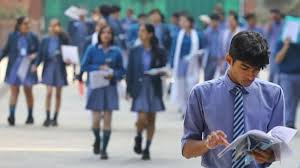
The Central Board of Secondary Education (CBSE) recently conducted key board examinations, including Class 10 Mathematics and Class 12 Physics, which drew widespread criticism from students, parents, and educators. Many found the Mathematics paper unexpectedly tough and time-consuming compared to other subjects, creating stress and uncertainty among examinees. This perceived mismatch between difficulty levels has triggered renewed calls for grace marks or lenient evaluation practices to balance outcomes for students.
What Students and Educators Are Urging
Several voices in the student community, including online petitions and social media discussion threads, are pressing the board to consider:
- Grace marks for students affected by unusually tough papers
- More lenient evaluation standards for difficult or non-standard questions
- Greater transparency and fairness when paper difficulty is uneven
The concerns are compounded by reports of variation in question difficulty across different sets of the same exam, leading to calls for moderation measures or compensatory marking for affected students.
A petition circulating online argues that when questions deviate significantly from NCERT-based syllabi or are exceptionally challenging, the evaluation should factor in these elements and award marks accordingly to avoid penalizing students unduly for factors beyond their preparation scope.
CBSE’s Official Position — No Formal Announcement Yet
As of now, CBSE has not issued any official communication confirming that grace marks or relaxed evaluation standards will be introduced for this year’s exams in response to these concerns. The board continues to follow its established assessment and evaluation norms.
Under current guidelines, the board may award grace marks in limited circumstances, such as when:
- A candidate misses passing by only a very small margin,
- Errors or ambiguities are later identified in the question paper,
- Questions are judged to be outside the official syllabus or exceptionally difficult based on review.
However, there is no guarantee that such measures will be applied systematically in response to generalized complaints about difficulty levels.
How Evaluation and Re-Assessment Works
Students are allowed to apply for re-assessment of theory answer sheets if they believe their results do not reflect their performance, but this does not guarantee additional marks or changes — it simply ensures all parts of the original response were evaluated correctly. Practical marks are generally not open to re-assessment since they are finalised at exam centres and uploaded to the board’s system.
Re-assessment remains a separate mechanism from grace marks or lenient evaluation. While some students hope re-assessment could lead to mark increases when errors occurred, this is not assured and depends strictly on how the answer was originally marked.
Broader Impact on Students
The difficulty debate comes at a time when tens of thousands of students are navigating board exams that may have:
- Varied difficulty levels between subjects, e.g., straightforward Science papers vs tougher Mathematics papers, leading to uneven stress and outcome perceptions.
- Calls for fairness and consistency across different question paper sets and examination sessions.
Concerns tend to intensify when students feel their preparation — largely based on **NCERT textbooks and board sample papers — does not align with the questions asked in actual tests.