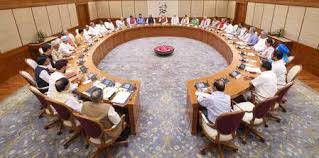
The Government of India has taken a decisive step towards overhauling the regulation of higher education by circulating a new legislative bill — intended to replace the University Grants Commission (UGC) and the All India Council for Technical Education (AICTE) — among 39 ministries and departments for discussions and deliberations. This move signals broad administrative engagement and sets the stage for a major transformation of how higher education is governed in India.
Why This Bill Matters
For over six decades, the UGC has been the statutory body responsible for maintaining standards in general higher education, while AICTE has regulated technical and professional education in the country.
The proposed bill — commonly referred to as the Viksit Bharat Shiksha Adhishthan (VBSA) Bill, 2025 — intends to consolidate multiple regulatory bodies into a single unified commission, aligning with the vision of the National Education Policy (NEP) 2020 to simplify governance and enhance quality.
Core Objectives of the Proposed Bill
📍 1. Merger of Regulatory Authorities
The Bill seeks to repeal the existing Acts governing the UGC, AICTE, and the National Council for Teacher Education (NCTE) — bringing their functions under one regulatory umbrella.
📍 2. Unified Regulatory Architecture
Under the new framework:
- A single apex body — the Viksit Bharat Shiksha Adhishthan Commission — will be established.
- It will consist of a Chairperson and up to 12 members, appointed at the national level.
- Three specialised councils will operate under this body:
- Regulatory Council
- Accreditation Council
- Standards Council
Each council will focus on a distinct dimension of higher education governance: regulation, quality assurance, and standard setting.
Key Structural & Functional Changes
🔹 De-centralising Funding, Streamlining Regulation
Unlike the UGC’s historic role in providing grants, the new regulator will not have grant disbursement powers. Instead, funding mechanisms will remain with the Ministry of Education, separating funding from regulatory oversight and enabling a clearer governance model.
🔹 Accreditation and Standards Framework
The proposed accreditation and standards councils will operate independently to assess institutional performance and learning outcomes — an approach aimed at elevating academic rigor and fostering multi-disciplinary excellence.
🔹 Penalties & Compliance
The unified regulator will hold strict compliance enforcement powers, including imposing penalties on institutions for violations of standards — a major shift from the existing fragmented accountability regime.
Advantages Envisioned
Experts and policymakers cite several potential benefits of the reform, including:
- Simplified regulatory ecosystem with less duplication.
- Enhanced institutional autonomy through graded, outcome-based compliance.
- Better alignment with NEP 2020 goals of interdisciplinary education and global competitiveness.
- Increased transparency via technology-driven regulatory processes.
Challenges & Stakeholder Concerns
While the move is broadly seen as forward-looking, voices from academic communities and state governments have historically expressed concerns in related debates that such consolidation could:
- Reduce institutional or state autonomy, by centralising decision-making powers at the national level.
- Create over-dependence on central policy directions, especially if states have limited representation in the council structures.
These themes surfaced during discourse on earlier drafts and regulations tied to higher education reforms.
Legislative Process and Next Steps
The circulated bill is now undergoing inter-ministerial consultations, representing a broad cross-section of government departments and ministries. Post consultations, the legislation is expected to be introduced in Parliament, followed by detailed scrutiny by a Joint Parliamentary Committee (JPC) before final enactment. The JPC’s involvement underscores the legislative importance and cross-party deliberative process.