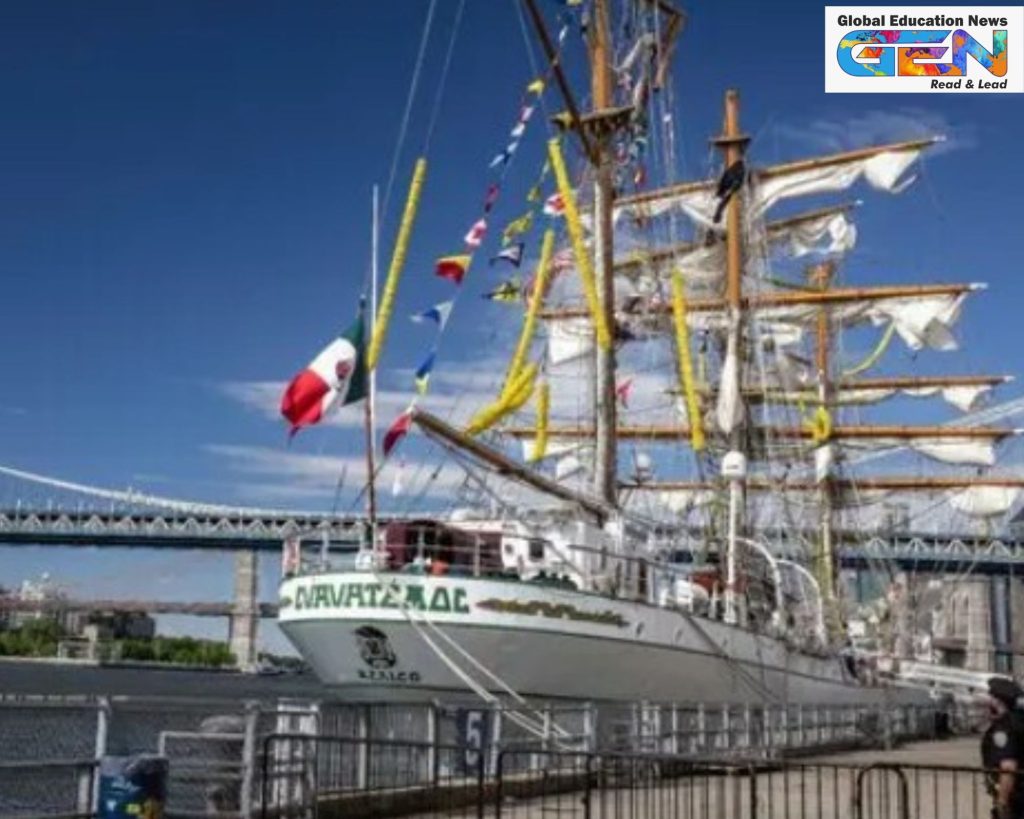
The Cuauhtémoc Crash: A Wake-Up Call for Maritime Safety
- Tragic Collision: On May 17, 2025, the 297-foot ARM Cuauhtémoc, a Mexican Navy training ship, lost power and drifted into the Brooklyn Bridge, snapping its three masts.
- Human Toll: Two cadets, América Sánchez (20) and Adal Jair Maldonado Marcos (23), died, with 19 others injured, some critically.
- Investigation Underway: Preliminary reports suggest engine failure and strong East River currents caused the ship to veer off course, despite a tugboat’s presence.
The ARM Cuauhtémoc, a 43-year-old steel-hulled barque known as the “Knight of the Seas,” was on a goodwill tour when disaster struck. Departing Manhattan’s Pier 17, the ship, adorned with festive lights and a giant Mexican flag, lost power and was swept backward by turbulent waters, its 160-foot masts crashing into the bridge’s 127-foot clearance. Dramatic videos captured sailors dangling from rigging as horrified onlookers fled. While the 142-year-old Brooklyn Bridge sustained no structural damage, the incident has sparked global conversations about maritime safety and the role of sailing ships in modern contexts.
Sail Training: Forging Seafarers in Modern Navies
- Hands-On Learning: Sailing ships like India’s INS Tarangini and INS Sudarshini teach navigation, teamwork, and seamanship unmatched by simulators.
- Global Tradition: Navies worldwide, including Germany (Gorch Fock), Italy (Amerigo Vespucci), and the US (USCGC Eagle), use sail ships for leadership training.
- Character Building: Physical challenges of sailing foster respect for the sea and environmental awareness.
In the wake of the Cuauhtémoc tragedy, the value of sail training shines through. Modern navies, including India’s, rely on vessels like INS Tarangini to train cadets in real-world conditions. Unlike mechanized ships, these tall ships demand hands-on mastery of wind and waves, honing skills like navigation and teamwork. The Indian economy benefits from such training, producing skilled naval officers who embody resilience and environmental consciousness—qualities no simulator can replicate. The Cuauhtémoc, carrying 277 crew members, was part of this proud tradition, training cadets at Mexico’s Heroic Naval Military School until its fateful crash.
Wind Power’s Comeback: Greening the Seas
- Eco-Friendly Shipping: Commercial shipping, responsible for 3% of global greenhouse gas emissions, is turning to wind propulsion to cut fuel use.
- Innovative Designs: Modern sails like WindWings and Flettner rotors reduce emissions by harnessing wind efficiently.
- Real-World Impact: The Pyxis Ocean, a retrofitted cargo ship, uses WindWings for up to 21% fuel savings on trans-Pacific routes.
The shipping industry, a key player in global trade, is under pressure to decarbonize. With environmental concerns at the forefront, wind propulsion is making waves. Unlike traditional cloth sails, modern innovations like the Pyxis Ocean’s WindWings or Flettner rotors—cylindrical devices using the Magnus effect—offer efficient wind power for hybrid vessels. These systems complement diesel engines, slashing fuel consumption and emissions while meeting tight schedules. Posts on X highlight this trend, with ships like the Canopée freighter showcasing how “Oceanwings” reduce fuel use, proving wind power’s viability in modern shipping.
Cutting-Edge Sail Tech: Tradition Meets Innovation
- Solid Sails: WindWings on the Pyxis Ocean capture wind with rigid, adjustable panels for optimal efficiency.
- Flettner Rotors: These spinning cylinders create propulsion via the Magnus effect, blending old principles with new tech.
- Scalable Solutions: Hybrid wind systems are being tested on bulk carriers, signaling broader adoption.
The Cuauhtémoc’s collision reminds us that traditional sailing carries risks, but modern sail technology is rewriting the rules. The Pyxis Ocean’s WindWings, towering nearly 50 meters, adjust like airplane wings to maximize wind capture. Flettner rotors, spinning to create pressure differentials, propel ships with minimal fuel. These innovations, highlighted in X posts, show how the Indian economy and global shipping can embrace sustainable tech without sacrificing efficiency, blending the romance of sails with cutting-edge engineering.
Challenges Ahead: Navigating a Wind-Powered Future
- Integration Hurdles: Retrofitting ships with wind tech requires significant investment and expertise.
- Regulatory Pressure: Stricter port emission standards push for cleaner solutions, but adoption is slow.
- Safety Concerns: The Cuauhtémoc crash raises questions about navigating tall ships in busy harbors.
Despite wind propulsion’s promise, challenges loom. The Cuauhtémoc’s loss of power and collision with a low-clearance bridge highlight the risks of sailing in crowded, current-heavy waters like New York Harbor. Integrating wind tech into commercial fleets demands hefty upfront costs and training, while port regulations add pressure. Yet, as X posts note, the success of ships like the Canopée and Pyxis Ocean suggests a growing acceptance of wind power, with potential to transform global trade and reduce the Indian economy’s carbon footprint.
The Road Ahead: A Sustainable Maritime Horizon
- Global Adoption: More ships are testing wind propulsion, with bulk carriers leading the charge.
- India’s Role: Vessels like INS Tarangini could inspire sustainable naval and commercial practices.
- Post-Cuauhtémoc Reforms: Enhanced safety protocols and tugboat assistance may prevent future tragedies.
The ARM Cuauhtémoc’s tragic crash is a sobering reminder of the sea’s unpredictability, but it also underscores the timeless allure of sailing ships. As India’s INS Tarangini and INS Sudarshini train future naval leaders, and commercial vessels like the Pyxis Ocean cut emissions, the maritime world is embracing a wind-powered renaissance. With ongoing investigations into the Cuauhtémoc incident, lessons learned could shape safer, greener practices for navies and shipping alike, positioning the Indian economy as a leader in sustainable global trade.