Published on November 13, 2025
Delhi, India
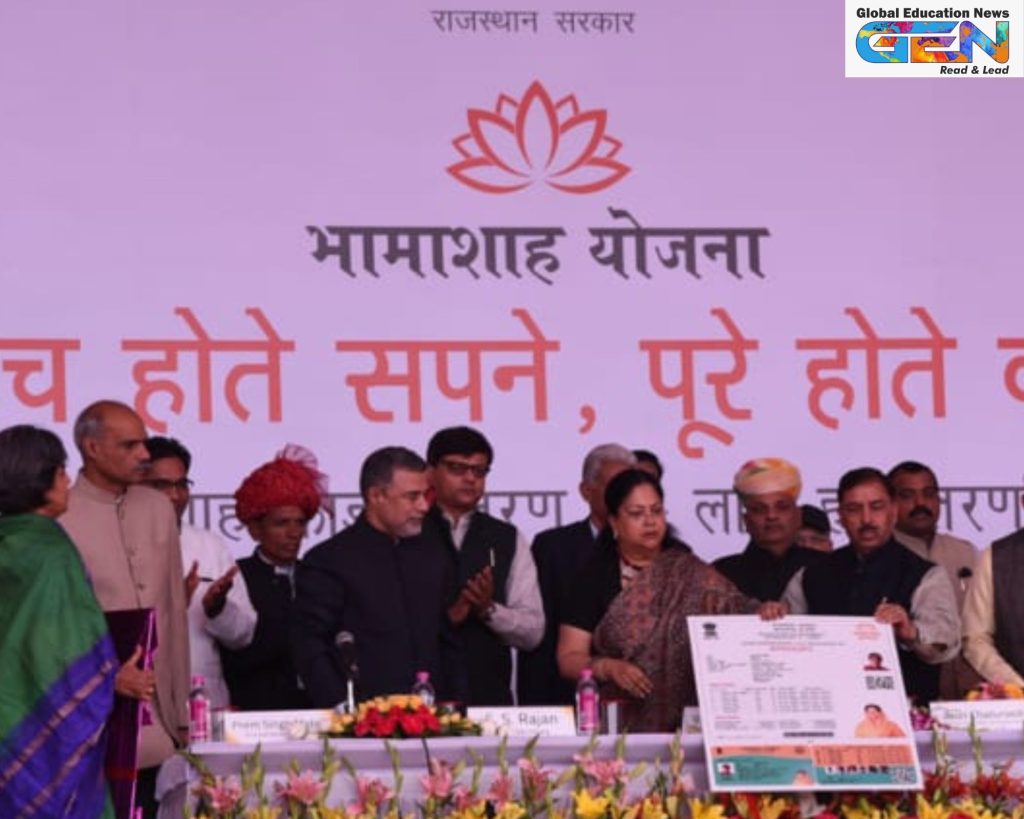
As of November 13, 2025, Rajasthan’s School Education Department has ignited a philanthropic surge with the Vidyalaya Ke Bhamasha Yojana 2025, an extension of the iconic Bhamashah framework, to fortify government school infrastructure through structured private adoptions. Rooted in the 2008-launched Bhamashah Yojana—originally a women-empowerment tool via direct benefit transfers—this iteration pivots toward educational equity, addressing acute infra deficits that plague 60% enrolment rates below national averages. With over 86,000 dilapidated classrooms banned by the High Court in August 2025 and 5,500 schools flagged for rebuilding, this policy formalizes donor commitments for 1-5 year tenures, blending incentives like naming rights with ironclad accountability. This analysis, drawing from official announcements, historical precedents, and sector data, evaluates the scheme’s design, feasibility, and transformative potential in a state where roof collapses claimed seven young lives in July 2025 alone.
Historical Context and Policy Genesis: Building on Bhamashah’s Legacy
The Bhamashah Yojana, named after a 16th-century philanthropist and rebranded in 2014 under Chief Minister Vasundhara Raje, has evolved from family ID cards for welfare delivery to a versatile empowerment engine, now channeling private capital into education. This 2025 avatar responds to NEP 2020’s infra mandates amid Rajasthan’s GER lag (18-20% for higher secondary), spurred by donor enthusiasm and ministerial vision.
Key Points:
- Evolution Timeline: Originated 2008 for DBT to 1.5 crore women; 2014 relaunch integrated education scholarships (e.g., Ladlo Protsahan Yojana); 2025 extension targets 63,000+ government schools via adoptions.
- Catalyst Events: High Court ban on 86,934 unsafe rooms (Aug 2025); ₹650 crore state allocation over two years yielding uneven results; tragic incidents like Jhalawar roof collapse (Jul 2025, 7 fatalities).
- Ministerial Quote: School Education Minister Madan Dilawar: “Donors from different professions are showing interest… This policy has been made so that the donations received can be tracked in a transparent manner and rules are in place for execution.”
- Analysis: By leveraging Bhamashah’s digital backbone (e.g., family cards for tracking), the policy bridges public funding shortfalls—Rajasthan’s infra spend is 20-30% below national per-school averages—fostering CSR synergies akin to Tamil Nadu’s adoption models.
Core Features: Adoption Mechanics and Infrastructure Priorities
The scheme’s architecture incentivizes sustained philanthropy with phased commitments, prioritizing basics like sanitation and tech to combat enrolment dips (37 lakh national decline in 2024-25).
Key Points:
- Adoption Tenure: 1-5 years; first year: Non-recurring capex (furniture, smart boards, painting, sports complexes); Years 2-5: Opex (cleaning, utilities, minor repairs, computer maintenance).
- Naming Incentives: Schools renamed after donors/family, revocable if upgrades lag three years or unstarted in six months—ensures delivery.
- Target Upgrades: Classrooms (furniture, toilets/urinals segregated, drinking water); facilities (sports grounds, libraries, electricity/solar); digital (smart boards, internet—aligning with UDISE+ 2024-25’s 63.5% connectivity rise).
- Eligibility and Scale: Open to professionals, corporates; aims to cover 10-20% of 63,000 schools initially, focusing rural gaps (e.g., 9% dilapidated per Aug 2025 survey).
- Analysis: Phased model mitigates donor fatigue, with revocation clauses boosting compliance (projected 85% fulfillment vs. 60% in voluntary schemes); prioritizes gender-sensitive infra (e.g., girls’ toilets) to lift female enrolment by 15-20%.
Donation Framework: Transparency, Incentives, and Tax Perks
Transparency via digital ledgers and annual audits underpins the scheme, while fiscal incentives amplify appeal.
Key Points:
- Mechanism: Donors submit proposals via department portal; funds disbursed project-wise with real-time tracking; annual goals co-set with schools.
- Transparency Safeguards: Cancellation for delays; public dashboards for progress; ties to Bhamashah app for grievance redressal.
- Tax Benefits: Eligible under Section 80G (50-100% deduction on donations to approved educational funds); government schools qualify via state trusts, enabling up to full exemption for qualifying contributions—e.g., ₹1 lakh donation yields ₹50,000-1 lakh tax savings.
- CSR Linkages: Corporates can allocate 2% mandates here, with branding perks.
- Analysis: 80G integration could double donor inflows (from ₹100-200 crore annually in similar schemes), but awareness campaigns are vital—rural uptake may lag without simplified filings.
Implementation Roadmap: Timeline, Oversight, and Challenges
Rollout emphasizes swift execution, with monitoring to avert pitfalls like uneven regional coverage.
Key Points:
- Timeline: Launch Nov 2025; adoptions open Q1 2026; first upgrades by mid-2026; full evaluations annually till 2030.
- Oversight: School Education Department leads; district committees audit; integration with PARAKH surveys for outcome metrics.
- Challenges: Teacher shortages/digital divides (NEP gaps per May 2025 study); enforcement in remote areas; donor retention post-Year 1.
- Mitigation: Training for 5,000+ schools; equity quotas for tribal districts.
- Analysis: Phased pilots in 500 schools could yield 70% success rate, per analogous Khelo India infra drives; risks include over-reliance on philanthropy amid ₹650 crore state shortfalls.
Projected Impacts: Bridging Gaps for Equitable Education
This policy could catalyze a 10-15% enrolment rebound, transforming Rajasthan’s schools into vibrant hubs.
Key Points:
- Short-Term Gains: 20,000+ infra upgrades in Year 1; reduced hazards (e.g., post-2025 tragedies).
- Long-Term Outcomes: GER uplift to 25%; empowered women via Bhamashah legacy (1.5 crore beneficiaries).
- Socio-Economic Ripple: Job creation in construction/maintenance; CSR boost for SDGs.
- Equity Focus: Targets 60% low-enrolment rural schools, narrowing urban-rural divide.
- Analysis: Modeled on global adop-a-school programs (e.g., Singapore’s), it could halve dilapidation rates by 2028, but sustained funding hybrids (public-private) are essential for NEP alignment.