Committee backs stronger legal framework for National Testing Agency while urging safeguards for students as NEET transitions toward a computer-based format
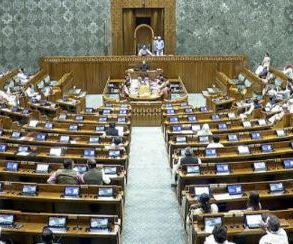
In a significant development that could reshape the future of India’s competitive examination system, the Parliamentary Standing Committee on Education, Women, Children, Youth and Sports has recommended that the National Testing Agency (NTA) be granted statutory status.
The recommendation comes as part of the committee’s broader review of the NEET-UG 2026 re-examination and ongoing reforms within the NTA. Lawmakers argued that the agency, which conducts some of India’s largest entrance examinations, requires a stronger legal foundation, greater institutional autonomy, and enhanced accountability to independently manage high-stakes examinations involving millions of candidates every year.
Why the Committee Wants NTA to Become a Statutory Body
At present, the National Testing Agency functions as an autonomous organization registered under the Societies Registration Act, 1860.
The Parliamentary Committee believes this structure limits the agency’s ability to independently oversee large-scale examinations such as NEET-UG, JEE Main, CUET, and UGC-NET.
Granting statutory status through an Act of Parliament would provide the NTA with:
- Clearly defined legal authority.
- Greater administrative independence.
- Enhanced institutional accountability.
- Stronger governance mechanisms.
- Improved operational stability.
- Better capacity to conduct nationwide examinations.
According to committee members, such a framework would help strengthen public trust in India’s examination ecosystem while improving long-term institutional resilience.
Review of NEET-UG 2026 Re-Examination
The recommendations emerged during the committee’s review of the NEET-UG 2026 re-examination, which was conducted after the cancellation of the original examination due to paper leak allegations.
Senior officials from the:
- Ministry of Education
- National Testing Agency
- Higher Education Department
briefed lawmakers on the conduct of the re-examination and the reforms implemented to improve examination security.
Members appreciated the enhanced security arrangements adopted during the re-exam but emphasized that sustainable reforms require institutional strengthening beyond short-term administrative measures.
Concerns Over Computer-Based Testing (CBT)
One of the major issues discussed during the meeting was the proposal to shift NEET-UG to a Computer-Based Test (CBT) format from 2027.
While acknowledging the advantages of digital examinations, committee members expressed concern that such a transition could unintentionally disadvantage students from:
- Rural areas.
- Economically weaker sections.
- Government schools.
- Regions with limited digital infrastructure.
- Communities with low levels of computer literacy.
The panel stressed that any move toward CBT should prioritize equity and ensure that all candidates have adequate opportunities to familiarize themselves with computer-based examinations before implementation.
Key Recommendations of the Parliamentary Committee
The committee outlined several measures aimed at strengthening India’s entrance examination system.
1. Grant Statutory Status to NTA
Members recommended enacting legislation that formally establishes the National Testing Agency as a statutory body with defined responsibilities and greater autonomy.
2. Ensure Inclusive Transition to CBT
Before implementing a computer-based NEET, the committee called for:
- Adequate digital infrastructure.
- Practice opportunities for candidates.
- Awareness programmes.
- Special support for rural and marginalized students.
- Measures to bridge the digital divide.
3. Strengthen Institutional Capacity
The committee emphasized the need for:
- Better governance.
- Improved examination management.
- Robust security mechanisms.
- Greater accountability.
- Technology-driven monitoring systems.
4. Protect Student Interests
Lawmakers stressed that future reforms should remain student-centric by ensuring fairness, transparency, and equal opportunity for candidates from diverse educational and socio-economic backgrounds.
Why Statutory Status Could Matter
Education policy experts believe that granting statutory status would provide several institutional advantages.
Greater Legal Authority
A statutory body derives its powers directly from legislation, enabling it to function with clearly defined responsibilities.
Improved Accountability
Parliamentary oversight and statutory provisions could strengthen transparency in decision-making and examination management.
Operational Stability
A stronger legal framework may help the agency independently plan and conduct examinations without excessive reliance on administrative interventions.
Higher Public Confidence
Following recent controversies surrounding national examinations, institutional reforms are viewed as essential for rebuilding public trust.
Balancing Technology with Accessibility
The committee’s discussion highlighted an important policy challenge—modernizing examinations while ensuring equal access.
Although computer-based testing offers advantages such as faster evaluation, enhanced security, and reduced logistical complexities, experts caution that India’s digital divide remains a significant concern.
Students from remote and underserved regions may require:
- Digital literacy training.
- Mock computer-based examinations.
- Improved internet and testing infrastructure.
- Additional technical support during examinations.
The committee emphasized that technological advancement should not compromise inclusivity.
Broader Push for Examination Reforms
The recommendation forms part of a larger national effort to strengthen India’s examination system following recent controversies involving high-stakes entrance tests.
Recent reform initiatives have focused on:
- Enhancing cybersecurity.
- Preventing paper leaks.
- Strengthening examination governance.
- Improving transparency.
- Expanding digital monitoring.
- Modernizing assessment infrastructure.
The proposal to grant statutory status to the NTA is widely seen as another step toward creating a more robust and accountable examination framework.
What Happens Next?
The Parliamentary Standing Committee is expected to formally submit its recommendations to the Union Government for consideration.
While the recommendations are not legally binding, they are likely to influence future policy discussions on the governance of national entrance examinations and the proposed transition to computer-based testing.
If accepted, the recommendations could pave the way for legislation establishing the NTA as a statutory authority and introducing structural reforms aimed at making India’s examination system more transparent, secure, and student-friendly.