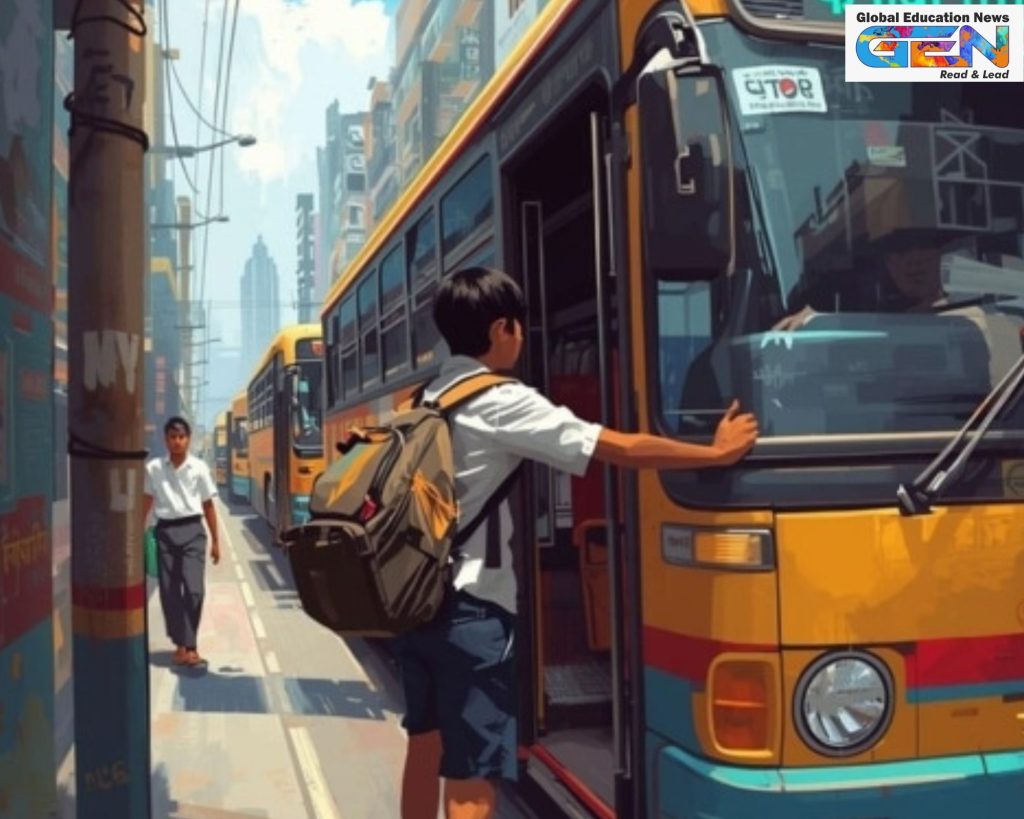
As of December 27, 2025, Odisha’s education landscape is set for a transformative shift with the state government’s notification for free bus travel for school students in government-run services. Issued on December 24 by the transport department, this upgrade to the Mukhyamantri Bus Seva (MBS) scheme replaces the existing 50% fare concession with zero-cost rides, targeting distance-induced dropouts in a state where rural schools often lie 5-10 km from villages. Stemming from Chief Minister Mohan Charan Majhi’s August high-level review, the move aligns with NEP 2020’s emphasis on accessible infrastructure, potentially benefiting over 5 lakh daily commuters across 300+ OSRTC routes. By mandating software tweaks and route realignments, the policy not only eases financial burdens but reimagines public transport as a lifeline for equity. This analysis unravels the directive’s framework, operational nuts-and-bolts, anticipated outcomes, and systemic ripples, grounded in official mandates to evaluate its promise in bridging Odisha’s urban-rural divide.
Background: Addressing Dropout Drivers in Odisha’s School Ecosystem
Odisha, with its 2.5 crore student population and 60,000+ schools, grapples with a 10-15% rural dropout rate, per 2025 UDISE+ data—largely attributable to transport hurdles in tribal and coastal belts. The MBS scheme, launched in 2023, initially offered 50% discounts on AC/non-AC buses, serving 4-5 lakh passengers monthly but falling short for low-income families (average fare ₹20-50/trip).
- Policy Trigger: CM Majhi’s August 2025 meeting highlighted transport as a “silent saboteur” of attendance, with 20% of dropouts in remote districts like Koraput and Mayurbhanj linked to costs.
- Precedent Alignment: Builds on national initiatives like Bihar’s free cycle scheme (2020), but scales via existing OSRTC fleet (1,200+ buses), avoiding new infrastructure spends.
- Equity Focus: Targets government/aided school students (Classes 1-12), prioritizing girls (55% of rural dropouts) and SC/ST communities (35% enrollment share).
This context frames the upgrade as a targeted antidote to socioeconomic silos, amplifying NEP’s “no child left behind” ethos.
Core Provisions: From Concession to Complimentary—Notification Highlights
The December 24 notification, circulated to OSRTC and district transport officers, operationalizes free travel with tech-enabled safeguards, ensuring seamless integration without revenue shortfalls (subsidized via state coffers).
Key directives include:
- Fare Structure Shift: Full waiver on all MBS routes—AC/non-AC—replacing 50% concession; applies to single/daily passes.
- Verification Mechanism: Students present valid ID cards or school uniforms for zero-ticket generation via Electronic Ticket Issue Machines (ETIM), minimizing fraud.
- Software and Route Overhaul: OSRTC tasked with app modifications for automated exemptions; revisit timings/routes to cover 80%+ schools, adding 50-100 stops in underserved areas.
- Scope and Exclusions: Limited to school hours (6 AM-6 PM); no extension to college/guest travel; monitored via GPS dashboards for compliance.
| Provision | Mechanics | Coverage |
|---|---|---|
| Free Travel Waiver | Zero fare on MBS buses (AC/non-AC) | All school students with ID/uniform; daily/single trips |
| ETIM Integration | Auto zero-ticket on validation | 1,200+ buses; real-time logging |
| Route Optimization | Add school-centric stops/timings | 300+ routes; focus on rural/tribal belts |
| Subsidy Funding | State exchequer covers ₹100-150 crore annually | No impact on OSRTC operations |
These elements ensure scalability, with pilots in Bhubaneswar and Cuttack by January 2026.
Benefits: Enhancing Access and Retention—Projected Gains
The policy’s student-centric design promises multifaceted uplifts, directly tackling barriers that sideline 1-2 lakh learners yearly in Odisha.
- Financial Relief: Saves ₹500-1,000/month per family (3-5 trips/day), freeing funds for books/uniforms; critical for BPL households (40% rural students).
- Attendance Boost: Targets 10-15% rise in daily footfall, per transport dept. models; reduces fatigue from walking/cycling in monsoons.
- Equity Amplification: Empowers girls (higher dropout risk post-Class 8) and disabled students, aligning with RTE’s 100m school proximity norm (met in only 60% areas).
- Holistic Outcomes: Fosters punctuality and social integration; indirect health perks via reduced road risks (Odisha logs 10,000 child accidents/year).
Early indicators from similar Tamil Nadu pilots (2024) show 12% retention gains, suggesting Odisha could reclaim 50,000 dropouts by 2027.
Implementation Roadmap: From Notification to Nationwide Rollout
Execution leverages OSRTC’s digital backbone, with phased integration to iron out glitches.
- Immediate Steps: Software upgrades by January 15, 2026; awareness drives via school PTAs and radio (All India Radio spots).
- Phased Expansion: Q1 2026: Urban clusters (Bhubaneswar, Rourkela); Q2: Rural/tribal (Kalahandi, Nabarangpur); full coverage by April.
- Monitoring Framework: Quarterly audits by district collectors; helpline (1800-xxx) for grievances; tie-ins with Samagra Shiksha for attendance tracking.
- Budgetary Backbone: ₹150 crore allocation in FY26 transport outlay; partnerships with NGOs for ID distribution in remote pockets.
Potential snags—like ETIM downtime in low-connectivity zones—are mitigated via manual waivers, ensuring 95% uptime.
Challenges and Safeguards: Navigating the Road Ahead
While visionary, the policy confronts logistical and behavioral hurdles in Odisha’s diverse terrain.
- Infrastructure Gaps: 20% routes lack coverage in hilly/mangrove areas; addressed via mini-bus additions (50 units budgeted).
- Misuse Risks: Uniform/ID fraud; countered by biometric pilots in high-traffic depots and random checks.
- Sustainability Queries: Subsidy strain amid rising fuel costs (₹100/litre diesel); offset by efficiency audits and green bus transitions (20% EV by 2027).
Stakeholder consultations, including teacher unions, will refine safeguards, drawing from Kerala’s free transport model’s 90% adherence.
Broader Implications: A Template for National Mobility Equity
This MBS evolution could cascade beyond Odisha, inspiring states like Bihar and Jharkhand (similar dropout profiles) to emulate, potentially lifting national retention by 5% under NEP. Economically, it unlocks human capital—educated youth add ₹2 lakh crore to Odisha’s GDP by 2030, per state forecasts. Socially, it narrows gender divides, with girls’ enrollment projected +8%. Globally, it echoes UN SDG 4’s access pillars, positioning India as a low-cost equity innovator.
Yet, true success demands data-driven tweaks: Annual impact studies to scale winners like route expansions.