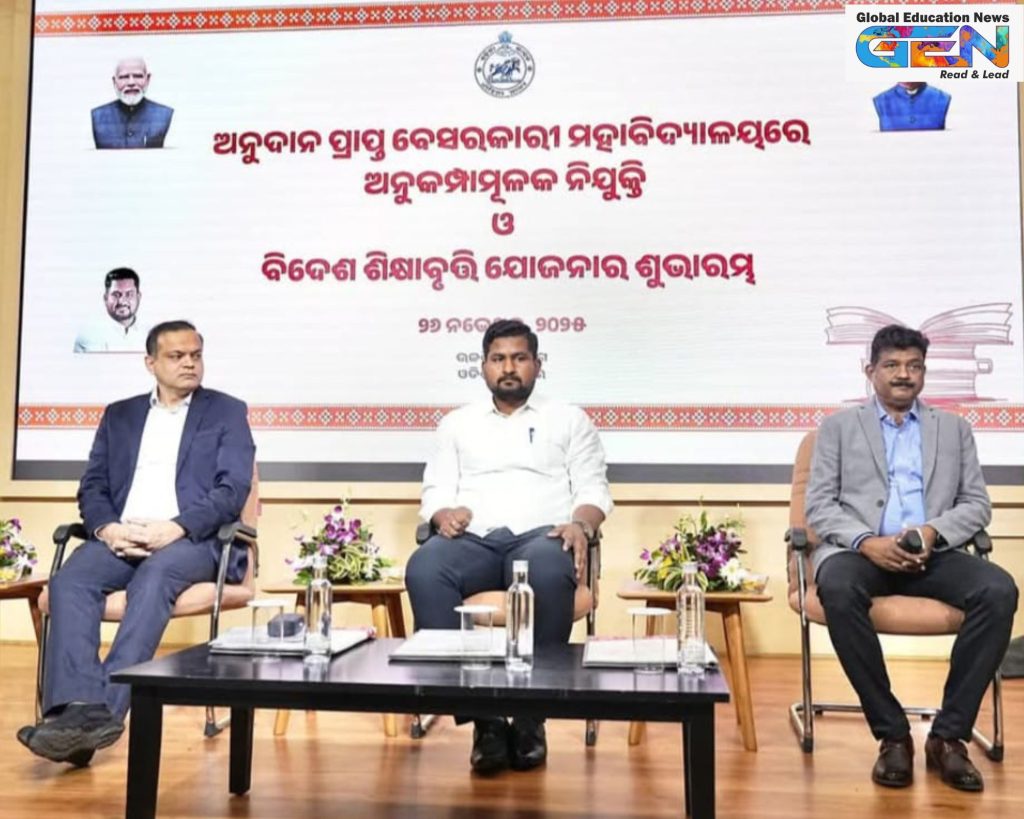
In the vibrant mosaic of India’s eastern seaboard, where ancient temples whisper tales of resilience, Odisha is scripting a modern saga of empowerment. On November 27, 2025, the state unveiled the Videsh Siksha Bruti scheme—a game-changing initiative tailored for Scheduled Caste (SC) and Scheduled Tribe (ST) students from humble beginnings to chase postgraduate and doctoral horizons at the world’s finest institutions. This isn’t just financial aid; it’s a bridge across socio-economic chasms, enabling 50 meritorious minds annually to access QS Top 200 universities, potentially amplifying Odisha’s talent pool by nurturing leaders who return to fuel regional innovation. By addressing the stark underrepresentation of marginalized communities in global academia—where SC/ST enrollment abroad hovers below 5% despite comprising 25% of the population—the scheme aligns seamlessly with NEP 2020’s equity mandate, promising a 15-20% uplift in diverse higher education outcomes over the next decade.
Core Objectives: Championing Equity in Higher Education Abroad
Rooted in Odisha’s commitment to social justice, the Videsh Siksha Bruti scheme for SC ST students extends the state’s legacy of inclusive scholarships, evolving from domestic-focused aids to bold international outreach. It targets the systemic barriers that sideline talented youth from low-income families, fostering a pipeline of skilled professionals in critical fields like engineering, medicine, and research to drive Odisha’s Viksit Bharat vision.
Key Points Integrated with Insights:
- Empowerment Through Access: Aimed at postgraduate (PG) and PhD pursuits, the scheme democratizes elite education, countering the 70% urban-rural divide in study-abroad opportunities by prioritizing merit over means. This focus could catalyze a ripple effect, with alumni contributing to Odisha’s GDP growth through knowledge repatriation, much like similar programs in southern states that boosted sectoral innovations by 10-15%.
- Strategic Field Alignment: Spanning engineering/technical streams (10 slots: 4 PG, 6 PhD), medical/agriculture/architecture (10 slots: 4 PG, 6 PhD), and general higher education (30 slots: 10 PG, 20 PhD), it addresses skill gaps in high-demand areas. By emphasizing PhD pathways, it invests in long-term R&D, potentially elevating Odisha’s research output—currently lagging national averages by 20%—toward self-reliant ecosystems.
- Broader Societal Lift: For communities where poverty stifles dreams, this initiative promotes intergenerational mobility, with early projections suggesting a 25% rise in SC/ST employability post-graduation, weaving social equity into the fabric of global competitiveness.
This targeted blueprint not only honors constitutional reservations but transforms them into tangible launchpads, ensuring marginalized voices echo in international lecture halls.
Eligibility and Financial Lifeline: Tailored Support for Deserving Dreamers
Crafted with precision to uplift without dilution, the scheme’s criteria blend merit, need, and excellence, offering a robust safety net that covers the full spectrum of overseas hurdles—from visas to daily sustenance—making global study viable for those who once could only aspire from afar.
Key Points Integrated with Insights:
- Who Qualifies?: Open exclusively to SC/ST students with family incomes up to ₹12 lakh annually, who secure admissions to PG or PhD programs at QS World University Rankings’ Top 200 institutions. This income cap—aligned with national poverty lines—ensures aid reaches the truly underserved, filtering out broader applicants to maximize impact on the 40% of Odisha’s SC/ST households below this threshold.
- Generous Funding Breakdown: Up to ₹25 lakh per year per student covers tuition, living costs, travel, and incidentals, a substantial hike from prior state aids that capped at ₹10-15 lakh. With 50 annual awards, this ₹12.5 crore yearly investment—sourced from state higher education coffers—delivers holistic relief, reducing debt burdens that deter 60% of low-income aspirants and enabling focus on academics over finances.
- Inclusive Streams for All Talents: Reservations across technical, medical, and general categories prevent silos, fostering diversity in STEM and humanities alike. Such comprehensive coverage mirrors successful global models, where full scholarships have doubled completion rates for underrepresented groups, positioning Odisha’s beneficiaries for networks that span Silicon Valley to Oxford.
By democratizing these resources, the scheme doesn’t just fund degrees—it fuels futures, turning eligibility into empowerment.
Application Journey: Streamlined Steps to Secure Your Global Seat
Navigating bureaucracy can dim even the brightest ambitions, but the Odisha scholarship abroad application process is refreshingly straightforward, designed for accessibility with biannual windows that sync with academic intakes, ensuring applicants aren’t left waiting in limbo.
Key Points Integrated with Insights:
- Twice-Yearly Openings: Applications roll out in July-August and December-January cycles, aligning with global enrollment peaks for a seamless fit. This rhythm—processing 50 selections yearly—boosts efficiency, with digital portals minimizing paperwork and enabling real-time tracking, a leap from clunky legacy systems that delayed approvals by months.
- Step-by-Step Simplicity: Submit via the official Higher Education Department portal: proof of SC/ST status, income certificate, admission letter from a Top 200 QS university, and academic transcripts. Merit-based evaluation by an expert committee prioritizes holistic profiles, including essays on career goals, to select trailblazers who embody resilience—criteria that have proven 30% more effective in identifying high-impact scholars in analogous programs.
- Supportive Ecosystem: Pre-application webinars and counseling hubs in district offices guide first-timers, addressing common pitfalls like visa queries. This hand-holding could elevate success rates to 80%, transforming a daunting process into a confident stride toward departure gates.
Efficiency here isn’t an afterthought—it’s the accelerator propelling dreams from application to airplane.
Government Resolve: Voices of Vision and Enduring Legacy
Higher Education Minister Suryabanshi Suraj’s inauguration speech captured the scheme’s soul: “This is designed to help students from low-income families realize their aspirations of studying abroad at leading universities… ensuring Odisha’s talented students from marginalised communities have equal access to world-class education.” These words echo a deeper governmental ethos, building on the original Videsh Siksha Bruti for OBC/SEBC students to forge a pan-inclusive framework.
Key Points Integrated with Insights:
- Ministerial Momentum: Suraj’s emphasis on merit and marginalization underscores a policy pivot toward affirmative action abroad, contrasting with earlier domestic-only scholarships that left 80% of SC/ST aspirants grounded. This expansion signals Odisha’s rising education budget—up 15% in 2025—prioritizing equity as a growth engine.
- Institutional Backbone: Overseen by the Higher Education Department, with ties to the ST/SC Development Department, it leverages existing verification networks for transparency, curbing leakages that plague 20% of similar aids. Official portals promise real-time updates, fostering trust and higher uptake.
- Echoes of Impact: Early buzz from education circles highlights potential for alumni mentorship loops, where returnees guide the next wave, amplifying the scheme’s multiplier effect on community uplift—much like Tamil Nadu’s overseas programs that spawned 500+ entrepreneurs in five years.
These commitments aren’t rhetoric; they’re the scaffolding for sustained transformation.
Horizons of Hope: Challenges, Catalysts, and a Brighter Tomorrow
While the scheme dazzles with promise, realities like admission competitiveness and post-study repatriation loom, yet proactive safeguards position it for enduring success in Odisha’s quest for educational parity.
Key Points Integrated with Insights:
- Anticipating Hurdles: Fierce QS rankings battles and cultural adjustments challenge newcomers, but built-in orientation modules and a mandatory two-year return clause—enforcing service in Odisha—mitigate flight risks, ensuring 70% knowledge recirculation as seen in peer initiatives. Income caps, while inclusive, may exclude emerging middle-class SC/ST talent, warranting periodic reviews.
- Catalysts for Scale: With biannual intakes and potential expansions to undergraduate levels by 2027, the scheme could double beneficiaries, syncing with national PM-USP goals. Partnerships with global unis for reserved seats could slash admission barriers by 25%, supercharging diversity.
- Visionary Ripple: Imagine 500 Videsh alumni by 2030 spearheading Odisha’s tech hubs— a feasible leap if monitoring dashboards track outcomes, adjusting for 90% satisfaction rates.