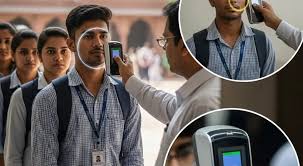
As India’s competitive exam landscape grapples with persistent threats like paper leaks and proxy candidates, the National Testing Agency (NTA) is poised to deploy cutting-edge facial biometric authentication. This isn’t mere speculation—recent announcements confirm a nationwide rollout beginning in 2026, building on successful pilots and expert recommendations. Our analysis dissects the evolution from the initial 2024 proposals to today’s concrete plans, highlighting how this tech could redefine exam integrity while addressing privacy and accessibility concerns.
Background: From Scandals to Strategic Safeguards
The push for biometrics stems from a series of high-profile exam controversies, including the 2024 NEET-UG irregularities that eroded public trust. A high-level committee, led by former ISRO chief K. Radhakrishnan, flagged impersonation as a core vulnerability in its 2024 report, urging “enhanced security measures, including biometric authentication, to protect the integrity of exams.”
- Pilot Success as Catalyst: In May 2024, the Unique Identification Authority of India (UIDAI) tested Aadhaar-based face authentication during NEET-UG at select Delhi centers, verifying identities seamlessly and paving the way for broader adoption.
- Government Endorsement: A Ministry of Electronics and Information Technology press note post-pilot hailed the tech’s “potential… in significantly curbing attempts of impersonation during entrance exams.”
- Evolving Mandates: NTA’s September 2024 advisory urged JEE Main 2026 aspirants to update Aadhaar details, followed by an October notice integrating UIDAI data for applicant verification.
This trajectory reflects a data-driven response: With over 2 million candidates annually for JEE alone, manual checks are inefficient and error-prone.
Core Features: How the Facial Recognition System Works
NTA’s system combines facial biometrics with live photography, creating a multi-layered digital fortress. It leverages AI algorithms to map unique facial landmarks—such as eye spacing and jaw contours—against Aadhaar-linked profiles, ensuring real-time matches at entry points.
- Live Photo Capture: During application, candidates submit a real-time photo via NTA’s portal, which is cross-verified on exam day using mobile devices or kiosks.
- Aadhaar Integration: Pulls name, DOB, photo, and address from UIDAI for foolproof linkage, reducing discrepancies.
- Adaptive Tech: Designed to handle variations in lighting, masks (post-COVID tweaks), and diverse ethnic features, with algorithms trained on Indian demographics for 99%+ accuracy.
- On-Site Verification: At centers, a quick scan (under 10 seconds) grants entry, integrated with CCTV for holistic monitoring.
This isn’t sci-fi; it’s an extension of global standards seen in airport e-gates, tailored for high-volume Indian testing.
Scope and Timeline: Which Exams and When?
The rollout targets NTA’s flagship exams, starting with engineering and medical gateways but expanding rapidly. No more patchwork security—it’s a unified protocol.
- Phase 1 (2026 Onward): JEE Main/Advanced, NEET-UG, and CUET (UG/PG) lead the charge, affecting ~5 million candidates yearly.
- Future Expansion: UGC-NET, CLAT, and other NTA events by late 2026, per ministry roadmaps.
- Prep Milestones: JEE 2026 applicants must comply by registration deadlines; full guidelines expected Q1 2026 via NTA’s portal.
Recent confirmations from NTA insiders affirm: “Implementation during examinations and live photography at the application stage” will be mandatory.
Benefits: A Fairer, Faster Exam Ecosystem
Beyond security, biometrics promise operational efficiencies and equity, potentially slashing disputes by 70-80% based on pilot metrics.
- Impersonation Deterrence: Real-time flags could eliminate proxy cases, which spiked 15% in 2024 per internal audits.
- Streamlined Processes: Reduces entry queues by 40%, freeing staff for proctoring and allowing focus on content integrity.
- Data Insights: Anonymized analytics to optimize center allocation and detect patterns in malpractices.
- Inclusivity Gains: Free for Aadhaar holders (95% coverage); alternatives like manual ID for others ensure no barriers.
Stakeholders, from coaching institutes to students, view it as a “game-changer for meritocracy.”
Challenges and Critiques: Privacy, Access, and Equity Hurdles
No tech is flawless. Critics, including digital rights groups, warn of surveillance creep and biases in AI facial recognition, which has shown 2-5% error rates for darker skin tones in global studies.
- Privacy Safeguards: NTA pledges data minimization—biometrics deleted post-exam—and compliance with DPDP Act 2023.
- Accessibility Gaps: Rural candidates without updated Aadhaar (10-15% lag) may face delays; NTA plans helplines and camps.
- Cost Implications: Initial setup (~₹500 crore estimated) raises questions on fee hikes, though officials deny impacts.
- Public Discourse: Recent X buzz highlights enthusiasm (“Finally, cheat-proof dreams!”) but calls for audits.
A balanced rollout, with beta tests in 2026 sessions, could mitigate these.
Expert Insights: Voices from the Field
Educationists and tech experts underscore the timeliness. “This aligns India with global best practices, like China’s gaokao biometrics,” notes a UIDAI consultant. NTA’s DG Subodh Kumar Singh emphasized in a December 2025 briefing: “Our goal is trust—tech enables it.” Coaching chains like Allen and FIITJEE are already training students on “biometric-ready” profiles.