Date: October 20, 2026
Place: Pune, Maharashtra
Education News: Higher Education, Student Financial Relief and Government Policy
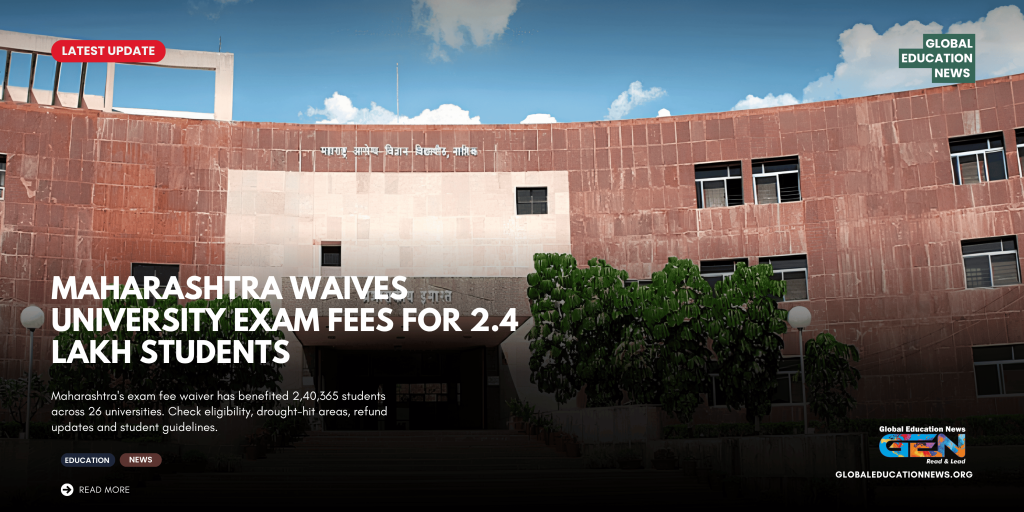
Pune, Education news: The Maharashtra government has waived semester examination fees for 2,40,365 students across 26 state universities, providing financial relief to students from drought-affected areas. The initiative aims to ensure that students facing financial difficulties because of drought can continue their education without the additional burden of examination fees.
The decision follows the expansion of the number of drought-affected talukas in Maharashtra from 265 to 305. The state’s Higher and Technical Education Department has directed universities to implement the fee waiver for eligible students. Students who have already paid their examination fees are also being considered for refunds under the implementation process.
The University of Mumbai has started refunding examination fees, with approximately ₹3.5 crore involved in the reported refund process. The state expects the overall initiative to benefit more than five lakh students as implementation continues.
Maharashtra University Exam Fee Waiver 2026: Key Highlights
| Detail | Latest information |
|---|---|
| State | Maharashtra |
| Scheme | Examination fee waiver for drought-affected students |
| Students benefited so far | 2,40,365 |
| Universities covered | 26 state universities |
| Drought-affected talukas | 305 |
| Expected beneficiaries | More than 5 lakh students |
| Refund update | Eligible students who paid fees earlier may receive refunds |
| Main objective | Reduce the financial burden on drought-affected families |
Why Has Maharashtra Waived University Examination Fees?
Drought can affect household income, agricultural livelihoods and the ability of families to meet education-related expenses. Examination fees may become an additional financial challenge for students whose families are already facing economic pressure.
To address this issue, the Maharashtra government directed higher education institutions not to collect examination fees from eligible students living in drought-affected talukas.
The measure is intended to reduce the risk of students facing additional financial obstacles when completing examination applications. It also seeks to ensure that eligible students can continue their semester examinations without having to arrange money for the prescribed examination fee.
The number of drought-affected talukas increased from 265 to 305, expanding the areas covered by the state’s relief measures.
Who Is Eligible for the Maharashtra Exam Fee Waiver?
The fee waiver is intended for eligible students from officially identified drought-affected talukas. Students studying at state universities and their affiliated institutions should check the implementation instructions issued by their respective universities and colleges.
Students should verify the following details:
- Residence: Whether their taluka is included in the officially identified drought-affected areas.
- Institution: Whether their university or affiliated college has implemented the waiver.
- Course and examination: Whether the relevant semester examination is covered by the applicable instructions.
- Documents: Whether proof of residence, an undertaking or any other supporting documents are required.
- Previous payment: Whether they have already paid the examination fee and need to follow the refund process.
Eligibility conditions and documentation may differ according to the applicable government resolution and university instructions. Students should confirm the exact requirements with their college examination section before submitting an application.
Have Students Who Already Paid Examination Fees Received Refunds?
Yes, refund processes have started at some universities for eligible students who paid their examination fees before the waiver was implemented.
The University of Mumbai has begun refunding examination fees, with approximately ₹3.5 crore involved in the reported process. Other universities have also begun taking steps to implement the government’s instructions.
The refund process is important because some students may have completed their examination applications and paid the required fees before receiving information about the waiver.
Students who have already paid should contact their college examination department to check whether their payment is eligible for a refund and whether any documents or application details are required.
How Many Students Have Benefited Across Maharashtra?
According to the latest reported figures, 2,40,365 students across 26 state universities have benefited from the zero-fee facility.
| University or category | Reported update |
|---|---|
| All 26 state universities | 2,40,365 students benefited |
| Savitribai Phule Pune University | Around 65,200 students benefited |
| University of Mumbai | Refund process underway; approximately ₹3.5 crore involved |
| Other state universities | Implementation and refund processes continuing |
| Overall state target | More than 5 lakh students expected to benefit |
These figures reflect the reported implementation status as of October 20, 2026. The total number of beneficiaries may increase as universities process additional examination applications and refunds.
What Should Students Do to Claim the Fee Waiver?
Students from drought-affected areas should follow their university’s official instructions rather than assuming that the waiver will be applied automatically.
Steps students can take:
- Contact the examination section of their college or university.
- Confirm whether their taluka is included in the applicable drought-affected list.
- Ask whether the examination fee waiver has been implemented for their examination.
- Submit any required residence proof, undertaking or other documents.
- If the fee has already been paid, ask about the refund procedure and expected processing timeline.
- Keep copies of the examination application, payment receipt and documents submitted.
Students who face difficulties accessing the benefit should contact the designated grievance or nodal officer at their university.
What Does the Decision Mean for Students and Families?
The fee waiver can reduce the immediate cost of appearing for semester examinations for eligible students. For families experiencing drought-related financial pressure, removing this expense may help them manage other education-related costs.
The measure also highlights the importance of coordination between the state government, universities and colleges. Clear instructions, timely refunds and accessible grievance mechanisms will be important to ensure that eligible students receive the intended benefit.
However, the waiver concerns examination fees covered by the applicable government instructions. Students should not assume that other charges, such as tuition fees, hostel fees or transport expenses, are automatically waived under the same measure.
Frequently Asked Questions (FAQs)
1. Has Maharashtra waived university examination fees in 2026?
Yes. Maharashtra has introduced an examination fee waiver for eligible students from drought-affected areas, with 2,40,365 students across 26 state universities reported to have benefited so far.
2. How many students will benefit from the Maharashtra fee waiver?
The state expects the initiative to benefit more than five lakh students as universities continue implementing the waiver and processing eligible cases.
3. Which areas are covered by the Maharashtra examination fee waiver?
The programme covers eligible students from officially identified drought-affected talukas. The reported number of drought-affected talukas has increased from 265 to 305.
4. Can students who have already paid their examination fees get a refund?
Eligible students who paid earlier may receive refunds under their university’s implementation process. They should contact their college examination department to confirm the procedure and required documents.
5. How can students check their eligibility?
Students should verify their residence, examination details and university instructions. They should contact their college or university to confirm the applicable conditions and documentation requirements.
6. Does the waiver cover tuition fees and hostel charges?
The announced measure concerns examination fees covered by the applicable government instructions. Students should confirm separately whether any other charges are covered by additional relief measures.
7. What should students do if their college is still collecting examination fees?
Students who believe they qualify should contact their college examination section and the designated university nodal or grievance officer. They should retain relevant application details and payment records.
8. Why did Maharashtra introduce the fee waiver?
The initiative aims to provide financial relief to students from drought-affected families and help prevent examination-related expenses from creating additional obstacles to continuing their education.
Conclusion
Maharashtra’s university examination fee waiver has provided relief to more than 2.4 lakh students across 26 state universities, with further implementation expected to expand the number of beneficiaries. The increase in drought-affected talukas from 265 to 305 has made effective implementation and timely communication especially important.
Eligible students should check their university’s official instructions, confirm their eligibility and ask about refunds if they have already paid examination fees. Global Education News will continue to follow developments in student financial assistance, higher education policy and government initiatives affecting students across India.