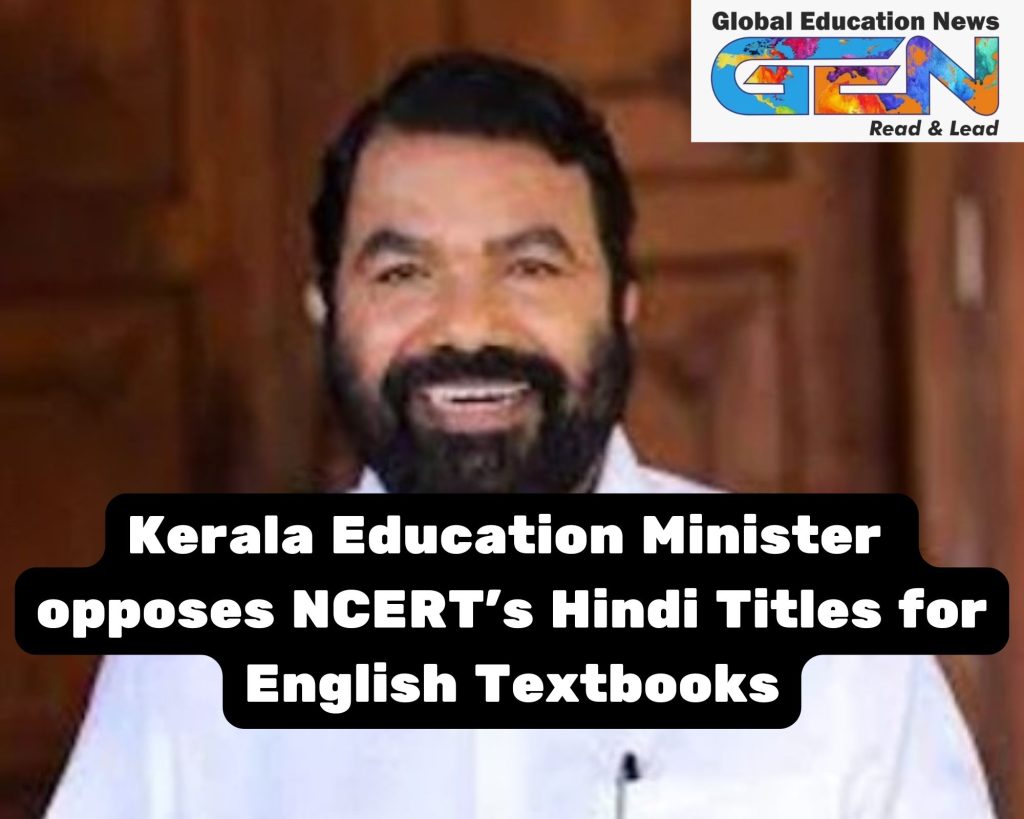
Kerala General Education Minister V. Sivankutty has publicly condemned the National Council of Educational Research and Training (NCERT) for assigning Hindi titles to English-medium textbooks. Labeling the move as a cultural imposition, he argues it threatens India’s linguistic diversity and disregards the needs of non-Hindi-speaking students. The decision has sparked widespread debate, highlighting tensions between national education policies and regional autonomy.
Why the Criticism Matters
- Cultural Concerns: Sivankutty views the use of Hindi titles like Mridangam and Malhar for English textbooks as an imposition that sidelines regional identities.
- Student Impact: Titles shape how students connect with content, and unfamiliar Hindi names may confuse English-medium learners.
- Federal Principles: The Minister argues that education policies should respect India’s linguistic diversity, not enforce a single language’s dominance.
The controversy stems from NCERT’s recent decision to replace traditional English titles with Hindi ones across various subjects for Classes 1 and 2, with plans to extend this to higher grades. Sivankutty contends that this approach alienates students in non-Hindi-speaking states, where English is often the primary medium of instruction.
The Linguistic Debate in Education
- Regional Resistance: States like Kerala and Tamil Nadu have long opposed policies perceived as promoting Hindi over regional languages.
- Policy Context: Critics link NCERT’s move to the National Education Policy 2020, which some argue emphasizes Hindi at the expense of linguistic inclusivity.
- Historical Tensions: Language imposition debates have resurfaced periodically, with non-Hindi regions advocating for equal respect for all Indian languages.
Sivankutty emphasized that textbooks are more than academic tools—they influence young minds’ cultural and creative outlooks. He urged NCERT to reconsider, suggesting titles should align with the medium of instruction to ensure clarity and relatability for students.
Kerala’s Stand on Education Autonomy
- Commitment to Diversity: Kerala has consistently prioritized multilingual education, integrating Malayalam, English, and other languages in its curriculum.
- Call for Reversal: The Minister demanded that NCERT withdraw the Hindi titles to uphold the constitutional value of federalism.
- Broader Implications: The state’s stance reflects a push for education policies that celebrate India’s pluralistic ethos rather than centralizing linguistic norms.
The decision has drawn attention from educators and policymakers, with many in non-Hindi-speaking regions echoing Kerala’s concerns. Critics argue that such moves risk alienating students and eroding trust in national educational frameworks.
What’s Next?
- NCERT’s Response Awaited: The council has yet to address the criticism, leaving room for potential policy revisions.
- Ongoing Dialogue: Education experts call for consultations with states to ensure inclusive textbook naming conventions.
- Focus on Students: Any resolution must prioritize ease of learning and cultural sensitivity for diverse student populations.
Sivankutty’s critique underscores a broader struggle to balance national unity with regional diversity in India’s education system. For the latest developments, keep an eye on statements from the Kerala Education Department or NCERT.