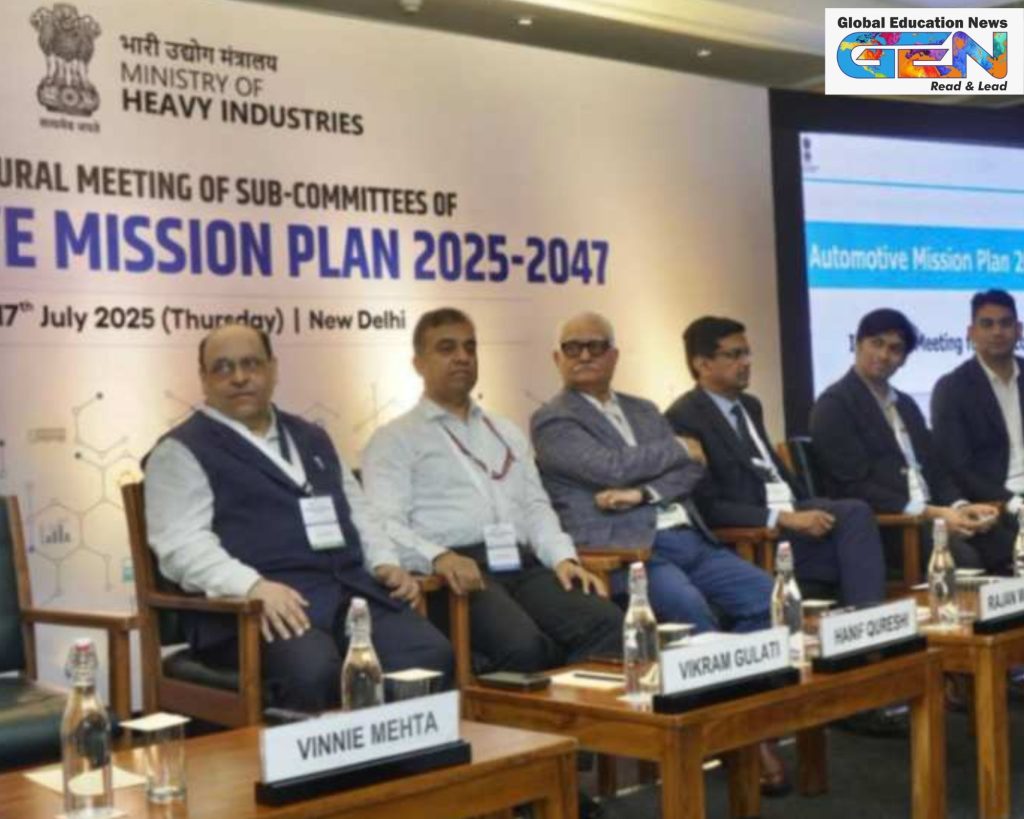
Launched on July 17, 2025, the Automotive Mission Plan 2047 (AMP 2047) is India’s ambitious roadmap to become a global automotive leader by 2047, aligning with Prime Minister Narendra Modi’s Viksit Bharat @2047 vision. Under the leadership of Union Minister H.D. Kumaraswamy and guided by Secretary Kamran Rizvi, this strategic plan builds on the successes of the AMP 2016–2026, which propelled India toward the top three global automotive hubs. AMP 2047 takes this vision further, emphasizing innovation, sustainability, and global trade share through a collaborative, multi-stakeholder approach. With clear milestones for 2030, 2037, and 2047, the plan aims to transform India into a powerhouse of vehicle and component manufacturing, job creation, and cutting-edge technology. Here’s a deep dive into its significance, challenges, and transformative potential
Key Points:
- Launched by the Ministry of Heavy Industries on July 17, 2025
- Targets global leadership in automotive by 2047
- Focuses on innovation, sustainability, and export growth
Why AMP 2047 Matters: A Vision for Viksit Bharat
The Indian automotive sector contributes 7.1% to GDP and nearly half of the country’s manufacturing output, making it a cornerstone of economic growth. AMP 2047 aims to amplify this impact by positioning India as a leader in engineering, manufacturing, and global trade. By prioritizing sustainability through electric mobility and cleaner fuels, and fostering innovation in design and processes, the plan supports India’s climate commitments and the Viksit Bharat goal of a $30 trillion economy by 2047. “The vision for 2047 is not an aspiration but a strategic roadmap backed by concrete targets,” said Additional Secretary Hanif Qureshi, emphasizing India’s global ambitions.
Key Points:
- Boosts India’s 7.1% GDP contribution from automotive
- Aligns with Viksit Bharat’s $30 trillion economy goal
- Promotes sustainable mobility and global competitiveness
Framework and Milestones: A Phased Path to 2047
AMP 2047 sets clear, phased milestones to ensure steady progress:
- 2030: Enhance EV infrastructure, increase export share, and adopt emerging technologies like autonomous driving. Focus on skill development and job creation.
- 2037: Establish India as a hub for advanced manufacturing and green mobility, with significant growth in global trade share and local supply chains.
- 2047: Position India as the global leader in automotive engineering, manufacturing, and exports, with a self-reliant, sustainable ecosystem.
These milestones are shaped by seven sub-committees comprising experts from government, industry, and academia, ensuring a collaborative and adaptive strategy.
Key Points:
- Milestones set for 2030, 2037, and 2047
- Focus on EV infrastructure, exports, and advanced manufacturing
- Adaptive to technological and market shifts
Stakeholder Synergy: A Multi-Sectoral Powerhouse
AMP 2047 thrives on collaboration, uniting diverse stakeholders:
- Government: Ministries of Heavy Industries, Power, Road Transport, Commerce, Petroleum, DPIIT, and Environment align policies for infrastructure and sustainability.
- Industry: OEMs, auto component makers, and bodies like SIAM, ACMA, CII, and FICCI drive innovation and manufacturing excellence.
- Academia and Think Tanks: Contribute research for cutting-edge technologies and skill development.
- End Users: Ensure consumer needs shape product design and accessibility.
The Apex Committee, chaired by Kamran Rizvi, consolidates inputs from sub-committees to create a cohesive plan. This multi-sectoral approach fosters cooperative federalism and ensures AMP 2047 addresses real-world challenges.
Key Points:
- Involves ministries, industry bodies, academia, and end users
- Seven sub-committees guide strategy development
- Apex Committee ensures unified execution
Sustainable Innovation: The Heart of Green Mobility
Sustainable innovation is central to AMP 2047, with a focus on electric mobility, cleaner fuels, and smart manufacturing. Initiatives like CAFE 3 norms (effective April 2027) promote EVs and flex-fuel vehicles, reducing emissions and oil dependency. Innovations in product design, automation, and supply chain sustainability aim to make India a leader in green automotive solutions. This aligns with global climate goals and boosts economic development by attracting investment and creating green jobs.
Key Points:
- Promotes EVs, flex-fuel vehicles, and cleaner fuels
- Drives economic growth through green jobs and investment
- Aligns with global sustainability commitments
EV Infrastructure: Opportunities and Challenges
Opportunities
- Market Growth: India’s EV market is projected to grow significantly, with AMP 2047 targeting expanded charging infrastructure to support adoption.
- Job Creation: Building EV ecosystems creates opportunities in manufacturing, maintenance, and renewable energy integration.
- Global Competitiveness: Affordable, innovative EVs can boost exports, positioning India as a rival to Germany and Japan.
Challenges
- Infrastructure Gaps: Limited charging stations and unreliable power supply hinder EV adoption, especially in rural areas.
- High Costs: Current EV prices are unaffordable for the middle class, requiring cost-reduction policies.
- Skill Shortages: A projected 50 million workforce skill gap by 2030 demands robust training programs.
Policy Solutions
- Subsidies and Incentives: Extend schemes like FAME III to reduce EV costs and incentivize charging infrastructure.
- Public-Private Partnerships: Collaborate with private firms to build charging networks and renewable energy sources.
- Skill Development: Expand STEM education and vocational training to meet industry demands.
Key Points:
- Opportunities in EV market growth and job creation
- Challenges include infrastructure gaps and high costs
- Policies like subsidies and partnerships can bridge gaps
Multi-Sectoral Coordination: The Key to Success
AMP 2047’s success hinges on multi-sectoral coordination, uniting ministries, industry, academia, and end users to address complex challenges. For example, the Ministry of Power supports EV charging grids, while the Ministry of Environment ensures emission compliance. Industry bodies like SIAM and ACMA drive manufacturing innovation, and academia fuels R&D. This synergy, described as “beyond technology silos” by Hanif Qureshi, ensures a holistic approach to technological, infrastructural, and social challenges.
Key Points:
- Unites ministries, industry, and academia for cohesive strategy
- Addresses technological, infrastructural, and social challenges
- Ensures adaptability to global trends and consumer needs
Public Sentiment: Hope and Calls for Action
Posts on X reflect excitement for AMP 2047, with users like @evehicleinfo praising its focus on EVs and global leadership. However, voices like @niveshniti_ urge affordable EVs and better roads, while others highlight the need for worker safety and women’s participation in manufacturing. These sentiments underscore the need for inclusive, practical policies to ensure AMP 2047’s success.
Key Points:
- Enthusiasm for EV focus and global ambitions
- Calls for affordability, safety, and inclusivity
- Highlights need for practical, inclusive policies
Tips for Stakeholders: Making AMP 2047 a Reality
- For Policymakers: Prioritize subsidies, charging infrastructure, and skill development programs.
- For Industry: Invest in R&D for affordable EVs and sustainable manufacturing.
- For Academia: Develop technology transfer mechanisms and incubation centers.
- For Citizens: Share feedback via innovateindia.mygov.in to shape the plan.
The Bigger Picture: A Viksit Bharat by 2047
AMP 2047 is a cornerstone of Viksit Bharat @2047, aiming to transform India into a $30 trillion economy through innovation, sustainability, and global trade. By addressing challenges like infrastructure gaps and skill shortages, and leveraging opportunities in electric mobility and exports, it positions India as a rival to global auto giants. With robust multi-sectoral coordination, AMP 2047 promises to drive economic growth, job creation, and sustainable development.
Key Points:
- Supports Viksit Bharat’s $30 trillion economy goal
- Drives economic growth and job creation
- Positions India as a global automotive leader
Drive the Future with AMP 2047!
The Automotive Mission Plan 2047, launched on July 17, 2025, is India’s bold vision to lead the global automotive industry by 2047. Through innovation, sustainability, and multi-sectoral collaboration, it aims to boost exports, create jobs, and build a self-reliant ecosystem. Stay updated via mhi.gov.in and contribute ideas at innovateindia.mygov.in. Let’s accelerate toward a Viksit Bharat together!