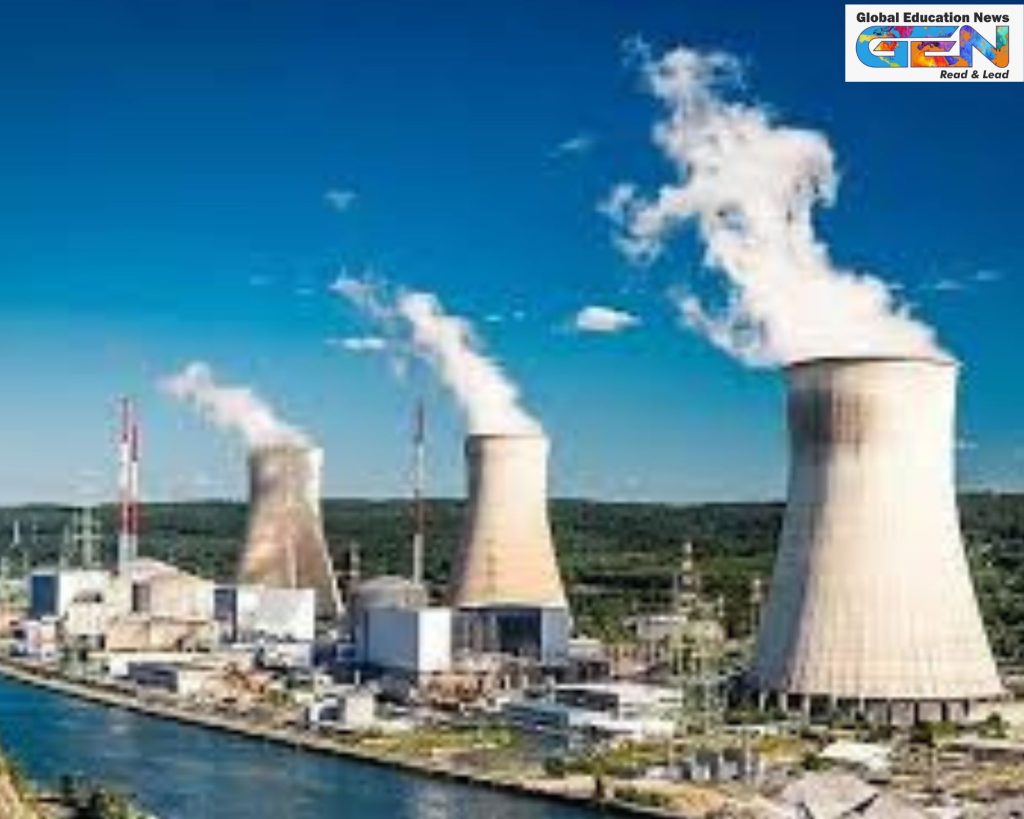
On September 17, 2025, Prime Minister Narendra Modi laid the foundation stone for the Mahi Banswara Rajasthan Atomic Power Project (MBRAPP), a monumental step in India’s quest for clean, reliable energy. This ₹42,000 crore initiative, one of India’s largest nuclear power plants, will harness four indigenous 700 MW Pressurised Heavy Water Reactors (PHWRs) to deliver sustainable power to Rajasthan and beyond. Paired with the inauguration of the 925 MW Nokh Solar Park in Phalodi, Rajasthan, this dual launch signals India’s unwavering commitment to a green energy revolution, blending nuclear and solar prowess to fuel economic growth and environmental stewardship.
Key Points:
- MBRAPP: Four 700 MW PHWRs designed by NPCIL, ensuring safe, reliable base-load power.
- Nokh Solar Park: 925 MW capacity, with 735 MW by NTPC, boosting renewable energy.
- Launched by PM Modi, aligning with India’s net-zero goals and energy security vision.
- Expected to create thousands of jobs and stimulate Rajasthan’s economy.
Mahi Banswara: Powering Rajasthan with Nuclear Might
The Mahi Banswara Rajasthan Atomic Power Project is a flagship initiative under India’s nuclear energy expansion. Located in Banswara, Rajasthan, it features four state-of-the-art IPHWR-700 reactors, designed by the Nuclear Power Corporation of India Limited (NPCIL) with advanced safety systems. With a total capacity of 2,800 MW, MBRAPP will supply clean, uninterrupted electricity to Rajasthan and neighboring states, reducing reliance on fossil fuels and bolstering energy security.
Key Points:
- Investment: ₹42,000 crore for construction and infrastructure.
- Capacity: 2,800 MW from four 700 MW PHWRs, operational by the early 2030s.
- Safety: Enhanced features like passive cooling and core catchers for accident mitigation.
- Impact: Affordable electricity for millions, supporting industrial and domestic needs.
Fleet Mode: India’s Smart Nuclear Strategy
MBRAPP is a cornerstone of India’s innovative fleet mode approach, which involves constructing ten identical 700 MW PHWRs nationwide. This strategy streamlines costs, accelerates timelines, and builds operational expertise. Three such reactors are already operational, with MBRAPP’s four adding to the momentum. This aligns with the Atmanirbhar Bharat vision, emphasizing self-reliance through indigenous reactor technology.
Key Points:
- Fleet mode: Standardizes design for efficiency; 10 reactors planned across India.
- Progress: Three 700 MW reactors commissioned; MBRAPP adds four more.
- Cost savings: Bulk procurement and standardized construction reduce expenses.
- Self-reliance: NPCIL’s PHWR design showcases India’s nuclear innovation.
NPCIL-NTPC Partnership: A Powerhouse Collaboration
The project is driven by Anushakti Vidhyut Nigam (ASHVINI), a joint venture between NPCIL (51%) and NTPC Limited (49%). This partnership combines NPCIL’s nuclear expertise with NTPC’s financial muscle and project execution prowess, ensuring seamless implementation. The collaboration sets a model for future public-private synergy in India’s energy sector.
Key Points:
- Ownership: NPCIL leads with 51%; NTPC brings 49% stake and operational know-how.
- Expertise: NPCIL’s reactor design meets NTPC’s infrastructure scaling capabilities.
- Execution: Joint venture ensures timely completion and operational efficiency.
- Model: Paves the way for more PPPs in India’s clean energy push.
Economic and Social Ripple Effects
Beyond power generation, MBRAPP is a catalyst for Rajasthan’s socio-economic transformation. It will create thousands of direct and indirect jobs, from construction to technical operations. Local businesses, supply chains, and industries will thrive, driving regional prosperity. The project also strengthens India’s energy security, ensuring stable power for homes, factories, and agriculture.
Key Points:
- Jobs: Thousands of opportunities in construction, maintenance, and support sectors.
- Local boost: Stimulates businesses in Banswara, from logistics to hospitality.
- Energy security: Reliable base-load power reduces outages and fossil fuel dependence.
- Sustainable growth: Aligns with India’s 2070 net-zero target.
Nokh Solar Park: A Renewable Energy Milestone
In tandem with MBRAPP, the RSDCL Nokh Solar Park in Phalodi, Rajasthan, was inaugurated, adding 925 MW of solar capacity to India’s renewable energy grid. Developed with 735 MW by NTPC and additional contributions by Rajasthan Solarpark Development Company Limited, this facility will power lakhs of homes while cutting carbon emissions. It complements MBRAPP’s nuclear output, creating a balanced clean energy ecosystem.
Key Points:
- Capacity: 925 MW, with NTPC contributing 735 MW.
- Impact: Powers households, reduces coal reliance, and supports climate goals.
- Jobs: Generates employment in solar panel installation, maintenance, and operations.
- Green synergy: Pairs with nuclear to diversify Rajasthan’s energy mix.
Why This Matters for India’s Future
The dual launch of MBRAPP and Nokh Solar Park underscores India’s multifaceted approach to clean energy. Nuclear power offers stable, high-capacity output, while solar provides scalable, eco-friendly energy. Together, they address rising electricity demand, combat climate change, and drive economic growth. As PM Modi emphasized, these projects embody Atmanirbhar Bharat by leveraging indigenous technology and fostering regional development.
Key Points:
- Clean energy mix: Nuclear and solar reduce India’s carbon footprint.
- Economic driver: Boosts Rajasthan’s GDP through jobs and infrastructure.
- Global leadership: Positions India as a model for sustainable energy transitions.
- Future-ready: Supports India’s 500 GW renewable and nuclear target by 2030.