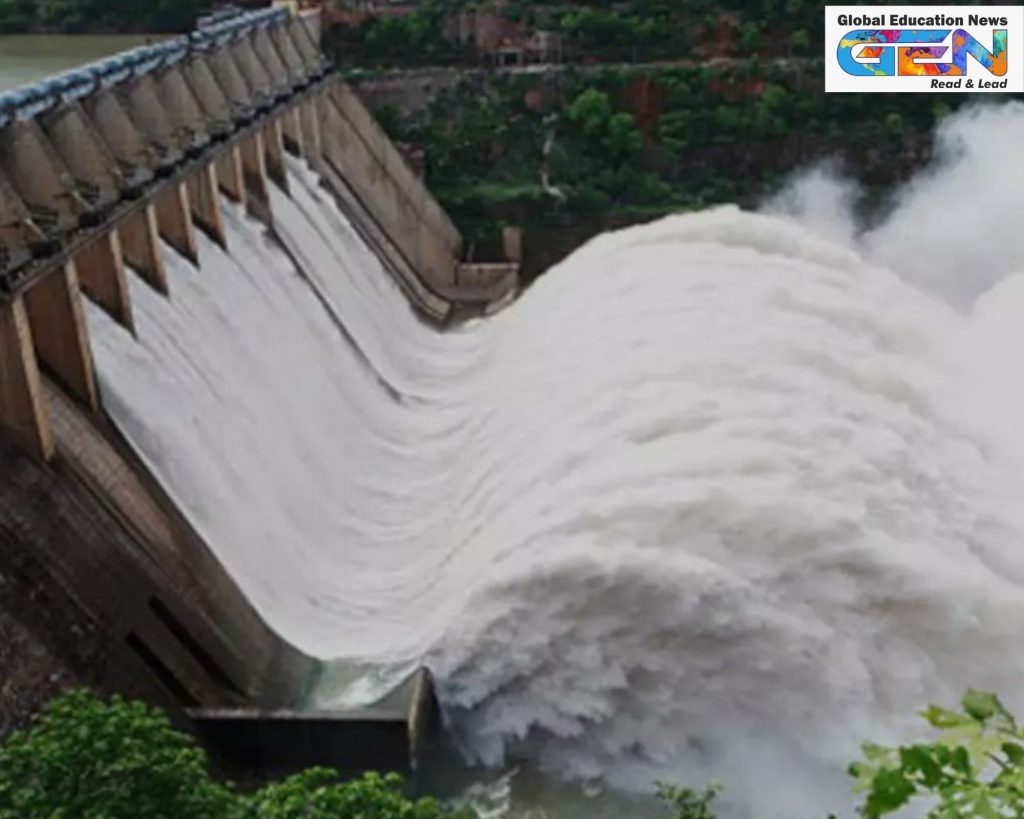
Launched as a landmark in regional clean energy collaboration, the 1,125 MW Dorjilung Hydropower Project on Bhutan’s Kurichhu River is a joint venture between Bhutan’s Druk Green Power Corporation (DGPC) and India’s Tata Power Company Limited. This run-of-the-river initiative introduces private sector participation and innovative financing, strengthening India-Bhutan ties while advancing sustainable energy goals.
Key Points:
- 1,125 MW run-of-the-river project on the Kurichhu River.
- Joint venture between DGPC and Tata Power, formalized in November 2024.
- Aims to support Bhutan’s 5,000 MW clean energy target, including hydropower and solar.
- Enhances regional energy security and economic cooperation.
Project Design and Location
The Dorjilung project is strategically located in Bhutan’s Mongar and Lhuentse districts, leveraging the Kurichhu River’s flow for sustainable power generation.
Key Points:
- Design: Run-of-the-river scheme with a 139.5-meter concrete gravity dam and a 15-km headrace tunnel.
- Powerhouse: Underground facility with six Francis turbines, generating 4.5 terawatt-hours annually.
- Water Flow: 287 cubic meters per second channeled to the powerhouse.
- Location: Dam and tunnel in Mongar, reservoir extending to Lhuentse.
Financial Structure and Funding
With an estimated cost of $1.7 billion (Nu/₹150 billion), the project marks a shift from traditional government grants to a public-private partnership model supported by the World Bank.
Key Points:
- Total Cost: $1.7 billion, with foundational contracts worth Nu/₹479 million awarded to Bhutanese firms Chimi RD Construction and KD Builders.
- World Bank Support: Finances the project, including a $4.3 million grant for project studies.
- Funding Model: Special Purpose Vehicle (SPV) with DGPC (60%) and Tata Power (40%) stakes.
- Construction Phase: Access roads and bridges underway, with dam and tunnel works to follow post-tendering.
India-Bhutan Energy Partnership
The Dorjilung project builds on the 2006 India-Bhutan bilateral agreement, which has delivered 2,136 MW from four operational hydropower projects. This collaboration expands to include 4,500 MW of hydropower and 500 MW of solar projects.
Key Points:
- Tata Power’s Role: Leads private sector involvement, including Dorjilung, Gongri Reservoir, Jeri Pumped Storage, and Chamkharchhu IV.
- Solar Component: Tata Power Renewable Energy Limited to develop 500 MW solar projects.
- Energy Goals: Supports Bhutan’s 25,000 MW renewable energy target by 2040 and India’s clean energy needs.
- Bilateral Benefits: Reduces Bhutan’s reliance on Indian grants, fostering business-to-business parity.
Strategic and Economic Significance
The project strengthens India-Bhutan ties while addressing economic and environmental priorities.
Key Points:
- Economic Impact: Hydropower contributes 14% to Bhutan’s GDP and 63% to its exports, with Dorjilung boosting local jobs in Mongar and Lhuentse.
- Energy Security: Provides India with reliable, clean power from the Himalayas.
- Regional Stability: Enhances bilateral relations through shared infrastructure and economic diplomacy.
- Innovative Model: Contrasts with challenges in Nepal, balancing Bhutan’s autonomy with strong India ties.
Challenges and Historical Context
Past Bhutanese hydropower projects, like Punatsangchhu I and II, faced cost overruns and delays, increasing external debt. Dorjilung’s PPP model and World Bank backing aim to mitigate such risks.
Key Points:
- Past Challenges: Cost escalations and delays in earlier projects increased Bhutan’s debt to 70% of GDP.
- Previous Attempts: A 2016 trilateral plan with Bangladesh failed due to geopolitical issues.
- Current Strategy: Focus on India-Bhutan collaboration with private sector equity.
- Risk Mitigation: World Bank oversight and competitive financing terms to ensure sustainability.
Economic and Social Impacts
The project is set to drive significant benefits for Bhutan’s local communities and the broader region.
Key Points:
- Job Creation: Construction and operations will boost employment in Mongar and Lhuentse.
- Sustainable Development: Run-of-the-river design minimizes environmental impact.
- Revenue Growth: Enhances Bhutan’s hydropower export revenue, supporting fiscal stability.
- Community Benefits: Infrastructure development improves local connectivity and economic activity.
Future Prospects and Recommendations
The Dorjilung project, expected to be completed by 2032, is a stepping stone toward Bhutan’s renewable energy ambitions and regional clean energy leadership.
Key Points:
- Timeline: 18 months for preparatory work, 60 months for main construction.
- Future Projects: Part of a 5,000 MW clean energy plan, including solar and additional hydropower.
- Recommendations:
- Prioritize local hiring to maximize economic benefits.
- Ensure competitive financing to avoid debt burdens.
- Leverage Tata Power’s expertise for efficient execution.
- Monitor updates via DGPC and Bhutan’s Ministry of Energy and Natural Resources.
Conclusion: A Blueprint for Clean Energy
The Dorjilung Hydropower Project is a testament to India-Bhutan’s shared vision for sustainable energy and economic growth. By combining private sector innovation, World Bank support, and bilateral cooperation, it sets a model for regional clean energy initiatives. Stakeholders should stay engaged through official channels like DGPC and the Ministry of Energy and Natural Resources for updates on this transformative project.