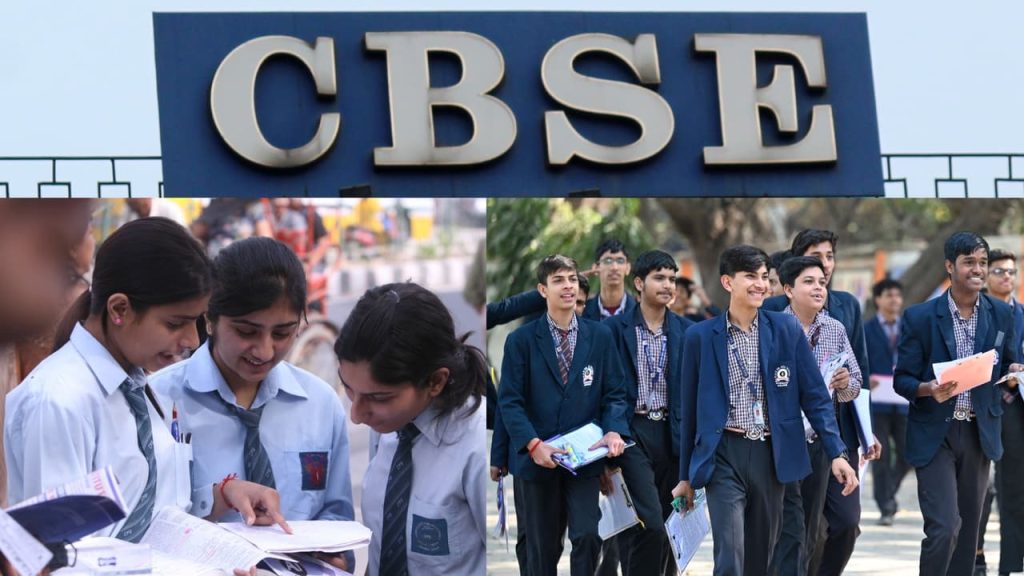
India’s education landscape is set for a major transformation as the Central Board of Secondary Education (CBSE) rolls out a new curriculum from the 2026–27 academic session. Designed in alignment with the National Education Policy (NEP) 2020, these reforms aim to make learning more flexible, skill-based, and student-centric.
The two biggest highlights?
- Three-language formula from Class 6
- Two-level (standard + advanced) Maths and Science in Class 9
These changes are not just structural—they represent a shift toward future-ready education, multilingual learning, and personalized academic pathways.
Three-Language Formula from Class 6: What It Means for Students
Under the new system, students will study three languages (R1, R2, R3) starting from Class 6.
Key Highlights:
- At least two languages must be Indian languages
- The third language becomes compulsory from middle school
- Full implementation will reflect in board exams by 2031
- Students will develop skills in reading, writing, speaking, and listening
This move promotes multilingual education, helping students stay rooted in Indian culture while becoming globally competitive.
Why This Matters
- Boosts cognitive ability and communication skills
- Encourages cultural diversity and inclusivity
- Aligns with global education standards
Dual-Level Maths & Science in Class 9: A Personalized Learning Approach
One of the most innovative changes is the introduction of a two-tier system in Mathematics and Science.
How It Works:
- Standard Level (Mandatory):
- 80 marks exam (3 hours)
- Common for all students
- Advanced Level (Optional):
- 25 marks exam (1 hour)
- Tests deeper conceptual understanding
- Advanced scores won’t affect overall percentage, but will be mentioned separately if a student scores 50%+
Why This Is a Big Deal
- Reduces academic pressure
- Allows students to learn at their own pace
- Encourages deeper learning for those interested in STEM
This is a major step toward customized education, where students are no longer forced into a “one-size-fits-all” system.
Beyond Languages & Core Subjects: What Else Is Changing?
CBSE isn’t stopping there. The new curriculum introduces several modern elements:
1. AI & Computational Thinking
- Introduced from early classes
- Will become mandatory board subjects by 2029
2. Vocational Education
- Becomes compulsory for Classes 9–10
- Focus on real-world skills and employability
3. Art & Physical Education
- Mandatory subjects
- Assessed through internal evaluations
4. Experiential Learning
- Focus on real-life applications
- Promotes critical thinking and problem-solving
Impact on Students, Parents & Schools
For Students
- More flexibility in choosing subjects
- Less pressure, more conceptual clarity
- Better preparation for future careers
For Parents
- Greater transparency in learning outcomes
- Focus on overall development, not just marks
For Schools
- Need to adapt to new teaching methods
- Integration of technology and skill-based learning
When Will These Changes Be Implemented?
- 2026–27:
- Three-language formula begins from Class 6
- Dual-level Maths & Science introduced in Class 9
- 2028:
- First Class 10 board exams under new system
- 2029–2031:
- Full rollout including AI subjects and language policy in boards