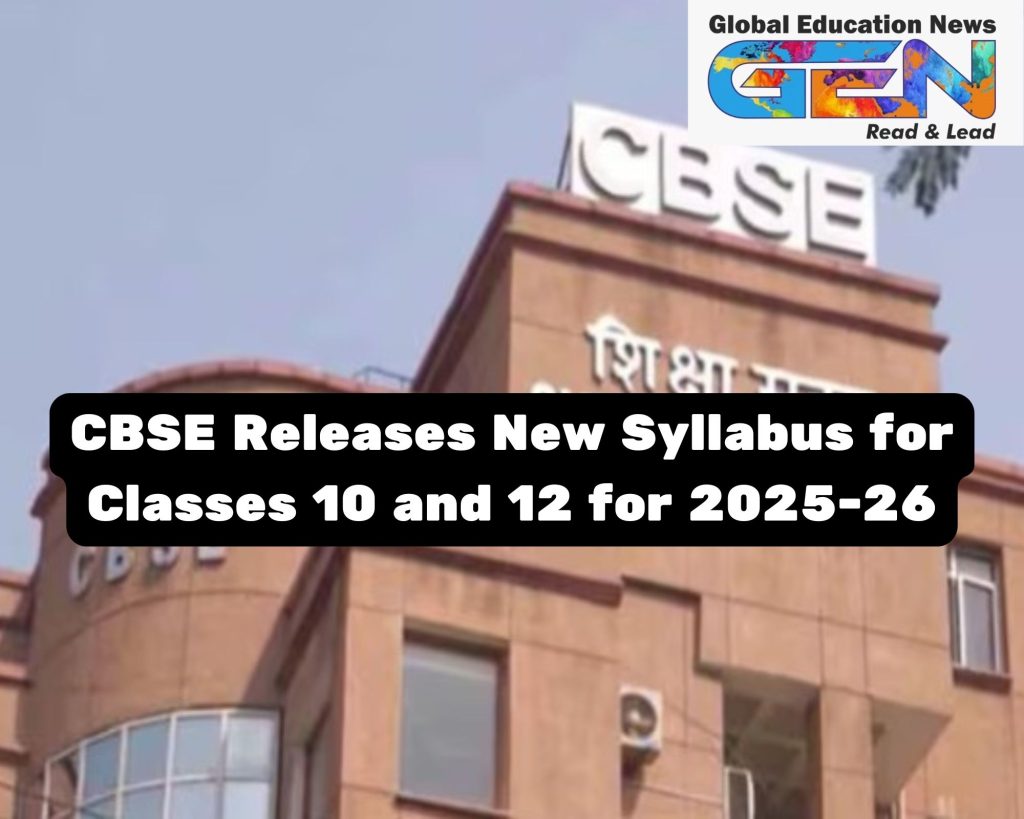
The Central Board of Secondary Education (CBSE) has officially released the new syllabus for Classes 10 and 12 for the academic year 2025-26. With this update, the board has introduced significant changes aimed at making education more relevant, practical, and engaging. Schools are instructed to strictly follow the updated guidelines and adapt to new teaching practices.
1. Overview of the New CBSE Syllabus for 2025-26
Key Points:
- Detailed Subject-wise Content: The syllabus outlines a structured approach to academic content for each subject, making it easier for students to understand their learning objectives.
- Clear Learning Outcomes: Learning outcomes have been clearly defined, ensuring that students know what is expected of them by the end of each academic term.
Implication: The updated syllabus offers a more transparent and structured approach to learning, where students can better track their progress throughout the year.
2. Focus on Experiential Learning and Competency-Based Assessments
Key Points:
- Experiential Learning: The new syllabus emphasizes hands-on learning where students engage with real-life situations and apply what they’ve learned practically.
- Competency-Based Assessment: The shift towards competency-based assessments ensures that students are tested on their ability to apply knowledge rather than just recall it.
Implication: This change encourages critical thinking and problem-solving, preparing students for real-world challenges beyond the classroom.
3. Interdisciplinary Approaches to Enhance Conceptual Understanding
Key Points:
- Cross-Subject Learning: The syllabus promotes interdisciplinary learning, where students will connect knowledge from different subjects to understand broader concepts.
- Practical Application: Subjects like Math and Science will be interconnected with real-world problems, fostering a deeper understanding of how these fields intersect.
Implication: By blending subjects, students gain a more holistic perspective, preparing them for complex, interconnected issues in higher education and the workforce.
4. Flexibility in Teaching Strategies
Key Points:
- Adaptable Teaching Methods: The new syllabus encourages schools to implement flexible teaching strategies tailored to individual students’ needs.
- Diverse Learning Styles: The curriculum allows for the integration of varied teaching practices to cater to different learning abilities and preferences.
Implication: This approach helps accommodate diverse learning styles, ensuring that all students, regardless of their strengths or challenges, have access to effective teaching methods.
5. Guidelines for Schools: What Schools Must Do
Key Points:
- Strict Adherence to the Curriculum: Schools are directed to follow the syllabus and guidelines strictly, particularly the initial directives on teaching approaches.
- Alignment with National Curriculum Framework-2023: The curriculum aligns with the National Curriculum Framework which promotes inclusive education, student-centered learning, and a focus on practical knowledge.
Implication: Schools must adopt a disciplined approach to ensure consistency and quality in education across all institutions following the new syllabus.
6. Holistic Development Beyond Academics
Key Points:
- Personal and Social Development: The syllabus includes components for developing emotional intelligence, social skills, and teamwork abilities.
- Extra-Curricular Activities: Schools are encouraged to focus on co-curricular and extracurricular activities, ensuring students have a balanced growth experience.
Implication: This focus on overall development prepares students not only academically but also personally, contributing to their growth as well-rounded individuals.
Conclusion: A Comprehensive Shift Toward Future-Ready Education
With the introduction of the CBSE 2025-26 syllabus, the board has made a pivotal shift toward a more integrated and student-centered education model. By focusing on experiential learning, competency-based assessments, and interdisciplinary approaches, the new curriculum aims to equip students with the skills necessary to thrive in a rapidly changing world. The guidelines for schools ensure that these changes are implemented effectively, fostering an environment where students can grow academically, socially, and emotionally.