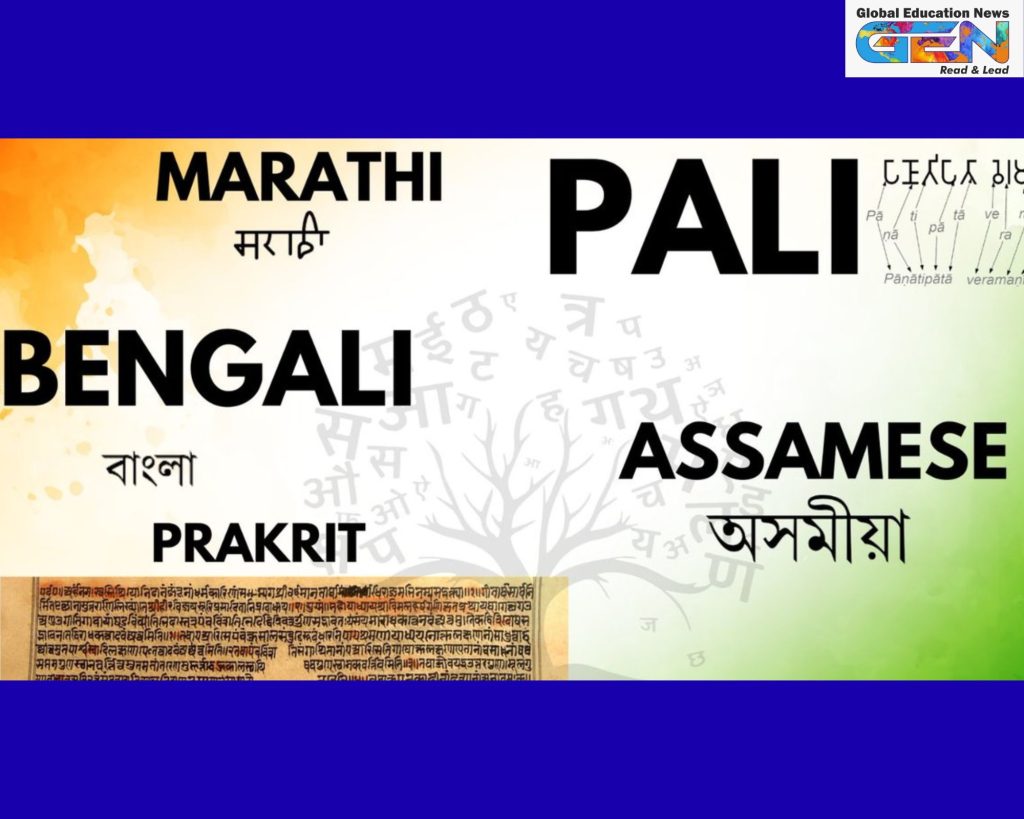
In the cradle of empires where Buddha once walked and whispered enlightenment, Bihar is tuning back into its ancient echoes. On December 10, 2025, Chief Minister Nitish Kumar’s cabinet greenlit two groundbreaking academies—one for Prakrit and another for Pali—under the freshly minted Department of Higher Education. This isn’t mere paperwork; it’s a heartfelt revival of languages that scripted Buddhism’s spread and Hinduism’s heartfelt verses, languages whispered in Magadha’s courts over 2,000 years ago.
With Bihar’s soil soaked in history—from Nalanda’s ruins to Bodh Gaya’s serenity—these academies aim to dust off forgotten scrolls, fueling university research and cultural pride. Amid a national push for vernacular roots, this move folds existing Sanskrit setups into a unified fold, promising a renaissance that could ripple from Patna’s libraries to global Buddhist hubs. We’ve got the scoop in scannable keypoints: From epic origins to educational edges, here’s why Bihar’s word warriors are winning hearts.
Cabinet’s Cultural Coup: The Birth of Bihar’s Language Guardians
Fresh from the state Cabinet’s nod, these academies join a trio of new departments—Youth, Employment and Skill Development, and Civil Aviation—signaling education’s top billing in Nitish Kumar’s playbook. Existing vernacular bodies for Sanskrit, Prakrit, and Pali now huddle under Higher Education’s wing, streamlining oversight for a sector that’s long needed a linguistic lift.
Key Points:
- Announcement Date: December 10, 2025—cabinet approval paves way for swift setup, with operations eyed for early 2026.
- Department Duties: Higher Education now steers university research across disciplines, plus all vernacular academies for coordinated revival.
- Broader Bundle: Alongside Prakrit/Pali, Sanskrit academy integrates— a one-stop shop for ancient Indian linguistics.
- Stakeholder Shoutout: Senior JD(U) leader Neeraj Kumar hailed it as a “major step toward preserving these languages,” crediting CM Kumar’s vision.
This fusion isn’t flashy—it’s foundational, turning scattered efforts into a symphony of scholarly support.
Prakrit’s Proud Pedigree: From Sanskrit Offshoots to Everyday Epics
Prakrit, the “natural” tongue of ancient masses, bloomed as Middle Indo-Aryan chatter from Vedic Sanskrit’s formal folds around 500 BCE. It birthed dramas, poems, and Jain texts, making high philosophy folksy before morphing into Hindi, Bengali, and more. In Bihar’s Magadhi heartland, it was the street-smart sibling to elite Sanskrit, scripting everything from love ballads to royal edicts.
Key Points:
- Evolution Edge: Emerged post-Vedic era; key in vernacular lit, influencing 80% of modern Indo-Aryan dialects.
- Bihar Bond: Magadhi Prakrit, a star variant, echoed in Buddha’s Bihar sermons—think Ashokan edicts etched nearby.
- Literary Legacy: Fueled Hindu plays (like Kalidasa’s echoes) and Jain canons; Sauraseni and Gandhari variants added flavors.
- Revival Role: Academies to digitize texts, host workshops—aiming to weave Prakrit into school curricula for cultural continuity.
Prakrit wasn’t elite ink— it was the people’s pulse, and Bihar’s bid to revive it honors that democratic draw.
Pali’s Sacred Symphony: The Buddha’s Bridge to Global Faiths
Pali steals the spotlight as Prakrit’s poetic pinnacle, the lingua franca of Theravada Buddhism that carried the Dharma from Bihar’s groves to Sri Lanka’s shores and Southeast Asia’s stupas. Composed around 300 BCE, the Tipitaka—Buddhism’s triple basket—lives in Pali, blending philosophy with practical wisdom that still guides millions.
Key Points:
- Buddhist Backbone: Canonical language for early texts; spread via missionaries to Thailand, Myanmar—Bihar as epicenter.
- Historical Hook: Emperor Ashoka’s envoys chanted Pali edicts; Nalanda monks preserved it through medieval mayhem.
- Variants Vibes: Gandhari Prakrit influenced early Pali scripts; ties to Bihar’s Vaishali, where Buddha’s last words rang.
- Modern Mission: Academies to train translators, fund digs—potentially boosting Bihar’s Buddhist tourism by 20-30%.
Pali’s not frozen fossil—it’s a living liturgy, and these hubs could spark global collaborations from Patna to Phnom Penh.
Bihar’s Buddha Boost: Why This Revival Hits Home Hard
Bihar, birthplace of the Buddha and Jain Tirthankaras, wears its linguistic heritage like a saffron robe. With 40% rural literacy lags and a youth craving roots, these academies aren’t add-ons—they’re antidotes to cultural amnesia, linking ancient lore to today’s job quests in heritage tourism and academia.
Key Points:
- Historical Halo: State claims Buddha’s enlightenment site; Prakrit/Pali echo in 2,000-year-old Magadhi dialects still spoken.
- Educational Edge: University tie-ins for PhD grants; could lift Bihar’s research output in humanities by 15%, per similar state models.
- Neeraj’s Nod: “Foundational to India’s cultural heritage… lasting influence on higher education,” especially in Buddha-linked Bihar.
- Inclusivity Angle: Open to scholars nationwide; women and tribal voices prioritized in fellowships for diverse digs.
This is Bihar betting big on its backstory—turning ruins into classrooms for a generation hungry for heritage highs.
Road to Resurrection: Plans, Perks, and Potential Pitfalls
While launch deets like budgets (estimated ₹50-100 crore initial) and HQs (likely Patna or Rajgir) are brewing, the focus is fast-track: Digitization drives, annual conferences, and school modules by 2027. Challenges? Scarce experts and funding fights—but Bihar’s track record with Sanskrit revivals hints at hope.
Key Points:
- Setup Swift: Process initiated; full ops by mid-2026, with pilot workshops in Q1.
- Perks Pipeline: Research grants, international exchanges—eyeing UNESCO nods for Pali archives.
- Broader Beats: Ties to NEP 2020’s multilingual push; could inspire UP or MP copycats.
- Watch-Outs: Need for local linguists; community outreach to dodge “elite-only” tags.
From scrolls to screens, this blueprint sketches a Bihar where ancient words whisper into wired worlds.