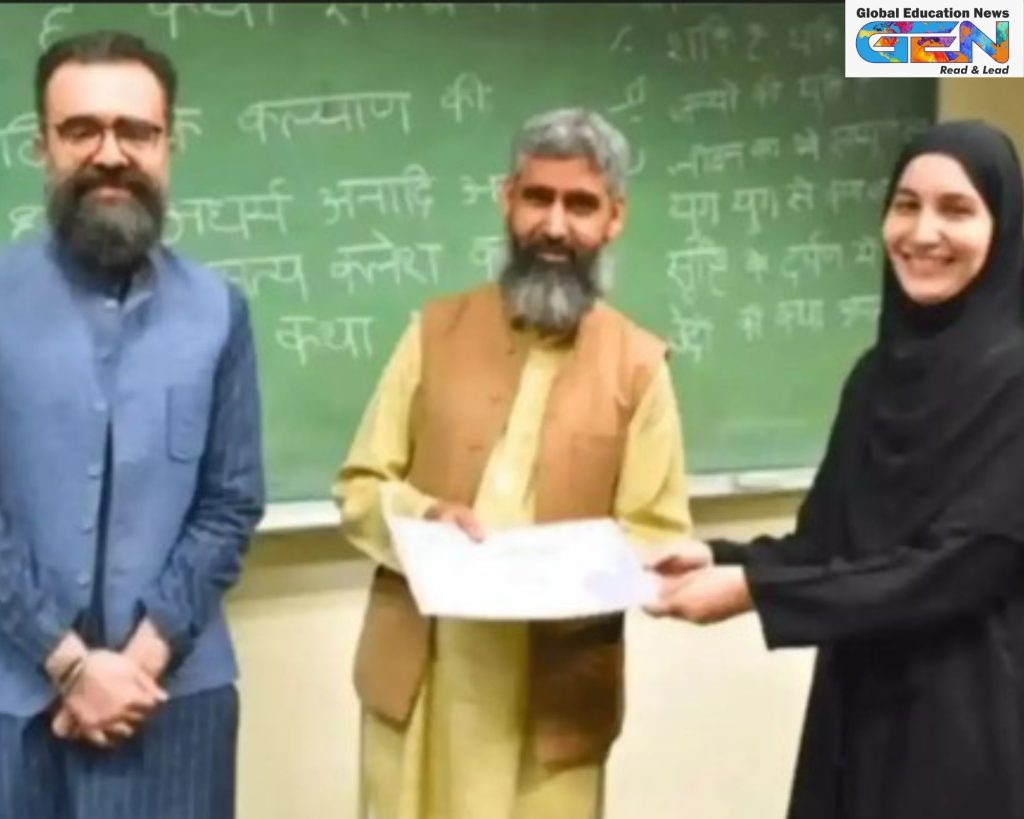
In the heart of Lahore, where history whispers through minarets and manuscripts, a long-dormant language is stirring back to life. This week, the Lahore University of Management Sciences (LUMS)—Pakistan’s premier liberal arts hub—unveiled formal Sanskrit courses, reciting verses from the Mahabharata and Bhagavad Gita in classrooms for the first time since the 1947 Partition. What began as a modest three-month workshop has exploded into a full-fledged academic offering, drawing cheers from students surprised by Sanskrit’s rhythmic logic and its deep roots in Urdu poetry.
This isn’t just linguistics; it’s a reclamation of shared South Asian soul. With Punjab University’s dusty Sanskrit archives waiting in the wings, LUMS is planting seeds for a renaissance—envisioning Gita scholars from Pakistan in a decade. Amid India-Pakistan tensions, it’s a quiet bridge of wisdom, echoing Panini’s ancient grammar from Gandhara’s soil (now Khyber Pakhtunkhwa). We’ve distilled the drama into digestible keypoints: From epic intros to enrollment euphoria, here’s why this could rewrite regional narratives.
Roots and Revival: Why Sanskrit’s Return to Pakistani Classrooms Feels Like Destiny
Sanskrit, the bedrock of South Asia’s epics, philosophies, and even everyday Urdu idioms, faded post-Partition amid political divides. LUMS’ leap reclaims it as a regional heirloom—not a relic of religion, but a living link to the Indus Valley’s ink. The workshop’s success? Overwhelming enrollments that screamed for more, turning curiosity into curriculum.
Key Points:
- Partition Pause: First formal Sanskrit teaching in Pakistan since 1947—78 years of silence broken by LUMS’ bold curriculum.
- Historical Heartbeat: Ties to Panini’s Gandhara village and Indus-era scripts; Punjab University hoards untouched Sanskrit treasures.
- Workshop to Wonder: A three-month intro drew hordes; now a staple course, eyeing a full-year program by 2027.
- Cultural Glue: Professor Shahid Rasheed: “It binds this whole region… It belongs to us as well; it is not tied to any one religion.”
This revival isn’t nostalgia—it’s a nod to unity, proving borders can’t bury shared verses.
Course Spotlight: Diving into Mahabharata Magic and Gita Gems
Forget dry grammar drills—these classes pulse with poetry. Students chant Gita passages, unpack Mahabharata battles through Sanskrit lenses, and even groove to the Urdu twist on the iconic “Hai katha sangram ki” theme from India’s beloved TV epic. It’s structured yet soulful, blending ‘subhashitas’ (wisdom nuggets) with language hacks.
Key Points:
- Epic Entries: Core focus on Mahabharata verses and Bhagavad Gita excerpts—recited aloud for that immersive vibe.
- Urdu-Sanskrit Symphony: Lessons on how Sanskrit shapes Urdu, with surprises like the Mahabharat song’s lyrical roots.
- Logic Layer: Sanskrit’s precise grammar wows initially (“intimidating”), then enchants—students call it “enjoyable puzzle.”
- Expansion Dreams: Train local experts; Dr. Ali Usman Qasmi predicts: “In 10-15 years, we may see scholars of the Gita and Mahabharata emerging from Pakistan.”
Hands-on and heartfelt, these sessions turn ancient texts into today’s teachable treasures.
Student Surge: From Shock to Sheer Delight in the Classroom
Enthusiasm is electric—workshops overflowed, and now courses are buzzing with wide-eyed learners uncovering Sanskrit’s quirks. Many mistook it for “just Hindi,” only to discover its standalone splendor and Urdu undercurrents. It’s sparking debates: Why reclaim this now?
Key Points:
- Enrollment Explosion: Workshop overload led to this launch; spots filling fast with diverse undergrads and scholars.
- Aha Moments: Students stunned by Urdu’s Sanskrit DNA—”Some didn’t even know that Sanskrit is different from Hindi,” says Rasheed.
- Warm Welcome: Initial intimidation melts into fun; one quip: “It’s like decoding a secret code of the subcontinent.”
- Rasheed’s Take: “When I was teaching ‘subhashitas,’ students were surprised… a small but important step” toward revival.
This buzz isn’t fleeting—it’s fueling a hunger for more, one verse at a time.
Broader Ripples: A Bridge for India-Pakistan Heritage Harmony
As LUMS leads, eyes turn to Punjab University’s archives—could this ignite nationwide Sanskrit studies? It’s a soft diplomacy win, highlighting cultural overlaps amid geopolitical static. Future? Homegrown epics experts, perhaps collaborating across the Radcliffe Line.
Key Points:
- Archive Awakening: Punjab U’s Sanskrit stash, ignored for decades, could get scholarly spotlights soon.
- Regional Resonance: Echoes India’s Sanskrit pushes, fostering quiet people-to-people ties through texts.
- Long-Term Legacy: 10-15 year horizon for Pakistani Gita/Mahabharata mavens—think joint webinars or translations.
- Inclusivity Angle: Open to all faiths; Rasheed emphasizes: “We must embrace it”—a call for collective custody.
In a divided subcontinent, these classrooms whisper: Wisdom knows no walls.