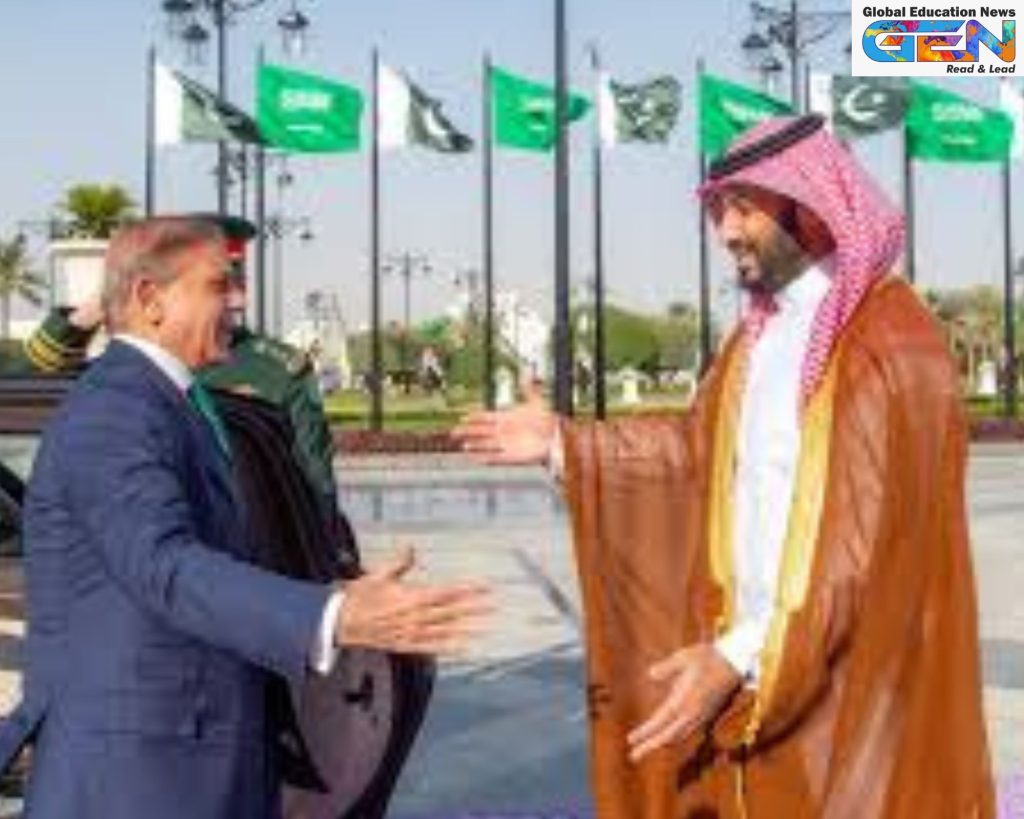
On September 17, 2025, in Riyadh’s Al Yamamah Palace, Saudi Crown Prince Mohammed bin Salman and Pakistan Prime Minister Shehbaz Sharif inked the Strategic Mutual Defense Agreement (SMDA), formalizing a decades-old security bond into a NATO-like pact. Triggered by Israel’s September 10 strikes on Qatar—aimed at Hamas leaders—the deal declares any aggression against one as an attack on both, blending Saudi’s oil wealth with Pakistan’s nuclear might. Signed amid an Arab-Islamic summit in Doha, it signals Gulf states’ waning faith in U.S. security guarantees, especially after Washington’s muted response to the Qatar incident.
Pakistan’s Defense Minister Khawaja Asif, in a September 18 Geo TV interview, dropped the bombshell: Pakistan’s nuclear arsenal—estimated at 180 warheads—could be “made available” to Saudi if threatened, marking the first explicit nod to a “nuclear umbrella” over the Kingdom. Yet, in a quick pivot to Reuters, Asif clarified nukes are “not on the radar,” emphasizing inspections and compliance as an “abiding nuclear power.” A senior Saudi official echoed: It’s a “comprehensive defensive agreement encompassing all military means.”
Key Points:
- Core Clause: Mutual defense activation on aggression; includes joint exercises, tech transfers, and co-production—no offensive intent.
- Historical Ties: Saudi reportedly funded Pakistan’s 1998 tests; long-standing arms deals and troop deployments (e.g., 1,000+ Pakistanis in Yemen ops).
- Expansion Tease: Asif hinted at including other Gulf states like UAE or Bahrain, potentially forming a “GCC-Pakistan bloc.”
- X Buzz: Posts like @OSPSF’s clarification (“Nukes not included”) went viral with 144 likes, countering hype from users sharing Asif’s initial quote.
This “watershed” pact, per Al Jazeera, isn’t just bilateral—it’s a geopolitical pivot.
Nuclear Angle: Asif’s Flip-Flop Fuels Speculation on Pakistan’s ‘Umbrella’ for Riyadh
Asif’s September 18 remarks—”Our capabilities will absolutely be available”—ignited fears of Saudi gaining de facto nuclear access, echoing long-held suspicions of shared tech. Pakistan insists its program is India-centric, with IAEA-compliant facilities, but experts like Belfer Center’s Matthew Kroenig dismiss full umbrella hype: “It’s rhetorical; operational nukes stay Pakistan-controlled.” Saudi, eyeing Iran’s advances, views it as a hedge—especially post-Qatar strikes.
Key Points:
- Arsenal Snapshot: Pakistan: 180 warheads; Saudi: None, but advanced missile tech via China/Pakistan deals.
- Clarification Drama: Asif’s Reuters walk-back: “No intention for aggression; nukes off-limits”—mirroring X clarifications from @Sardar_Nouman__.
- Saudi Stance: “All military means” includes deterrence, but no explicit nuke mention—balancing ties with nuclear rival India.
- Global Jitters: U.S. sanctions loom; echoes 2018 reports of Saudi funding for Pakistani missiles.
X erupted: @Tarique18386095’s post listing global nukes drew 39 views, amplifying fears.
India’s Alert: MEA Flags ‘Sensitivities’ as Pact Alters South Asia-Middle East Calculus
India’s Ministry of External Affairs (MEA) spokesperson Randhir Jaiswal, in a September 19 briefing, urged Saudi to weigh “mutual interests and sensitivities,” vowing to “study implications for national security.” With $50B+ bilateral trade and 2.6M Indian expats in Saudi, New Delhi sees the pact—timed post-May 2025 Indo-Pak skirmish—as a direct threat, potentially emboldening Islamabad.
Key Points:
- Security Calculus Shift: Analyst Ian Bremmer: “Going to change life for India”—could drag Pakistan into Gulf conflicts, straining resources.
- Diplomatic Tightrope: Saudi-India ties (NEOM investments) vs. Pakistan’s nukes; MEA eyes “regional and global stability.”
- Broader Ripples: Could extend to GCC, countering Iran/Israel; India mulls boosting QUAD ties.
- X Echoes: @KNLofficials noted Saudi defending Pakistan against India, sparking 28 views of debate.
A wake-up for Delhi: From economic partner to strategic rival?
Expert Takes: Hype vs. Reality – A Hedge Against Iran or Empty Rhetoric?
Geopolitics watchers split: Belfer Center calls it “not a full umbrella” due to ambiguities, while Reuters sees Pakistan’s nukes entering Middle East equations. DW’s experts peg it as an “Iran hedge,” amid Tehran’s advances. Al Jazeera dubs it a “watershed,” reshaping post-U.S. Gulf security.
Key Points:
- Pro-Hype: Strengthens deterrence vs. Israel/Houthis; Saudi’s missile buys from Pakistan.
- Skeptics: Case-by-case activation; no nukes in text—rhetoric for domestic boosts.
- U.S. Angle: Biden-era sanctions on Pak missiles; pact tests Washington’s Gulf role.
- X Pulse: @business_today’s video on “NATO-Style” pact garnered 54 views, framing global shifts.
Not a revolution, but a recalibration.
Potential Fallout: From Gulf Expansion to Global Non-Proliferation Strains
If extended, the pact could spawn a nuclear-tinged GCC alliance, alarming NPT signatories. For India: Heightened Indo-Pak risks; for world: Echoes of Saudi’s “if Iran, then us” vow. U.S./Israel watch closely, per CNN.
Key Points:
- Gulf Dominoes: UAE/Bahrain next? Counter to Iran’s proxies.
- India’s Moves: Boost border defenses; deepen Saudi economic ties to dilute security rift.
- Global Watch: IAEA scrutiny on Pak facilities; U.S. Congress eyes sanctions.
- X Fears: @Lailafatimeh’s pledge post (107 views) highlights “nuclear capability” sharing.
A powder keg? Or prudent prudence?
What’s Next: Monitoring Escalation and Diplomatic Dances
Eyes on October GCC summit for expansions; India-Saudi talks could soothe. For now, Asif’s words linger—umbrella or bluff? Track MEA briefings and Riyadh dispatches.
Key Points:
- Timeline: Joint drills by Q1 2026; IAEA visit to Pak sites soon.
- Stakeholder Alerts: India: Revise doctrines; U.S.: Reaffirm Gulf commitments.
- X Call: @Sabre20483’s expansion tease (29 views) sparks “Arab NATO?” debates.
- Your Take: Umbrella real or rhetoric? Comment below!
Published on September 20, 2025, at 4:10 PM IST.