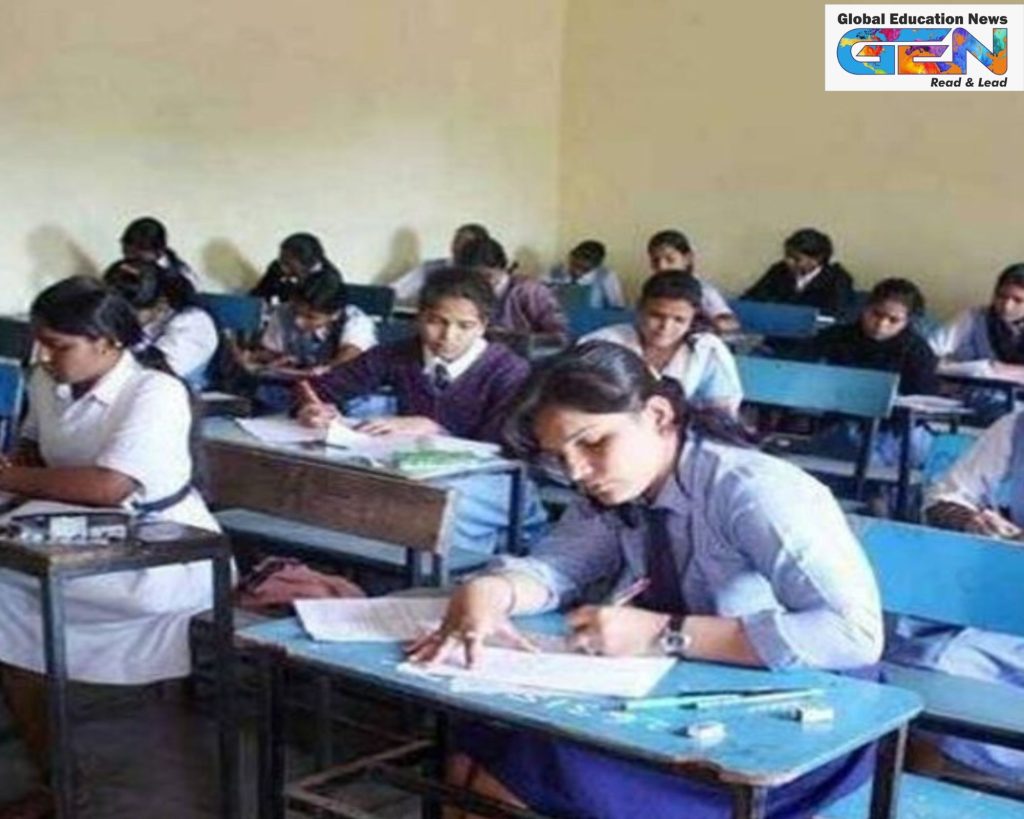
Punjab has set a national benchmark by becoming the first state in India to integrate entrepreneurship as a core subject for Class 11 students, starting in the 2025-26 academic year. Announced by Punjab School Education Minister Harjot Singh Bains alongside AAP Incharge Manish Sisodia, this initiative aims to transform over 2.68 lakh students across 3,840 senior secondary schools into innovators and job creators.
- Key Points:
- Punjab leads as the first state to embed entrepreneurship in school curriculum.
- Targets over 2.68 lakh students to foster creativity and innovation.
- Initiative aligns with India’s push for self-reliance and economic growth.
A Hands-On, Experiential Curriculum
Unlike traditional subjects, the entrepreneurship curriculum is designed to be project-based and experiential, prioritizing practical skills over exam pressure. Students will collaborate in teams to brainstorm business ideas, develop prototypes, pitch for seed funding, and even launch real products or services.
- Key Points:
- Curriculum includes 18 periods annually: 3 for theory, 15 for project work.
- No written exams; evaluation via self-assessment, peer-assessment, and mentor reviews.
- Encourages students to become problem-solvers and community leaders.
Fostering an Entrepreneurial Mindset
The initiative aims to shift students’ perspectives from being job seekers to job creators. By fostering creativity, resilience, and decision-making skills, the program empowers students to think like entrepreneurs and contribute to Punjab’s economic landscape.
- Key Points:
- Focus on creating an entrepreneurial mindset among youth.
- Classrooms to serve as incubators of ideas, with teachers as startup coaches.
- Prepares students for a future driven by innovation and self-reliance.
Economic Impact and Scalability
Minister Bains emphasized the initiative’s potential to drive grassroots economic growth. With over 2.68 lakh students participating, even a 10% success rate could generate Rs 300-400 crore in annual student-led economic activity, boosting local entrepreneurship and job creation.
- Key Points:
- Potential to create significant economic impact through student ventures.
- Encourages community engagement and sustainable development.
- Scalable model for other states to emulate in fostering youth entrepreneurship.
Building on the Success of Punjab Business Blasters
The entrepreneurship subject builds on the Punjab Business Blasters Programme, launched in November 2022 under the Punjab Young Entrepreneurs Programme. Starting with 32 schools and 11,041 students, the program has expanded to 1.8 lakh students across 1,927 schools, proving its success in nurturing young entrepreneurs.
- Key Points:
- Business Blasters Programme laid the foundation for the new curriculum.
- Expanded from 32 to 1,927 schools, impacting 1.8 lakh students.
- Consolidates gains to make entrepreneurship a core part of secondary education.
A Vision for a Self-Reliant Future
This landmark initiative marks a significant milestone in preparing Punjab’s youth for a future driven by innovation and sustainable development. By embedding entrepreneurship in education, Punjab is creating a generation of leaders ready to tackle global challenges and drive economic progress.
- Key Points:
- Aligns with India’s vision for Atmanirbhar Bharat (self-reliant India).
- Positions Punjab as a leader in innovative education reforms.
- Inspires other states to integrate entrepreneurship into school curricula.