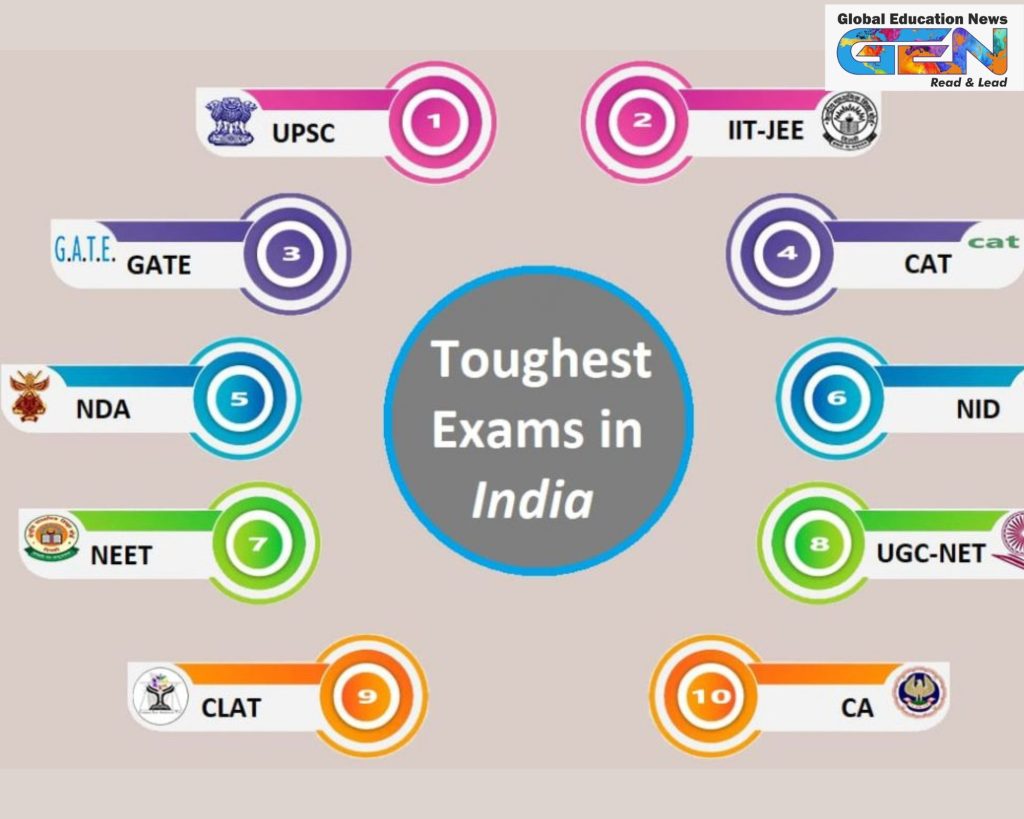
Every year, over 1 crore students in India dive into the high-pressure world of entrance exams, chasing dreams of securing spots in premier institutions for engineering, medicine, law, management, and civil services. These exams—household names like JEE, NEET, UPSC, and CAT—are more than just tests; they’re life-defining milestones that shape careers and social standing. With intense competition, years of preparation, and only a fraction of aspirants succeeding, these exams reflect the scale and ambition of India’s education system. Let’s unpack the top 10 toughest entrance exams, their significance, and the challenges students face.
The High-Stakes World of Entrance Exams
Entrance exams in India are the gateway to prestigious institutions and lucrative careers. With millions of applicants for limited seats, the competition is fierce, and preparation often begins years in advance, fueled by coaching centers, online platforms, and grueling study schedules.
Key Points:
- Massive Scale: Over 1 crore students compete annually across exams like JEE, NEET, and UPSC.
- Career Impact: Success unlocks scholarships, social recognition, and access to elite institutions like IITs, IIMs, and NLUs.
- Cultural Significance: These exams are seen as turning points, shaping not just education but lifelong professional trajectories.
Top 10 Toughest Entrance Exams in India
Here’s a closer look at the exams that define India’s competitive academic landscape, each a stepping stone to coveted careers.
1. JEE (Main and Advanced)
The Joint Entrance Examination (JEE) is the gold standard for engineering aspirants, opening doors to IITs, NITs, and other top institutes.
Key Points:
- Structure: JEE Main is the first step, followed by JEE Advanced for IIT admissions.
- Competition: Over 10 lakh students appear for JEE Main annually, with only 2-3% qualifying for Advanced.
- Preparation: Requires mastery of physics, chemistry, and mathematics, often starting in Class 11.
2. NEET-UG
The National Eligibility cum Entrance Test (Undergraduate) is the sole exam for MBBS, BDS, and other medical courses.
Key Points:
- Scale: Around 18-20 lakh students compete for approximately 1 lakh medical seats.
- Syllabus: Covers biology, physics, and chemistry, with a focus on NCERT curriculum.
- Pressure: High stakes due to limited seats and intense parental expectations.
3. NEET-PG
NEET-Postgraduate determines entry into MD and MS programs, a critical step for medical professionals.
Key Points:
- Applicants: Over 2 lakh doctors compete for limited postgraduate seats.
- Challenge: Tests in-depth medical knowledge and clinical skills.
- Impact: Shapes specialization and career paths in medicine.
4. GATE
The Graduate Aptitude Test in Engineering (GATE) is key for MTech admissions and PSU jobs.
Key Points:
- Versatility: Scores are used for postgraduate admissions and recruitment in companies like ONGC and IOCL.
- Participants: Around 7-8 lakh engineering graduates appear annually.
- Difficulty: Tests technical expertise across 29 disciplines.
5. CAT
The Common Admission Test (CAT) is the gateway to IIMs and top B-schools for MBA aspirants.
Key Points:
- Competition: Over 2.5 lakh candidates vie for around 5,000 IIM seats.
- Sections: Tests verbal ability, quantitative aptitude, and data interpretation.
- Reward: Opens doors to high-paying corporate careers.
6. CLAT
The Common Law Admission Test (CLAT) is the entry point to National Law Universities (NLUs) and other law schools.
Key Points:
- Applicants: Around 60,000 students compete for 3,000 NLU seats.
- Syllabus: Covers legal reasoning, English, and general knowledge.
- Career Path: Leads to prestigious legal careers in litigation or corporate law.
7. UPSC Civil Services Examination
The UPSC exam is among the toughest, selecting candidates for IAS, IPS, and IFS roles.
Key Points:
- Scale: Over 10 lakh aspirants appear, with less than 0.1% securing top ranks.
- Stages: Includes Prelims, Mains, and Interview, testing diverse skills.
- Prestige: Offers unparalleled social status and influence in public service.
8. CUET-UG
The Common University Entrance Test (Undergraduate) standardizes admissions to central universities.
Key Points:
- Newcomer: Introduced in 2022, now mandatory for 200+ universities.
- Reach: Over 15 lakh students register, reflecting its growing importance.
- Flexibility: Allows students to choose subjects aligned with their interests.
9. UGC-NET
The University Grants Commission-National Eligibility Test qualifies candidates for assistant professorships and research fellowships.
Key Points:
- Applicants: Around 9-10 lakh candidates appear annually.
- Purpose: Determines eligibility for teaching and research roles in universities.
- Challenge: Tests subject-specific knowledge and research aptitude.
10. XAT/MAT
Xavier Aptitude Test (XAT) and Management Aptitude Test (MAT) are alternatives to CAT for B-school admissions.
Key Points:
- Acceptance: Recognized by institutes like XLRI (XAT) and over 600 B-schools (MAT).
- Participants: XAT sees around 1 lakh applicants; MAT, over 2 lakh.
- Focus: Tests analytical and decision-making skills for management careers.
The Challenges of Preparing for These Exams
Preparing for these exams is a marathon, not a sprint, requiring immense dedication and resources.
Key Points:
- Coaching Culture: Millions invest in coaching centers like Allen, Aakash, and BYJU’S, often costing lakhs of rupees.
- Mental Pressure: Intense competition and societal expectations lead to stress and burnout.
- Time Commitment: Preparation often spans 2-3 years, balancing board exams and entrance tests.
Why These Exams Matter
These exams are more than academic hurdles; they’re gateways to social mobility and professional success.
Key Points:
- Elite Institutions: Success secures seats in IITs, IIMs, NLUs, and AIIMS, guaranteeing quality education.
- Career Opportunities: Opens doors to high-paying jobs in tech, medicine, law, and public service.
- Social Recognition: Clearing these exams is a badge of honor, celebrated by families and communities.
The Future of Entrance Exams in India
As India’s education system evolves, exams like CUET are reshaping admissions, aiming for fairness and accessibility. However, challenges like coaching dependence and mental health concerns call for reforms to make the process more inclusive.
Key Points:
- Standardization: CUET aims to level the playing field for university admissions.
- Digital Shift: Online platforms and AI-driven prep tools are transforming how students study.
- Need for Balance: Addressing stress and affordability can make exams more equitable.
Conclusion
India’s toughest entrance exams are a testament to the ambition and resilience of over 1 crore aspirants annually. From JEE’s engineering dreams to UPSC’s public service prestige, these tests shape the nation’s future leaders. As competition intensifies, supporting students with accessible resources and mental health initiatives is crucial to ensure everyone has a fair shot at success.