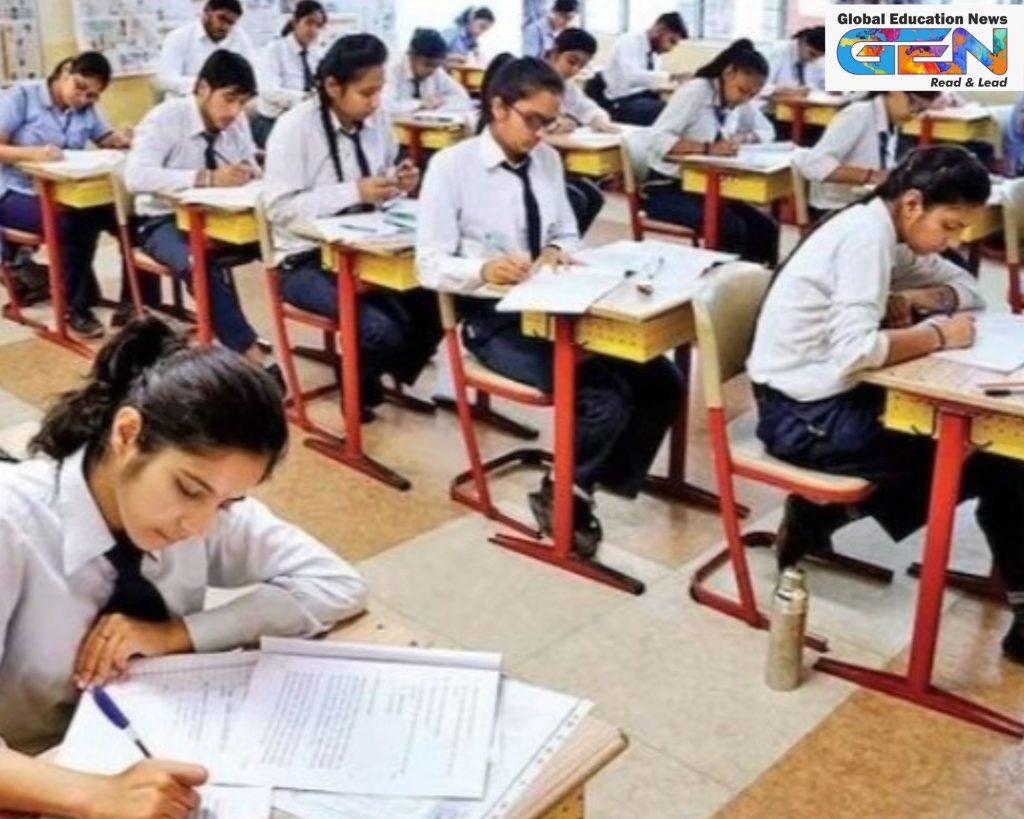
On August 24, 2025, the Central Board of Secondary Education (CBSE) announced plans to implement open-book examinations (OBEs) for Class 9 starting in the 2026-27 academic year. This initiative, aligned with the National Education Policy (NEP) 2020, aims to shift the focus from rote memorization to critical thinking, analysis, and application, impacting over 38 lakh CBSE students in secondary education. However, the move raises questions about readiness, feasibility, and the systemic changes needed for effective implementation.
Key Points:
- OBEs to begin for Class 9 in 2026-27.
- Aligns with NEP 2020 to promote higher-order thinking.
- Impacts 38 lakh+ students in CBSE schools.
Benefits of Open-Book Exams
OBEs are designed to reduce the burden of memorization, fostering skills essential for real-world problem-solving. Key benefits include:
- Reduced Test Anxiety: Students can refer to resources, alleviating pressure to recall facts.
- Enhanced Skill Development: Encourages critical thinking, research skills, and application, aligning with professional demands where information is accessed rather than memorized.
- Long-Term Retention: Promotes deeper understanding over short-term recall, as supported by global research.
- Real-World Relevance: Prepares students to locate, interpret, and apply information, mirroring workplace scenarios.
The modules cite examples like Finland, where education emphasizes critical thinking, and Singapore and the U.S., where OBEs are common at the tertiary level, as models for success.
Key Points:
- OBEs reduce test anxiety and enhance critical thinking.
- Align with real-world skills like information application.
- Inspired by global models like Finland and Singapore.
Challenges in Implementation
Despite the benefits, implementing OBEs in India faces significant hurdles:
- Student Readiness: Many Class 9 students struggle with analytical thinking, as the current system prioritizes rote learning. Students excel at recalling facts but falter in interpretation or connecting ideas.
- Teacher Preparedness: Teachers lack training to design higher-order questions or evaluate OBE responses. Many rely on rote-based methods due to:
- A culture valuing memorization over understanding.
- Exam systems rewarding recall-based performance.
- Pressure to complete syllabi quickly, leading to repetitive testing.
- Parental expectations for high marks over holistic learning.
- Shortage of trained teachers capable of innovative pedagogies.
- Systemic Barriers: Limited in-service teacher training and professional development risks rendering OBEs ineffective. For instance, only 10% of teachers receive regular training under the National Professional Standards for Teachers (NPST).
Key Points:
- Students lack analytical skills due to rote-based education.
- Teachers unprepared to design or assess OBE questions.
- Systemic issues include limited training and cultural biases.
Preparing for OBEs: Strategies and Needs
To ensure OBEs succeed, CBSE must address preparation gaps:
- Teacher Training: Train teachers to frame open-ended questions using verbs like analyze, evaluate, create, justify, and compare, per Bloom’s Taxonomy. Training should also cover evaluating responses for reasoning rather than correct answers.
- Student Preparation: Shift to a learner-centered approach through:
- Classroom debates to encourage reflection and diverse perspectives.
- Collaborative learning to foster peer explanation and negotiation.
- Real-life problem-solving, such as addressing social issues or environmental challenges in communities.
- Balanced Assessment: Use OBEs alongside other methods to ensure comprehensive evaluation, avoiding a one-size-fits-all approach.
- Infrastructure Support: Leverage CBSE’s new regional offices (e.g., Gurugram, Lucknow) and Centres of Excellence for teacher training, targeting 10 lakh teachers by 2027.
Key Points:
- Train teachers in Bloom’s Taxonomy for higher-order questions.
- Foster learner-centered activities like debates and collaboration.
- Use CBSE CoEs for teacher training across new offices.
Context and Broader Implications
The OBE initiative aligns with NEP 2020’s push for competency-based education, complementing efforts like the UGC’s draft curriculum (e.g., Kala Ganpana, Bharatiya Bijganit) and NCERT’s space modules. However, challenges like infrastructure gaps (e.g., Rajasthan’s 86,934 unsafe classrooms) and 45% rural internet penetration could hinder implementation, especially for digital OBEs. The KATBOOK format (NCERT-UEducate MoU) could support OBE resources, but equitable access remains critical.
Key Points:
- Aligns with NEP 2020 and UGC/NCERT initiatives.
- Faces infrastructure and digital access challenges.
- KATBOOK could enhance OBE resource delivery.
Recommendations
CBSE’s OBE initiative is a transformative step, but success requires strategic preparation:
- Pilot OBEs in select schools in 2025-26 to assess feasibility, targeting 1,000 CBSE schools.
- Scale teacher training via NPST and CoEs in Gurugram, Raipur, and Ranchi, aiming for 5 lakh teachers by 2026.
- Develop digital resources through DIKSHA (40 crore+ users) to support OBE preparation, especially in rural areas.
- Engage parents to shift focus from marks to skills, using awareness campaigns via CBSE’s new offices.
- Students should practice open-ended questions and collaborative learning to build skills for OBEs, leveraging resources like NCERT modules for interdisciplinary knowledge.