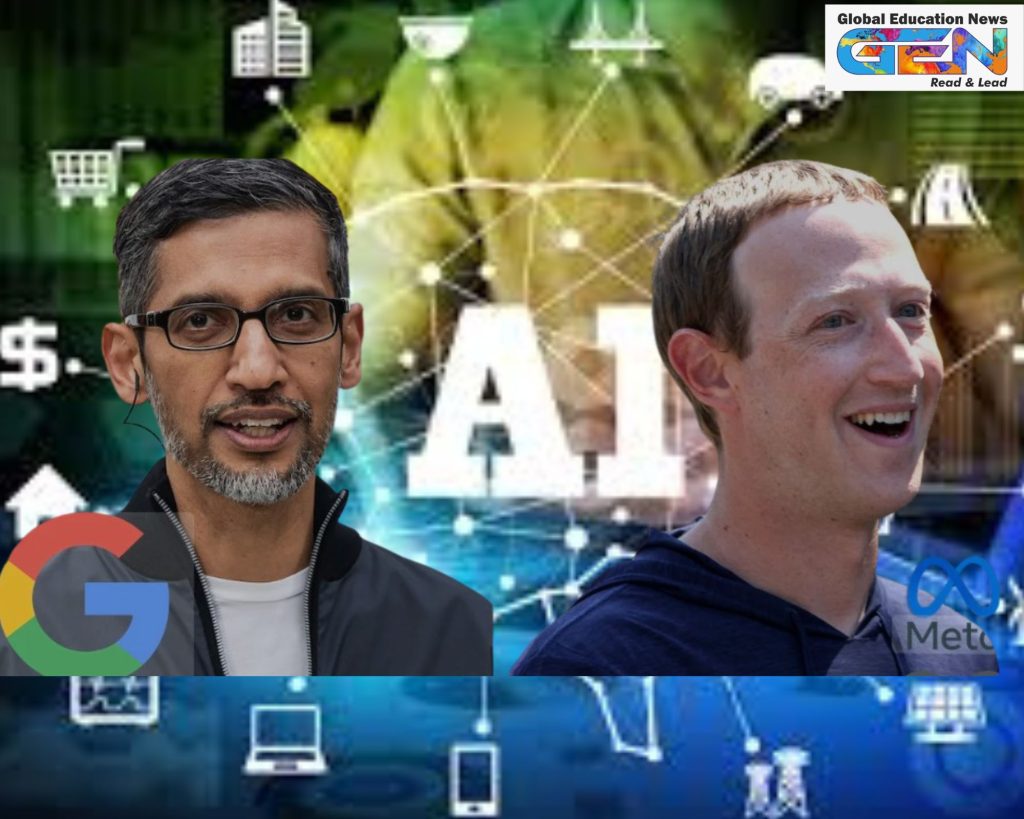
In 2025, Google and Meta, two Silicon Valley giants, are taking starkly different approaches to hiring in the AI-driven era. As artificial intelligence reshapes workflows, the rise of AI-powered cheating tools has forced a reevaluation of recruitment processes. Google is doubling down on in-person interviews to ensure candidate integrity, while Meta is pioneering AI-assisted interviews, viewing collaboration with AI as a critical future skill. This divergence sparks a broader debate: Should hiring prioritize independent problem-solving or the ability to co-create with AI?
- Key Points:
- Google reinstates in-person interviews to combat AI cheating.
- Meta pilots AI-enabled interviews to integrate AI as a workplace skill.
- The contrast reflects a pivotal shift in tech hiring strategies.
Google’s Return to In-Person Interviews
Google’s response to AI-powered cheating is a return to face-to-face assessments. CEO Sundar Pichai, speaking on the Lex Fridman podcast in June 2025, announced the inclusion of at least one in-person interview round to verify candidates’ fundamental skills. The urgency stems from widespread AI-assisted cheating in virtual coding interviews, with over 50% of candidates reportedly using off-camera AI tools, according to CNBC. This has compromised the reliability of remote assessments, prompting Google to adopt a hybrid model combining virtual and in-person interviews.
- Key Points:
- In-person interviews aim to ensure candidates’ core computer science skills.
- Over 50% of candidates use AI tools in virtual technical interviews.
- Hybrid approach balances convenience with evaluation integrity.
Meta’s Bold AI-Enabled Interview Approach
In contrast, Meta is embracing AI as a partner in the hiring process. The company is testing AI-enabled interviews where candidates can use AI assistants during coding assessments, as outlined in an internal memo titled “AI-Enabled Interviews—Call for Mock Candidates.” Meta views collaboration with AI as a vital skill, aligning with CEO Mark Zuckerberg’s vision of AI agents functioning as “midlevel engineers.” This pilot program reflects Meta’s belief that future workplaces will integrate AI tools, making such skills essential for candidates.
- Key Points:
- Meta tests AI-assisted interviews to evaluate collaboration with AI tools.
- Aligns with Zuckerberg’s vision of AI as a core workplace component.
- Reflects a shift toward evaluating real-world, AI-integrated skills.
Industry-Wide Anti-Cheating Measures
The challenge of AI-assisted cheating is not unique to Google and Meta. Other tech leaders, including Anthropic, Amazon, Cisco, and McKinsey, are implementing stricter measures. Anthropic bans AI use during applications, emphasizing non-AI-assisted communication skills, while Amazon requires candidates to confirm they won’t use unauthorized tools. Deloitte has also reinstated in-person interviews for its UK graduate program, signaling an industry-wide shift toward safeguarding evaluation integrity.
- Key Points:
- Anthropic and Amazon enforce strict anti-AI policies in hiring.
- Cisco, McKinsey, and Deloitte prioritize in-person assessments.
- Industry trend reflects growing concern over AI-driven cheating.
The Cluely Case: A Glimpse into AI’s Role
The rise of tools like Cluely, developed by Columbia University student Chungin “Roy” Lee, highlights the evolving role of AI in hiring. Initially suspended for creating Interview Coder, an AI tool for coding interviews, Lee rebranded it as Cluely, raising over $20 million by mid-2025. His perspective—“Everyone uses AI now”—mirrors Meta’s approach, suggesting that AI collaboration is becoming a norm, challenging traditional hiring paradigms.
- Key Points:
- Cluely raised $20 million, reflecting acceptance of AI in interviews.
- Lee’s tool underscores the blurring line between skill and AI support.
- Meta’s pilot aligns with emerging trends in AI-integrated assessments.
Meta’s Aggressive AI Talent Acquisition
Beyond interview strategies, Meta is intensifying its AI talent war, offering massive bonuses—some exceeding $100 million—to poach top engineers from rivals like OpenAI. The acquisition of a 49% stake in Scale AI for $14 billion brought founder Alexandr Wang to lead Meta’s Superintelligence Labs. This aggressive hiring, targeting figures like OpenAI’s Ilya Sutskever, has sparked debate about its long-term payoff, with concerns about cost and innovation diversity.
- Key Points:
- Meta offers $100 million bonuses to attract AI talent.
- Acquisition of Scale AI strengthens Meta’s superintelligence focus.
- Critics question the sustainability of Meta’s high-cost hiring strategy.
Implications for Candidates and the Industry
The contrasting strategies of Google and Meta highlight a critical question: Should hiring prioritize raw technical skills or the ability to leverage AI? Google’s focus on fundamentals ensures a rigorous evaluation of individual capability, while Meta’s approach prepares candidates for AI-driven workplaces. For aspiring tech professionals, mastering AI tools is becoming essential, as employability increasingly depends on adapting to AI-integrated environments.
- Key Points:
- Google emphasizes independent problem-solving and core skills.
- Meta prioritizes AI collaboration as a future-ready skill.
- Candidates must adapt to AI-driven hiring and workplace trends.