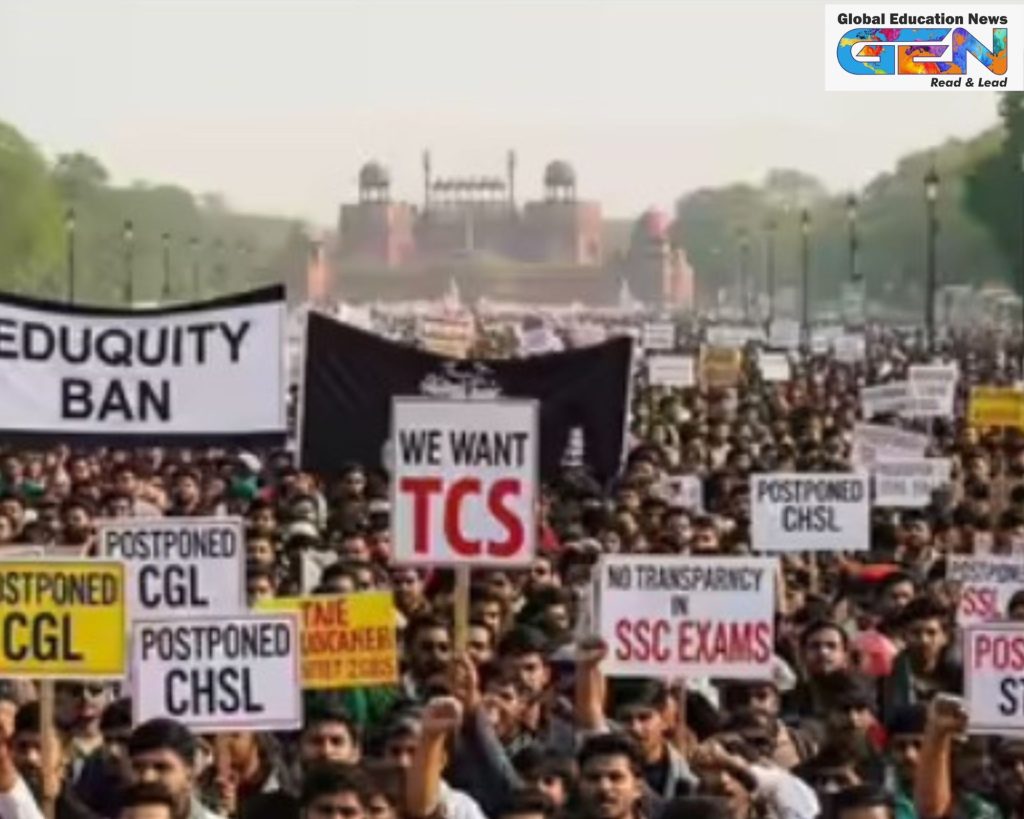
The Staff Selection Commission (SSC) has faced intense scrutiny in 2025 over alleged mismanagement in its Phase 13 and other exams, sparking nationwide protests and trending hashtags like #SSCMismanagement. In an exclusive interview with Aaj Tak’s Saurabh Dwivedi on August 10, 2025, SSC Chairman S Gopalakrishnan addressed critical issues, from paper leaks to the controversial transition from Tata Consultancy Services (TCS) to Eduquity Career Technologies. This move comes amid growing student unrest and demands for transparency in India’s premier recruitment exam system. Here’s the backdrop:
- Nationwide Protests: Thousands of students and educators protested in cities like Delhi and Patna, alleging technical glitches, distant exam centers, and potential paper leaks. Over 55,000 grievances were filed, per Global Education News.
- Historical Context: The 2018 SSC protests over paper leaks led to a CBI probe, setting a precedent for accountability demands echoed in 2025.
- Public Sentiment: Social media posts on X highlight frustration, with claims of Eduquity’s questionable track record fueling distrust.
Chairman’s Defense: No Paper Leaks Since 2018
Gopalakrishnan firmly denied paper leak allegations for SSC exams post-2018, emphasizing a robust digital system designed to prevent leaks. He clarified the roles of TCS and Eduquity, addressing concerns raised by students and educators:
- No Leaks Claim: The Chairman stated that no SSC exam papers have leaked since 2018, as question papers are generated digitally minutes before exams, stored in a secure digital vault.
- Digital Process: A program selects questions from a vault at 5:15 PM for a 5:30 PM exam, downloaded simultaneously across centers, making leaks nearly impossible.
- Malpractice Concerns: While denying leaks, Gopalakrishnan acknowledged potential malpractices, like candidates taking screenshots, and vowed stricter monitoring.
Eduquity vs. TCS: The Vendor Controversy Explained
The shift from TCS to Eduquity as the exam-conducting agency has been a focal point of criticism, with allegations of Eduquity being blacklisted and underperforming. Gopalakrishnan clarified the transition and defended the process:
- Supreme Court Mandate: A 2020 Supreme Court ruling, stemming from a 2018 case, mandated that exam-conducting agencies not set question papers, leading to the separation of roles. TCS handled both until May 2025; now Eduquity conducts exams while a separate content agency prepares questions.
- Eduquity’s Role: Gopalakrishnan emphasized that Eduquity only conducts exams, not sets papers, countering claims of mismanagement tied to question quality.
- Transparent Selection: He refuted blacklisting allegations, stating Eduquity was selected via a transparent tender process in 2025, replacing TCS to comply with court orders.
Addressing Student Grievances: Technical Glitches and Center Issues
Students reported technical glitches, distant exam centers, and mismanagement, such as invigilators using phones during exams. The Chairman acknowledged these issues and outlined corrective measures:
- Technical Errors Admitted: Gopalakrishnan admitted minor errors in question papers, like duplicate options or mismatched answers, but attributed them to the content agency, not Eduquity.
- Center Mismanagement: He addressed complaints about centers 500–1,000 km away, bouncers at venues, and cancellations (e.g., Pawan Ganga Educational Centre, July 24–26), promising better allocation and oversight.
- Reforms Underway: Measures include Aadhaar-based verification, enhanced infrastructure, and C-DAC monitoring to ensure transparency. Refunds of ₹100 per wrong question were also announced.
The Path Forward: Restoring Trust in SSC Exams
With the SSC Combined Graduate Level (CGL) exam scheduled for August 13, 2025, and 30 lakh candidates expected, the stakes are high. Gopalakrishnan’s interview signals a commitment to reform amid ongoing protests:
- Systemic Changes: Introduction of a sliding rank system instead of waitlists and faster result declarations (e.g., CPU results within a week) aim to address student concerns.
- Student-Centric Promises: The Chairman acknowledged mental distress and financial losses, committing to proximity-based center allocations and compensation for cancellations.
- Broader Implications: The controversy, echoed in posts on X, underscores systemic issues in India’s exam system, with political leaders like Rahul Gandhi and Arvind Kejriwal amplifying calls for fairness.
Why This Matters: Securing India’s Youth Aspirations
As India hosts global academic events like the International Olympiad on Astronomy and Astrophysics in Mumbai, the SSC exam controversy highlights the urgency of reliable recruitment systems. The protests, peaking at Jantar Mantar on July 31, 2025, reflect the dreams of millions reliant on SSC for government jobs offering ₹70,000–₹90,000 salaries. Gopalakrishnan’s assurances, coupled with reforms, aim to restore trust, but ongoing scrutiny from students and educators will shape the future. Stay updated on SSC’s journey toward transparency and fairness as the nation watches closely!