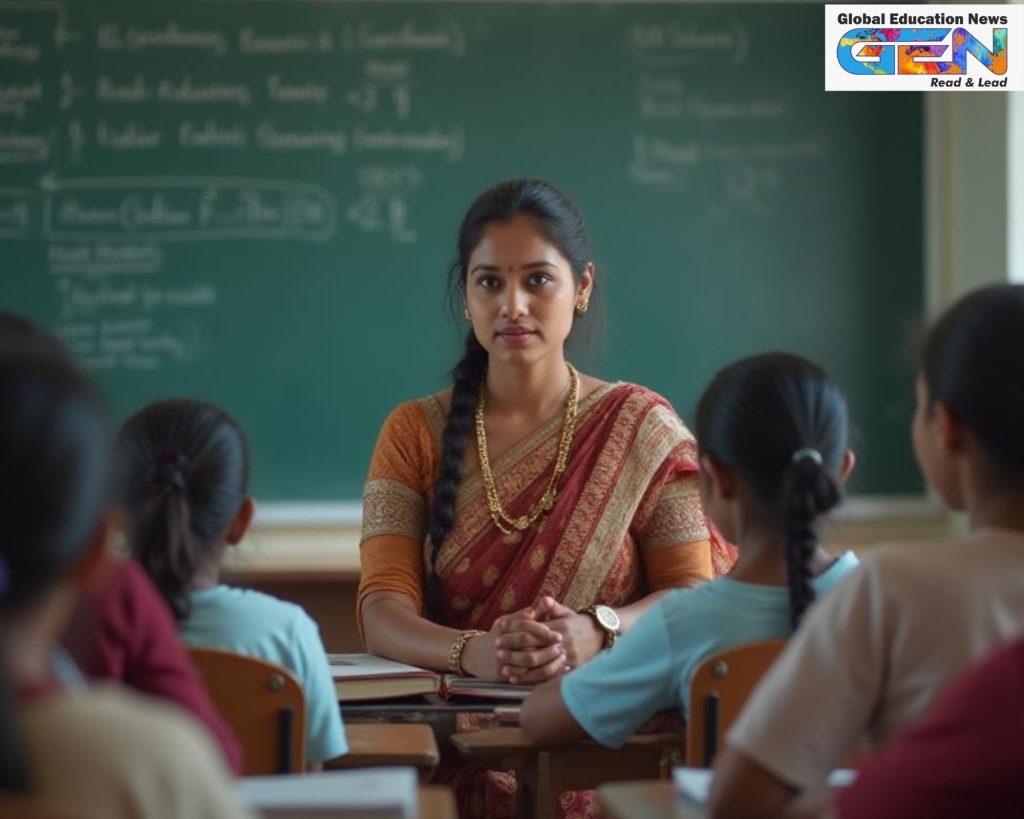
In a transformative move, the Delhi government, under Education Minister Ashish Sood, is set to launch a specialized training program for government school teachers in Indian Knowledge Systems (IKS). Starting in September 2025, this initiative will be hosted at IIT-Mandi in Himachal Pradesh and IIT-Gandhinagar in Gujarat, aiming to reconnect educators with India’s rich cultural and intellectual heritage.
Key Points:
- Training to begin in September 2025 at IIT-Mandi and IIT-Gandhinagar.
- Focuses on Indian Knowledge Systems, including philosophy, Sanskrit, and ancient texts.
- Aims to integrate traditional wisdom into modern education.
What is the Indian Knowledge Systems (IKS) Program?
The IKS program is designed to immerse teachers in India’s traditional knowledge, covering disciplines such as philosophy, Sanskrit, arts, sciences, Vedas, Upanishads, Ayurveda, and Yoga. By blending these subjects with contemporary teaching methods, the initiative seeks to create a holistic educational experience that fosters cultural pride and intellectual curiosity among students.
Key Points:
- Includes modules on Vedas, Upanishads, Ayurveda, Yoga, and more.
- Bridges ancient Indian wisdom with modern pedagogical approaches.
- Enhances teachers’ ability to inspire cultural awareness in students.
Program Structure and Implementation
In its first phase, at least 50 government school teachers will be selected and divided into batches of five. Each batch will undergo intensive training lasting five to seven days at either IIT-Mandi or IIT-Gandhinagar. These premier institutes were chosen for their expertise in integrating traditional knowledge with modern research, ensuring a high-quality learning experience.
Key Points:
- 50 teachers to be trained in batches of five in the initial phase.
- Training duration: 5–7 days at IIT-Mandi and IIT-Gandhinagar.
- IITs selected for their academic excellence and IKS expertise.
Why This Matters: Bridging Past and Present
Education Minister Ashish Sood emphasized that the program aims to “foster a stronger connection between students and their cultural roots.” By equipping teachers with knowledge of India’s ancient systems, the initiative seeks to enrich classroom learning, making it more relevant and engaging for students. This aligns with the National Education Policy (NEP) 2020, which advocates for the inclusion of traditional knowledge in curricula to promote holistic development.
Key Points:
- Strengthens students’ connection to India’s cultural heritage.
- Aligns with NEP 2020’s focus on holistic and culturally rooted education.
- Enhances classroom engagement through traditional wisdom.
Impact on Students and Education
The training is expected to empower teachers to weave cultural narratives and traditional wisdom into their lessons, helping students appreciate India’s intellectual legacy. Subjects like Ayurveda and Yoga can promote well-being, while insights from ancient texts can inspire critical thinking. This initiative could set a precedent for other states to integrate IKS into their education systems.
Key Points:
- Teachers will incorporate IKS into classroom teaching.
- Promotes student well-being and critical thinking through traditional knowledge.
- Could inspire nationwide adoption of IKS in education.
A Step Toward Cultural Revival
By partnering with esteemed institutions like IIT-Mandi and IIT-Gandhinagar, the Delhi government is taking a bold step toward reviving India’s traditional knowledge systems. This initiative not only enriches education but also instills a sense of pride in India’s heritage, preparing students to be global citizens rooted in their cultural identity.
Key Points:
- Collaboration with IITs ensures high-quality training.
- Revives interest in India’s intellectual and cultural heritage.
- Prepares students for global challenges with a strong cultural foundation.
Looking Ahead
As the program rolls out in September 2025, it is expected to expand to more teachers and potentially include additional IITs or institutions. The Delhi government’s commitment to IKS signals a broader movement to integrate India’s ancient wisdom into modern education, paving the way for a more inclusive and culturally rich learning environment.